
This is an e-bookconvertible download.
See forthe online version with illustrations and links
http://www.vahini.org
This is an e-bookconvertible download.
See forthe online version with illustrations and links
http://www.vahini.org
BHAGAVATHA VAHINI
The Story of God and his Devotees
Forword by N. KasturiDear Reader!
The Bhagavatha is a dialogue between a person under the sentence of death and a great saint, who prepared him to meet it. We are all under a sentence of death; our hearts, like muffled drums, are beating funeral marches to the grave. Some reach it late, some soon. We require the counsel of a great saint, to prepare us, too, for meeting Death and witness the horizon beyond.
The Bhagavatha is a Ganga, emerging from the Lord, and merging in Him, after a long journey through geographic descriptions, historic annals, philosophic disquisitions, hagiological narratives, epistemologic enquiries, and after fertilising the vast valleys of human minds with the pure pellucid waters of Krishna-episodes.
Bhagavan has come again as Sathya Sai for the revival of Dharma among men; one important aspect of that revival is the re-establishment of reverence for the ancient spiritual texts, like the Bible, the Koran, the Zend Avesta, the Tripitaka, the Vedas and the Bhagavatha. Reverence can spring at the present time, only when the inner meaning of the statements and stories is explained in clear, simple, charming style by the very Person who inspired the original Scripture.
Here, in this Book, we have His version of that voluminous textbook of Bhakthi, which Vyasa composed at the suggestion of the sage Narada, so that he may win peace and equanimity.
This is not just a book, dear Reader. It is a balm, a key, a Mantra - to soften, solve and save, to loosen the bonds, to liberate from grief and pain, thirst and tutelage.
Open it with humility, read it with diligence, revere it with devotion, observe its lessons with steadfastness and reach the Goal that Vyasa reached and Narada attained; that Suka taught and Parikshith learnt. What greater recompense can man hope for?
Translated by N. Kasturi.
Prasanthi Nilayam, Guru Pournima, 18-7-1970.
Chapter 1: The Bhagavatha
The name Bhagavatha can be applied to every account of the experiences of those who have contacted God and the Godly (Bhagavan and Bhaktha). God assumes many forms and enacts many activities. The name Bhagavatha is given to the descriptions of the experiences of those who have realised Him in those forms and of those who have been blessed by His Grace and chosen as His Instruments.
The great work known by that name is honoured by all masters of the Vedas. It is a panacea which cures physical, mental and spiritual illnesses. The Bhagavatha is saturated with sweetness of nectar, it shines with the splendour of God.
The principle of Avathara or the Descent of God on earth, the Incarnation of the Formless with Form, for the uplift of beings- this is the basic fact that makes the Bhagavatha authentic. By Bhagavatha we also mean those with attachment to God, those who seek the companionship of God. For such, the book, Bhagavatha, is most precious; it is the breath of their life. To be in the midst of such Bhagavathas is to foster one's own devotion. Unless you have a taste for God-ward thoughts, you will not derive joy therefrom. To create that taste the Bhagavatha relates stories relating to incarnations to the earnest inquirer. Then, one developes the yearning to experience the thrill of God, through all the levels of consciousness. He who has this intense yearning can be a true Bhagavatha.
People believe that incarnations of God happen only for two reasons: the punishment of the wicked and the protection of the righteous. But, these represent only one aspect of the task. The granting of peace and joy, of a sense of fulfillment to seekers who have striven long - this too is the task.
The Avathar, or Form Incarnate, is only the concretisation of the yearning of the seekers. It is the solidified sweetness of the devotion of godly aspirants. The formless assumes the Form for the sake of these aspirants and seekers.
They are the prime cause. The cow secretes milk for the sustenance of the calf. That is the chief beneficiary. But, as we see, others too benefit from that milk. So too, though the Bhakthas are the prime cause and their joy and sustenance the prime purpose, other incidental benefits also accrue, such as the fostering of Dharma, the suppression of evil, the overwhelming of the wicked.
There is no compulsive rule that incarnations should occur only on the earth and in human form. Any place, any form, can be chosen by the Fully-Free. Whichever place, whatever Form, promotes the purpose of fulfilling the yearning of the devotee, that place and that form are chosen by the will of God. God is above and beyond the limits of time and space. He is beyond all characteristics and qualities; no list of such can describe Him fully. For Him, all beings are equal. The difference between man, beast, bird, worm, insect and even a god is but a difference of the 'vessel' (the Upadhi).
It is like the electric current that flows through various contrivances and expresses itself in many different activities. There is no distinction in the current; it is the same. To speak of it as different is to reveal one's ignorance (Ajnana). So too, the one single God activates every vessel or Upadhi and gives rise to manifold consequences. The wise see only the one uniform current; the ignorant feel that they are all distinct. God appreciates the consciousness of unity, as the basic motive of acts. He does not appreciate the activity itself being one, without variety; it is suited to the various needs. The fruits of karma or activity appeal only to those who identify themselves with the body and not for the others, who know that they are the indestructible Atma.
Again, you must know that there is no end to the incarnations that God indulges in. He has come down on countless occasions. Sometimes He comes with a part of His glory, sometimes with a fuller equipment of splendor, sometimes for a particular task, sometimes to transform an entire era of time, an entire continent of space.
It is the story of the last of these, that the Bhagavatha elaborates. The drama enacted by the Avathara, and the Bhakthas drawn towards Him, is the subject matter of the Bhagavatha. Listening to it promotes the realisation of God. Many sages have testified to its efficacy and extolled the Bhagavatha, which they helped preserve for posterity.
Generally speaking, man gets drawn to sense objects for, he is the victim of instincts. Instincts easily seek sense-objects. They come along with the body and are not derived by any training. The infant seeks milk from the mother's breast; the new-born calf nestles at the udder. No training is needed for this. But, for the infant to walk and talk, some training is necessary. The reason is that they are not automatic; they are socially prompted, by example and by imitation of others.
Training is essential even for the proper pursuit of sense pleasure, for it is the wild untrained search for such pleasure that promotes anger, hatred, envy, malice, conceit. To train them along salutary lines and to hold them under control, certain good disciplines like Japa, Dhyana, Upavasa (Fasts) Sandhya-vandana (worship at dawn and dusk) etc. are essential. But, however much their value may be praised and their practice recommended people do not develop a taste for them. This is because the desire for sensory pleasure has struck deep roots in the human heart. When one is asked to do spiritually salutary acts, one has no inner prompting at all. Still one should not give up in despair. Until the taste sprouts, the disciplines have to be strictly followed. This taste is the result of training; no one has it from the very beginning. Constant practice will create the zest.
The infant does not know the taste of milk. By taking it daily, it develops an attachment for it which is so deep that when milk is to be given up and rice substituted, it starts to protest. But, the mother does not despair; she persuades the child to take small quantities of cooked rice daily and by this process it starts liking rice and it gives up milk. Milk was once its natural food, so natural that if no rice is available for a single day, it becomes miserable.
So, too, though sense-pleasures are "natural" at first, by means of practice and training and listening to the commendation of the wise, slowly the greater and more lasting pleasure derivable from the glories of the Lord and their recapitulation is grasped; thereafter, one cannot exist without that atmosphere even for a minute; one feels that there is nothing as sweet as the experience of listening to the splendor of the Lord. The company of the worldly who chatter about the senses and the sense-objects will no longer attract; the company which exults in praising the Lord will draw and hold.
This is the real hall-mark of the good. Sadhakas and votaries of the Lord are to be judged by these, not by external apparel or appearances. If one mixes with men who revel in sensory talks and activities, then, he puts himself out of court. Spend your time in the company of the godly, engaged in godly affairs. Avoid getting mixed with the company of the ungodly. Do not see their activities or listen to their accounts. Only those who avoid them can be called Bhagavathas, God's own.
Reading and enjoying the stories of the glory of Krishna in some sacred spot or some temple or prayer-hall shrine or hermitage of a saint or sage, or in the company of the virtuous and the good - that is a source of great inspiration and joy. It makes people forget everything else. Else, one can approach pious men and serving them, listen to their exposition of the glories of God. Taste for such wholesome literature is the result of accumulated merit and endeavour. It is that merit that rewards one with such company. Listening will be enough in the beginning; later, the stories will arouse interest in the nature and characteristics of God and the aspirant will seek and find for himself the path to realisation.
Listening to expositions by the wise is much better than reading oneself; or, one can be looking into the text while listening. It is preferable to listen in company, rather than alone; of course, it is excellent to listen with a number of earnest aspirants. If the person who expounds has had the thrill of genuine experience, then it is the supremest luck, for it yields best results. For, his face will blossom into joy, his eyes will shed tears of joy at the very contemplation of the glory of the Lord. Those who listen to him will catch that inspiration; they will experience the joy themselves. In the midst of a group that weeps, tears will spring out of the eyes of those who have come in; when an infant smiles, those around will also smile in unison. So too, the words of those who are saturated with devotion to God will saturate the hearts of those who listen. It is impossible to measure the profit that one can derive while in the company of the great.
Through that process of listening, a dirt-laden heart will be transformed into a clean illumined heart, shining with genuine light. To the foul odours of sense-pursuits, keenness to listen to the glories of God is a valuable disinfectant, besides being in itself so full of sweet fragrance. The listening will cleanse the heart through the prompting it gives for good work.
Such a cleansed heart is the most appropriate altar, or tabernacle. In that fragrant bower, the Lord will establish Himself; at that very moment, another incident too will happen; the group of six vices that had infested the place will quit without so much as a farewell.
When these vices quit, the wicked retinue of evil tendencies and vulgar attitudes which live on them will break camp and disappear, without leaving even their addresses! Then, man will shine in his native splendour of Truth and Love (Sathya and Prema); he will endeavour without hindrance, to realise himself; and, finally, he will succeed, in merging with the Universal and Eternal. He will liberate himself from the tangle of ignorance, or Maya. His mind will fade away; the long-hidden secret will be revealed to him; he will discover his Madhavathwa (Divinity).
Man's nature is Prema, Love. He cannot survive a moment, when deprived of Love. It is the very breath of his life. When the six vices, to which he was attached so long, disappear, Love is the only occupant of the heart; but, Love has to find an object, a Loved one. It cannot be alone. So, it is directed to the dark-blue Divine Child, the charming cowherd Boy, who is Purity Personified, who is the embodiment of service, sacrifice and self-lessness, who has taken residence in that cleansed Altar. There is no scope now for any other attachment to grow. So, step by step, this Love for Madhava becomes deeper, purer, more self denying, until at last, there is no other need for thought and the individual is merged in the Universal.
When Vaasudeva enters the heart of man, vasudeva has no longer a place therein. In other words, when the deva of vasu or wealth is seated in the heart, the divine Vaasudeva or Krishna cannot dwell therein.
Any attempt to accommodate both in the heart is bound to fail. Darkness and light cannot exist at the same time and in the same place; they cannot continue together. Dhanam and Daivam cannot be joint ideals; when Dhanam or riches are sought, Daivam or God cannot also be achieved. If both are sought by man what he will achieve will be neither Dhanam nor Daivam but Dayyam (the Devil).
It is creditable if man behaves as man; it is laudable if he behaves as the Madhava, he really is. But, to behave as a demon or as a beast is despicable indeed. For, man was long born a mineral and died a mineral; then, he promoted himself as a tree. He was long born a tree and died as a tree; but, in the process, he got promoted as an animal; but, he has now risen into the status of man. This rise from one scale to another has been acknowledged by science and spiritual experience. Now, alas! he is born as man and dies as man. It is a greater shame if he slides into the beast or a beastly ogre. Praise is his due, only if he rises to the Divine status. That is real fulfilment of his destiny. Therefore, avoid contact with vices; develop attachment to virtues; transmute the heart into an altar for the Lord; destroy all the shoots and sprouts of desire; then, your Manasa-sarovaram (the Lake of your Inner Consciousness) will be sublimated into a Ksheera-sagara, (the Pure Ocean of Milk, whereon the Lord reclines on the Serpent-couch). Your real Self will, like the Celestial Hamsa, revel in the placid waters of that Lake, thus transformed. It will discover endless delight.
Who can mark the beginning of the continuous waves of the ocean? It is an impossible task. If any one decided to do so, the wave with which he starts the calculation will be considered as the beginning, the wave with which he stops his calculation will be for him the last, the end. There is a beginning and an end for his count: there is no beginning or end for the process. No one can visualise either, in that boundless illimitable expanse. God's Glory is the shoreless ocean. When one starts describing it, it begins for him; when he finishes his description it is the end, so far as he is concerned. But, His Glory is beyond space and time. Only little minds, limited minds, will argue that God's Glory has a beginning and an end. The stage on which He plays (His Leela) has no boundaries.
The story of His Leela is all Nectar; it has no other component, no other taste, no other content. Every one can drink his fill, from any part of that Ocean of Nectar. The same sweetness exists everywhere, in every particle. There is nothing inferior to mar the sweetness.
The love of God and the love for God are both eternally sweet and pure, whatever the method of your accepting or attaining them. Such love is holy and inspiring. Sugar is sweet when eaten during day or during the night. For it is night or day for the person who eats, not for the sugar. Sugar behaves uniformly always.
Chapter 2: The Birth of a Bhagavatha
Maharaja Parikshith was the very self of Abhimanyu, who had attained the Heavenly Abode of Heroes. When Parikshit was an embryo, growing in the womb of Uttara, he saw the sharp arrow let off by Aswatthama flying towards him, emitting sparks of fury and terror, bent on his destruction. But, at that very moment, he saw also, a Person of Brilliant Charm armed with a Terrific Wheel, breaking that death-dealing arrow into a hundred pieces. The royal foetus was filled with wonder and gratitude.
He pondered deep on the identity of his Saviour. "Who is he? He must also be dwelling in this womb, with me, because he could see the arrow at the very moment I saw it! But, he has such intrepidity and skill that he could destroy it before it reached me. Can he be a uterine brother? How could he get hold of that wheel? If he is endowed with a wheel, how did I miss having it? No; He is no mortal." He argued thus for a long time within himself.
He could not forget that Face, that Forms. He was a Boy, with the splendour of a million suns. He was benign, blissful, blue like the clear sky. After saving him so dramatically and so mercifully, he had disappeared. He had the Form always before him, for, he was seeking to see it again. Whomsoever he saw, he examined to find out whether that form corresponded with the Form he had reverentially fixed in his mind.
Thus he grew in the womb, contemplating that Form. That contemplation transformed him into a splendour-filled baby. When at the end of the period of gestation, he was born into the world, the lying-in-room was lit by a strange light. The female attendants of Uttara were dazzled by the brilliance. Their wits were overcome by wonder.
Recovering herself, Subhadra mother of Abhimanyu sent word to Yudhishtira, the eldest of the Pandavas announcing the birth. The Pandava brothers were overwhelmed with joy, when they heard the glad tidings for which they were waiting anxiously. They ordered that bands play, and guns be fired, in honour of the event, for, a scion had been born for the royal family, a successor to the Pandava throne.
The people heard the peal of guns and sought the reason for the joy. They rushed towards Indraprastha in large masses of enthusiasm. Every corner of the kingdom gushed with joy at this event. Within minutes, the City was transformed into a heavenly garden, fit for Gods to give audience to men. Yudhishtira distributed several varieties of sweets to all who came. He granted several cows as gifts to Brahmins. He instructed the ladies of the court to give golden caskets full of saffron and kumkum to women. Brahmins were awarded silk clothes, and precious gems. Citizens were transported with joy, for the dynasty had now secured an heir. Night and day, they reveled in hilarious exultation.
Next day, Yudhishtira called the family priest, Kripacharya and performed the rite of Jatha-karma (first cleansing) to the infant. He satisfied the Brahmins by gifts of various costly jewels. The scholars and priests blessed the child and returned home.
On the third day, Yudhishtira called to his presence renowned astrologers as well as famous palmists and soothsayers, for, he was very eager to know whether the fair name of the kingdom and its culture would be safe in the hands of the prince who had come to carry the burden of the state. He received them at the palace with traditional hospitality; they were given appropriate seats in the hall; they were offered scents and silks.
The king bowed before them and joining his palms in reverential adoration, he prostrated before them, and prayed, "0, wise men, who know the past, present and future, examine the horoscope of the infant that is born, calculate the positions of stars and constellations, and the planetary influences that will guide his life and tell me how the future will be shaped." He noted the exact time of birth and placed the note on a golden plate, before them.
The Pundits took that note and drew up the plan of planetary positions, and studied it with great care. They communicated to one another their increasing joy as they began to draw conclusions; they were in great joy themselves; they could not get words to express their amazement.
The doyen of the group, a great Pundit, at last rose and addressed King Yudhishtira thus. "Maharaja! I have till this day examined well nine thousands of horoscopes and prepared concerned plans of the zodiacs and constellations. But, I must admit I have never yet come across a more auspicious grouping than is indicated in this horoscope. Here, all the signs of good augury have assembled in one moment, the moment of this prince's birth. The moment indicates the State of Vishnu Himself! Al1 the virtues will gather in this child. Why describe each glory separately, the great Manu has again come into your dynasty ."
Yudhishtira was happy that the dynasty had such good fortune. He was indeed overpowered by joy. He folded his palms and bent low before the scholars who had given him such good news. "This family is lucky to claim such a gem as its scion, through the blessings of elders and of pundits like you as well as the blessings of the Lord, who is our guardian. You say that the boy will develop all virtues and will accumulate fame. But of what use is all that if, he has not acquired the quality of reverence towards Pundits, Sadhus and Brahmins? Please look into the horoscope once again and tell me whether he will have that reverence."
The leader of the group of astrologers replied: "You need entertain no doubt on that score. He will revere and serve the gods and the brahmins. He will perform many Yajnas, and Yagas, prescribed in the ancient texts. He will earn the glory that your ancestor Bharatha won. He will celebrate even the Aswamedha. He will spread the fame of this line all over the world. He will win all things that gods or men covet. He will outdistance all those who have gone before him." They extolled him thus in various ways to their hearts' content. They stopped because they were nervous to recount all the excellences; they feared they might be charged with exaggeration and flattery if they continued to detail the conclusions they had drawn from the horoscope of the baby.
Yudhishtira was not satisfied; he wanted to hear more from them of the excellences of the character of the Prince. Pundits were encouraged by this yearning. They said, "0 King, You seem to be eager to know about some more aspects of the child's fortune. We shall only be too glad to answer any specific question that you may feel inclined to put us."
Noting their enthusiasm, Yudhishtira came forward and asked them, "During the regime of this Prince, will there be any great war? If war is inevitable, will he achieve victory? 'No', said the Pundits, He will not be pestered by any foe. He knows no failure or defeat in any undertaking of his. This is absolutely true, an unshakable truth."
Hearing this, Yudhishtira and the brothers Bhima, Arjuna, Nakula and Sahadeva looked at each other and shared great joy.
Meanwhile, Yudhishtira began to speak. He had said, "If that is so...", but, before he could complete the sentence, he hung his head and was plunged in thought. The Pundits noticed it; they said, "You seem to be anxious to know something more. You have only to ask, we shall readily answer all questions." "Of course, I am happy at all the answers you have given. He will be virtuous, famous, triumphant over all, loving and kind, treating all equally; he will perform many yajnas and yagas; he will have no enemies; he will bring honour to the dynasty and restore its reputation. All this gives me great joy. But,... I would like to know also, how he will meet his end." The brothers saw Yudhishtira getting rather upset at the anxiety which agitated him over this problem. His voice had faltered a bit, when he put the question.
They consoled him and said, "Why worry about that at this stage? The end has to come some day, some way. It is something that cannot be avoided. Something will cause it; some circumstance will bring it about. Birth involves the contingency of death. We are afraid, the extreme joy of this incident has queered your line of thought a bit. We think this much is enough. We shall leave the rest, in the realm of doubt; let us not probe further. Let us leave it to God."
But, Yudhishtira could not somehow give up his desire to know how such a virtuous ideal Prince would end his career on earth. He imagined it must be a truly wondrous finale to a glorious life. So, he wanted the astrologers to tell him about it.
The scholars set about the calculations again and took a pretty long time over it. Watching this, the King became excited; he hastened them and pressed for a quick answer. They gave the reply, "This prince will give up his kingdom as the result of a sage's curse." Yudhishtira wondered how such a paragon of virtue can ever invoke upon himself the curse of a sage. He was shocked at the possibility.
Meanwhile, the Pundits said, "Our calculations show that he will be bitten by a serpent." Yudhishtira lost heart at this news. All his joy evaporated in a moment. He became very sad and dispirited.
Chapter 3: Ceremony of Name giving
"Alas! Is he to suffer at last this tragic fate? Is this to be the reward for all the good in store for Him? Can the consequence of years of good living suddenly turn into this calamitous end? It is laid down that those who die drowning, those who are killed by fall from trees, and those who die of snake-bite have a bad after-life. These are considered "inauspicious deaths"; those whose deaths are such, become ghosts and have to suffer so, it is said. Why should this child end up like that? 0, the horror of it. 0, the injustice of the whole thing!" lamented Yudhishtira, biting his lips to suppress his sorrow.
The Brahmins hastened to console him. "Maharaja!", they interceded. "There is no reason to give way to grief. Such a great man will never meet with such a tragedy. No. In the horoscope of this child, studying the positions of the planets, we can clearly notice two happy conjunctions, which indicate Vajrayoga and Bhakthiyoga, both powerful and propitious. Therefore, as soon as he learns of the curse, he will give up his kingdom as well as his wife and children and retire to the bank of the holy Bhagirathi river and surrender himself to the Lord. The great sage Suka, son of Vyasa, will arrive there and initiate him into Atmajnana (Self-knowledge) through the recital of the glories of Lord Krishna and the singing of His Praise. Thus, he will spend his last days on the sacred bank of Ganga and breathe his last with the adoration of the Lord. How can such a man meet with any tragedy or calamity? He will not be born again, for, through Bhakthiyoga, he will attain oneness with the Lord of All, Purushothama. Hearing these words, Yudhishtira gave up grief and became happy. He said, "If so, this is no curse; it is a unique boon!"
The Name - Parikshith
At this, every one rose. The Brahmins were honoured as befitted their learning and austerity. They were given gems and silken clothes and the king arranged to send them home. Yudhishtira and his brothers moved into their palaces, but, they spent many hours talking about the happenings of the day and of the fears, luckily removed. They were filled with joy at the turn the predictions had taken.
The baby grew in the lying-in-room, as the moon in the bright half of the month. Since it was born as heir to the great empire, after a succession of dire dangers, every one loved it and guarded it like the apple of the eye, as the very breath of their lives. Droupadi who was broken by the loss of her own children, (the Upapandavas), Subhadra who had suffered inconsolable loss in the death of Abhimanyu, and the Pandava Brothers who dreaded that the terrific sorrow of Aswasthama directed against the posthumous child of Abhimanyu, still in the womb of Uttara, might do the worst and destroy for ever the Pandava line - all were relieved, nay, were overjoyed when they saw the child. They were supremely happy; they spent the days doting over the little lovely baby, whom they brought from the zenana for the purpose, whenever they felt the urge to see it and hold it in their arms.
The child too was very bright; it seemed to watch the lineaments of every one who fondled it or came before it. It stared into their faces long and longingly. All were surprised at this strange behaviour. Every person who came to it was subjected to this searching examination by the child who seemed determined to trace some one or some thing, in the world into which it was born.
Some said, sadly, it is seeking its father, Abhimanyu. Others said, "No, no; the child is searching for Lord Krishna". Some others opined that it appeared to be trying to discover some Divine Brilliance. The fact remained that the child was examining all, for some trait or sign which it knew already, to recognise some Form it had in mind. "Pariksha" was the word used by every one for the 'quest' in which the child was engaged and so, even before the formal Naming Ceremony, every one both in the palace and outside it, began referring to the child as the Parik- shith, 'he who is engaged in Pariksha!'
That name, Parikshith, stayed! From the Raja to the ryot, from the Scholar to the boor, from the Monarch to the man-in-the-street, every one addressed the child as Parikshith or referred to him so. The fame of the child grew from day to day. It was on every one's lips. One auspicious day, Yudhishtira had the court priest brought before him and he commissioned him to fix a good day for the ceremony of naming the child-prince.
The priest called together his group of scholars and astrologers and after consulting the conjunctions of heavenly bodies, they discovered a day which all of them agreed was a good one for the event. They also settled at what hour the actual naming has to take place. Invitations to attend the ceremony were sent to the Rulers of the land and to Scholars and Pundits as well as prominent citizens. The king sent his emissaries to invite Sages, and personages, full of spiritual wealth. Arjuna went to Lord Krishna and reverentially prayed that He should shower His Grace on the child on the occasion; he succeeded in bringing Krishna along when he returned.
When Lord Krishna arrived, the Sages, Brahmins, Rajas, subordinate rulers and citizens got ready to receive Him with respectful homage; the Pandava brothers, attired magnificently, waited at the main gate of the Palace to offer Him welcome. When the chariot of the Lord was sighted drums sounded, trumpets pealed mighty welcome, and joyful Jais rose from every throat. Yudhishtira approached the chariot and embraced the Lord as soon as He alighted; he held Him by the hand and led Him into the palace, where a High Throne was specially placed for Him. After the Lord was seated, all else occupied their seats according to their rank and status.
Sahadeva went to the inner apartments and the child was brought on a gold plate, resplendent as the sun, made more charming by magnificent jewels. The priests recited manthras, invoking the Gods to bless the child and confer on him health and happiness.
Sahadeva laid the child down in the centre of the Court Hall. Maids and chamberlains came in long lines towards the place where the prince was, holding in their hand gold plates full of perfumes and flowers, silks and brocades. Behind specially fitted curtains, the queens Rukmini, Droupadi, Subhadra and Uttara were rejoicing at the happy scene, watching the gambols of the child. Sahadeva took the child and placed it on a bed of flowers in the mantap that was erected for the naming ceremony. But, the child rose on all fours and started crawling bravely on, in spite of the remonstrances of the maids. Apparently, it wanted to proceed somewhere!
The efforts of Sahadeva to stop its journey proved futile. Yudhishtira, who was observing its movements with interest said with a smile, "Sahadeva! Do not stand in the way. Leave him alone. Let us see what he does." And, Sahadeva left his hold. He allowed the child to move wherever he liked. Only, he took care to keep his eye always on him lest he fall or hurt himself. He followed him at every step, vigilantly.
The child, who got freedom of movement, soon made a bee line towards the place where Lord Krishna was seated, as if He was a long acquaintance whom he was seeking to meet. The child grasped the Feet of Krishna and pleaded, by his looks, that he may be taken onto the lap and fondled! The Lord saw his yearning; He laughed aloud; then, He graciously bent low to lift the child onto His lap.
Sitting on His lap, the prince was staring at the Lord's face without even a wink; he did not turn his head this way or that or pull at anything with his hands or make any sound. He just sat and stared. Everyone was amazed at this behaviour, so unlike that of a child. Even Krishna shared in the feeling that pervaded the Hall.
Turning to Yudhishtira, Krishna said, "I did not believe when I was told that this child stared at everyone who came before him and examined their lineaments. I thought it was a new explanation given by these priests, to the usual prank and play of children. Now, this is really a wonder. The fellow has started examining even Me! Well, I shall test his behaviour, a little, Myself."
Then, the Lord tried to distract the attention of the child from Himself by placing before him a variety of toys, and Himself hiding from view. He expected that the child will soon forget Him. But, his attention was not drawn towards any other object. He had fixed his eye inexorably on the Lord Himself, and it was seeking Him and no other. He was trying to move towards the place where he imagined Krishna was. When His attempts to transfer the attention of the child from Himself failed, Krishna declared, "This is no ordinary child. He has won through My tests. So, the name Parikshith is the most appropriate one for him. He lives up to it, already!"
At this, the Pundits recited verses indicating their blessings on the child. The Brahmins recited relevant passages from the Vedas. The music of trumpets rent the air. Women sang auspicious songs. The family preceptor dipped a Nine-gemmed jewel in a golden cup of honey and wrote the Name, on the tongue of the child; on the rice grains spread on a gold plate, the name was written and the rice was then showered on the head of the child, in token of prosperity and happiness. The naming ceremony was thus celebrated in grand style. Men and women who attended were given presents as befitted their rank and they departed. Every one was talking appreciatively of the wonderful way in which the child sought out the lap of the Lord. Many praised the steady faith that the child had already attained.
Yudhishtira who was puzzled at the unique behaviour of the child approached Vyasa, the great sage, to know from him the reason for the strange search and learn about the consequences of this attitude. Vyasa said, "Yudhishtira! When this child was in the womb, the deadly arrow that Aswathama aimed at it in order to destroy it was about to hit its target, Lord Krishna entered the foetal home and made it safe and saved it from destruction. This child therefore has been eager to know who had saved him from within the womb where he lay. He started examining every one to find out whether he had the same effluence that he saw, while a foetus in the womb. Today, he saw that Divine Form with all its splendour and so, he moved straight towards Him and prayed to be taken up and seated on the lap. This is the explanation for the strange behaviour about which you are curious to know ."
Hearing these words of Vyasa, Yudhishtira shed tears of joy and thankfulness. Overjoyed at the limitless Grace of the Lord, he paid Him reverential homage.
Chapter 4: The Penitential Yajn'a
The Namakaranam Ceremony of the Prince gave great delight to the subjects of the State as well as the inmates of the Palace, and members of the Royal Household. But, Yudhishtira, the eldest of the Pandava brothers felt that something more had to be done: he was not content with the joyous festival alone. He called for an assembly the same evening of all the elders, the scholars, the Pundits, the subordinate rulers and leaders of the people: he prayed that Lord Krishna preside over the gathering and confer joy on all. The sages Vyasa and Kripa also attended.
Coming to the Assembly, Yudhishtira stood before the gathering a few seconds in silence, before he fell at the feet of Lord Krishna and the sage Vyasa. He then turned towards the rulers, scholars and leaders and said, "I was able to defeat the foes through your help, cooperation and best wishes, as well as the blessing of the Lord who is present here and of the sages and saints who have installed Him in their hearts. We were able by means of that victory to win back the kingdom that we had lost. Again, through these blessings, the light of hope has gleamed in hearts, darkened by despair about the continuation of this dynasty. The Pandava line will be continued by the Prince who was named today by the Lord as Parikshith.
While all this delights me, I must announce before you that I am overwhelmed with sorrow at the contemplation of another side of the picture. I have committed countless sins, killing kith and kin. I feel I must do some expiation for this; or else, there will be no happiness for me or for my dynasty or for my people. Therefore, I wish to take this opportunity to seek your advice on this matter. There are among you many who have known the Reality and attained Brahmajnana; we have also the great sage Vyasa here. I expect you to suggest some expiatory rite by which I can rid myself of this colossal quantity of sin that I have accumulated as a result of this war."
When Yudhishtira posed this problem in great humility and with great contrition, Lord Krishna said, "Yudhishtira, you are famous as Dharmaraja and you ought to know Dharma. You know the intricacies of Dharma and morality, of justice, of right and wrong conduct. Therefore, I am surprised that you are afflicted with grief over this war and this victory. Do you not know that a Kshatriya incurs no sin when he kills a foe who has come to the battlefield armed with intention to kill? Whatever injury or pain or loss is inflicted on the battlefield during the fight with armed foes is free from sin. It is the Dharma of a Kshatriya to take up the sword and fight to the very end, without any thought of self, to save his country. You have only observed your Dharma. How can Karma (Activity) along the lines of Dharma be sinful? It is not proper to doubt this and give way to despair. Sin cannot touch you, surround you or bother you. Instead of exulting over the festival of the naming of the new-born Prince, why should you dread imaginary calamities and seek remedies for non-existent sins? Be calm; be happy."
Vyasa too rose from his seat and addressed the King. "Sinful and blame-worthy acts are inevitable in battle. They should not be the cause for grief. The chief aim in battle should be the protection of Dharma from its foes. If that is kept before the mind, the sin will not affect the fighters. A putrid wound has to be treated with the knife; it is not sinful to inflict the surgery. A doctor who knows the surgery, and knowing, does not save the man by doing it, incurs sin. So too knowing that the foe is the source of injustice, cruelty, terror and vice, if these boils are not treated by the surgeon, knowing the cure, because he is reluctant to use the knife (the surgeon being the Ksha-triya), he incurs sin by remaining quiet, not by using the sword. Dharmaraja, you are speaking under a delusion. I can understand others less wise being afflicted by these doubts, but, I wonder how you are worried over this fear of sin?
If however our words do not carry conviction, I can suggest another remedy too. That will remove all fear. Some rulers in the past have resorted to it, after the conclusion of wars, for the removal of the effects of sin. It is the rite of Aswamedha, the Horse Sacrifice. If you desire, you can also perform this rite, as an expiatory ceremony. There can be no obstacle for that. But, believe me, you are innocent of sin even without any expiation. Since your faith is shaky. I am suggesting this rite for your satisfaction". After this statement, Vyasa resumed his seat.
At this, all the elders, scholars and leaders rose as one man and applauded the valuable suggestion given by Vyasa. They shouted, Jai Jai, in order to demonstrate their approval and appreciation. They exclaimed, "0! How auspicious", "How significant" and they blessed Dharmaraja in the endeavour to free himself from the sinful consequences of war. But, Dharmaraja was still heavy with grief; he was not free from fear. His eyes were wet with tears.
He pleaded with the assembly, most piteously. "However much you assert my innocence, I am not convinced. Somehow, my mind does not accept your argument. Rulers who were engaged in wars might have cleansed themselves by means of the Aswamedha yaga. Those were ordinary wars; they were the usual type. But my case is something very extraordinary. My sins are three times more sinister, for, (1) I have killed kith and kin (2) I have killed holy elders like Bhishma and Drona and (3) I have killed many crowned heads. Alas, my fate! How monstrous have been my actions?"
"No other ruler could have done so much of iniquity. Not one, but three Aswamedha Yagas have to be performed to cleanse this quantity. Then, only can I have peace. Then only can my dynasty be happy and secure. Then only can the administration of my kingdom be safe and meritorious. This must be kindly accepted by Vyasa and other elders and sages."
When Yudhishtira spoke thus, tears dropped on his cheeks; his lips quivered with sorrow; his body was bent with remorse. Seeing this, the heart of every sage melted with pity. The subjects of the King were moved in sympathy. Vyasa and even Vasudeva were affected. Many Pundits shed tears, without being aware of it. The assembly was struck dumb with astonishment. All knew in a flash how soft the heart of Dharmaraja was. The brothers too, Bhima, Arjuna, Nakula and Sahadeva were standing with folded palms, in reverential humility, awaiting the word that will assure relief, from the Lord who was in the Presidential Seat.
Then, the assembly, with one voice, approved the three Aswamedha Yagas, to relieve the distress of Dharmaraja. One sage gave expression to the opinion of the assembly. He said, "We shall not stand in the way of your desire. We accept it whole-heartedly. We shall celebrate the Yagas in the best Sastraic way, until the final rites. For, we seek peace of mind for you, more than anything else. We are prepared to do anything which will give you satisfaction." This was acclaimed by every one in the gathering.
Hearing this, Dharmaraja said; "I am indeed blessed; I am blessed indeed. He gave his grateful thanks for the promised cooperation. He walked towards the place where Krishna and Vyasa were seated and he fell at their feet. He held the feet of Krishna and pleaded, "0 Madhusudana! Didn't you hear my prayer? Didn't you witness my grief? I pray that you grant us your Divine presence at the coming Yaga, that you ensure me the fruit thereof and save me from this burden of sin."
Krishna smiled and lifted him up from the ground before Him. He said, "Dharmaraja! I shall certainly answer your prayer. But, you have taken upon your shoulders a burden as heavy as a range of mountains. This Yaga is no small affair. Moreover, the performer is the celebrated King, Dharmaraja! That means, it has to be celebrated on a scale befitting your status. I know that you have no where-withal for this very expensive undertaking. Kings derive money only from their subjects. To spend on a Yaga, the money squeezed out of them is not desirable. Only well earned money can be used for such holy rites; else it will bring evil instead of good. Nor can your subordinate rulers come to your help, for they too have been miserably impoverished by the late war. It is clear they have nothing to spare. Aware of all this, how could you accept to celebrate three Aswamedhas in a row? I wonder how you found such audacity in spite of these adverse conditions. And, you have already announced it publicly in this great and distinguished gathering. You did not give Me even a hint about this costly idea. Then, we could have thought out some plan. Well, it is not too late. We shall take a decision after some more deliberation. It does not matter if some delay is caused."
Dharmaraja listened to these words of the Lord and laughed a hearty laugh! "Lord, you are playing a drama with me, I know. I have never decided upon an act without deliberation. Nor have I ever worried about money or the wherewithal. When we have as our guardian, You with your inexhaustible Grace, why should I worry about anything? When I have the Kalpatharu (Wish fulfilling tree) in my garden, why should I worry, seeking roots and tubers? The all-powerful Lord, who has been guarding us all these terrible years as the eyelids guard the eye, will not give us up, at this juncture.
For You who can whiff huge mountains into dust, this little pebble is no problem at all. You are my Treasure, My treasury. You are the Very Breath. Whatever You may say, I will not hesitate. All my strength, all my wealth is you and you alone. I place all my burdens, including the burden of state and this new burden of the three Yagas on your Feet. You can do anything you like. You may value my word and carry out my intention or you may discard it and cancel the Yagas. I have no concern. I am equally happy, whatever you do. It is Your Will, not mine."
Of Course, with the Lord who resides in the heart, no special pleading is needed. The Lord melted; He lifted Dharmaraja and helped him to stand. "No; I spoke in jest to test your faith and devotion. I wanted to demonstrate to these subjects of yours how strong is your faith in Me. You need have no worry on any score. Your wish will be fulfilled. If you follow My instructions, you can procure very easily the money needed for the celebration of the Yagas. You can get it without harassing the rulers and squeezing the subjects."
On hearing this, Dharmaraja was delighted. He said, "Lord, we shall honour Your command." Then Krishna said, "Listen. In bygone times, a ruler named Maruth performed a Yaga, in a style that no one since then could approach. The hall where the Yaga was celebrated along with every item connected with it were of gold. Gold bricks were given away, as gifts to the priests who officiated; golden images of cows were given instead of cows and plates of gold were distributed instead of lands! The Brahmins were not able to carry them home and so, they took only as much as they could lift or carry. The rest they just cast away. Those pieces of gold are now available in large quantities, for your yagas. You can collect them."
Dharmaraja did not agree; he had qualms about it. He said, "Lord. That is the property of those to whom it was given. How can I make use of it, without their permission?" Krishna replied, "They have cast it away, fully conscious of what they were doing and what they were discarding. They are not alive today. Their children know nothing about the existence of this treasure. It is now under the earth. Remember that all treasure inside the earth, which has no master or owner, belongs to the king of that realm, When the king wants to take possession of it, no one has the right to object. Bring that treasure soon and prepare for the celebration of the Yagas," commanded Lord Krishna.
Chapter 5: Yajn'as and the Penance of Elders
Dharmaraja accepted the advice of Vasudeva, as well as the benedictions of Vyasa. He sent his brothers, with the army, to bring the gold that had been thrown aside by the Brahmins. They left after purifying themselves by partaking consecrated offerings. They discovered the quantities of gold that had been given as presents to the priests at the conclusion of the Sacrifice by Emperor Maruth in the past. They had dropped the gold on the sides of the roads along which they returned home. The army collected these and conveyed them to the Capital on camels, elephants, chariots and carts. It took them some days to reach Hasthinapura with all that load. They unloaded the gold, amidst the acclamations of the people.
The citizens were amazed at the success of the expedition; they extolled the good fortune of the Pandavas. They welcomed into the City the princes and the gold shouting "Jai, Jai" until their throats were hoarse, jumping and dancing in joy. They pictured among themselves the grandeur and magnificence of the sacrifice, for which this gold was brought.
Preparations were started that very day for the construction of the ritual altar and the necessary adjuncts on the bank of the Ganga; the sacred area was many square miles in extent. The ground was levelled and cleaned. The dais was built; beautiful buildings arose on the vast area. Porches and verandahs were added. Decorations like flags and festoons embellished the structures.
When the holy day neared, Chieftains, Brahmins, Scholars and Sages moved from all directions towards the sacred place, hastening each other in their enthusiasm to reach early. They took residence in the quarters allotted to them, according to their status and needs. They spent the night counting minutes, in joyful expectation of the extravagant but efficacious Yajna that they could witness when the dawn brings in another day.
The morning came. The auspicious moment approached. The priests took up their positions and got ready to take the vows of initiation. They stood up facing Lord Krishna and the King and said, "0 King! We understand that you have resolved to perform not one but three Aswamedhas (Horse Sacrifices). Is that correct? If so, do you desire us to perform them, one after the other? Or, shall we repeat every formula and rite, thrice and have them all concurrently? If you make it known, we shall arrange the participants and performing priests accordingly ."
At this, Dharmaraja replied, "What can I say when you know best; I shall agree to whatever advice you offer. I seek on1y the consent of Vasudeva for whatever course we adopt" and he turned towards Krishna with pleading eyes. Krishna left the decision to the Brahmins. They discussed among themselves for a while and announced at last that the effect of "Three Aswamedhas" can be secured by repeating each manthra thrice and presenting the Brahmins presiding over the rituals thrice the usual fees. Vasudeva indicated His approval of this suggestion, and taking his cue from this, Dharmaraja declared that he was agreeable. He desired that the Yajna might be inaugurated.
The recitation of the manthras by the Brahmins shook both earth and sky. The preliminary rites were gone through and the sacrificial horses proceeded on their planned round. They were caparisoned in great style and they carried on their foreheads the Declaration challenging any one to take them into custody if he dared. When He, who is the recipient of all Yajnas, (Yajnaswarupa) has taken the role of the presiding authority, no words can describe the fortune of the participants and the witnesses. It drew to a successful close with the Valedictory Oblation (Poorna-ahuthi).
The experts in sacrificial manthras, the sages and the Brahmins were loaded with presents and fees. Enormous numbers of cows, large areas of land, and vast quantities of gold were gifted away by the King. The whole nation was filled with happiness. Every one was praising the Yajna as indescribably superb. All who came were fed sumptuously at all hours. Sages and ascetics who saw all this lavishness extolled the Yajna of Dharmaraja as grander even than the Yajna performed by Emperor Maruth in the past! They were delighted they got the chance to partake in this Yajna. People once claimed that the Yajna of Maruth was presided over by Indra, the Ruler of the Gods and they felt that it made it incomparably superior to any other sacrifice. But now, they congratulated Dharmaraja on securing the Yajnaswarupa (Vasudeva) Himself to preside over the Yajna, a piece of good fortune far superior to Maruth's and far more difficult to secure.
At the end of the Yajna, those who had come from far off places returned; others too turned home. The kings and chieftains took respectful leave of Dharmaraja and went back to their own principalities. The kinsmen of the King stayed for a few days more and left at their convenience to their places.
However, Krishna chose to spend some more time with the Pandavas; so, He stayed on in Hastinapura. The Pandavas were delighted at this signal act of Grace; they made suitable arrangements for the residence of the Lord; they served Him every day, they filled their eyes with His Beauty, they filled their hearts with His Gracious Words of Instruction; they spent the days in supreme Joy. After some time spent thus in the Pandava Capital, Krishna returned to Dwaraka, taking Arjuna with Him. The inhabitants of Dwaraka were overjoyed when their Lord returned to His capital.
They welcomed Him in enthusiastic reverence. They feasted on the Darsan of the Lord and were immersed in Ananda.
The Penance of Elders
Meanwhile, news came to Hasthinapura that Vidura his uncle was moving about on the environs of the city in the guise of a monk; it travelled from mouth to mouth and at last reached the ears of Dharmaraja, the King. The news was received with surprise and joy. He sent a few scouts to discover whether the news was authentic, and soon, they brought the welcome information that Vidura had actually come and was present. Dharmaraja could not contain himself with excitement.
"Ah! How happy you have made me!", he ex- claimed. "This holy moment has made the dried trunk of the tree of hope put forth leaves again. Oh, I can now see and serve Vidura who fostered us and guarded us and guided us, I who feared I might not get the chance at all."
The heartening news was spread by courtiers among the queens and princesses and women of the royal household. Dharmaraja did not rest; he spoke about the great event to everyone around him; he sought out others to share with them the joy. He issued orders to the army that appropriate arrangements should be made to welcome into the Capital the brother of his late father, Sage Vidura, foremost among the votaries of the Lord. The citizens too were alerted and asked to prepare a grand reception.
They decorated the streets and mansions on each side of them; they erected arches and hung festoons and hoisted flags. They allotted galleries and seats on every road for children, women, and the aged, so that they might have a fine and clear view of the procession and of the great Sage. It was an inspiring sight to see many old men and women hobbling on with their sticks, eager to get a glimpse of Vidura, whom they extolled as the very embodiment of Dharma, as the very God-father of the Pandavas. Some thought at first that the sighting of Vidura on the outskirts of the City must have been in someone's dream, and not in actual fact. They had lived long enough to swallow the rumour without personal verification. For, they never could believe that Vidura would ever come back to Hasthinapura. They grouped themselves on vantage points and got ready for the great moment when they could rest their eyes on the saint. All along the route, every building was overflowing with humanity; the trees carried strings of adventurous youth, full of excitement and expectation, shouting in acclamation of the oncoming guest.
The King decked in ceremonial robes ascended the royal chariot and started out of the palace with his brothers to bring home the famous votary of the Lord.
Vidura appeared before them walking barefoot, slow and dignified, with matted hair and wearing the robes of a monk. The King and his brothers stepped down from their vehicles, bowed reverentially to the Feet of Vidura and walked behind him, at a respectful distance. The citizens ran forward and fell at Vidura's Feet, in spite of the earnest entreaties of the guards that they should desist. The Pandavas could not express Welcome in words; their joy was immeasurable. So, their eyes spoke it, with tears of gratitude. They clasped Vidura in their arms and prayed to him that he should get into the chariot so that the thick ranks of onlookers on all the roads might get Darsan to their hearts' content. Vidura was persuaded to agree. Seated in the Royal Chariot of the King, Vidura gave Darsan to the people who had amassed en route. At last, the Procession reached the Palace. It was a sweet flood of song and joy that flowed along the roads of the city that day.
Some of the citizens were so overcome with joy that they were rooted to the spot. The arduous life of Thapas that Vidura had undertaken had so transmuted his personality that he appeared a different person, a person glowing with divine aura, like Indra, the king of Gods. The people were describing their exultation in their own words to one another. Many shed tears remembering the trials and tribulations which Vidura had undergone and the peace that he had acquired. The queens and princesses too had Darsan from inside the purdah and they were supremely happy.
Chapter 6: Vidura's Renunciation
Inside the Palace, Vidura enquired about the welfare of every one of his kinsmen. Then Kunthi Devi, the Queen-Mother, came in and casting her endearing looks at him, said, "At last, we have been able to see you, 0 Vidura!" She could not say more.
After some time she resumed, "How could you stay away so long, ignoring the very children whom you reared with so much love and myself and others who revere you so much. It is through your Grace that my children are today rulers of this land. Where would they be today if you had not saved them on many a critical occasion? We were the target for many a disaster; but, the greatest one was your being away from us. That affected us most. Even the hope of seeing you again was extinguished in us. Now, our hearts have sprouted again. Aspirations scattered by despair have come together. Today, our joy has attained fullness. 0, what a happy day!" Kunthi sat for a while wiping her tears.
Vidura held her hands, but, could not resist his own tears. He was recapitulating the varied events of the past, in the Pandava and Kaurava groups. He said, "Mother Kunthi Devi! Who can overcome the decrees of fate? What must happen, happens. The good and the evil that men do have to result in good and evil. How can man be called free, when he is bound by this law of cause and effect?
He is a puppet in the hands of this law; it pulls the strings and he makes the movements. Our likes and dislikes are of no consequence. Everything is His Will, His Grace." When Vidura was thus expounding the fundamental spiritual truths that govern human affairs, the brothers Dharmaraja, Bhima, Nakula, and Sahadeva were sitting near, wrapped in close attention.
Kunthi raised her head at last and said, "Through your blessings, we won the war; but, we were powerless to save the lives of the sons of Droupadi and the son of Subhadra. Misfortune haunted us so strongly. Of course, as you said, no one can escape one's destiny. Well, let the past be forgotten. It is meaningless to worry over what cannot be set right. I must say, my thirst has now been considerably relieved; I could meet you at last. Where were you all this time? Tell us."
At this, Vidura replied that he had been on a pilgrimage to a number of holy places. The brothers listened with rapt attention to his story, prodding him with questions. Dharmaraja said often that he was awaiting the day when he too could go through all those holy experiences. He folded his palms in reverence whenever a holy shrine was mentioned and with closed eyes, he pictured to himself the sacred spot. Meanwhile, Bhima interjected, "Did you proceed to Dwaraka? Please tell us your experiences there." Dharmaraja too added, "You must have met Lord Krishna there, isnt it? Tell us all what happened, in full detail." Kunthi Devi too became eager to hear his description; for, she said, "Tell us, tell us. My son is there now; you must have met him too. How are they all? I hope the old parents, Nanda and Yasoda are well. And, Devaki and Vasudeva?" A shower of questions fell on Vidura, even before he started talking.
Vidura was not over-eager to answer. He talked as if he was anxious to avoid being drawn into the topic. For he had learnt from Uddhava while on the way to Dwaraka that the Yadava clan had perished and Krishna had closed His Human career. He had no desire to plunge the Pandavas into grief, when they were elated at meeting him after a long time. "Why should I who have given them so much joy be myself the cause for wiping off that joy," he argued. "They are sure to know about it, from Arjuna who will be returning from Dwaraka with the sorrowful news." So, he swallowed the news that popped up quite often into his mouth; he satisfied himself and them, by describing the glory of Krishna. He said, "I did not like to visit kith and kin with these ascetic robes on: so, I did not meet any of the Yadava leaders or Nanda, Yasoda and others", and kept quiet. He did not dilate further on Dwaraka and his own pilgrimage.
"I came to you, because I heard that you have won the war and are peacefully engaged at last in ruling over the kingdom which was rightfully yours; I felt drawn towards these children whom I had fostered from a tender age. It was affection towards them that drew me here. Among my kith and kin, I was tempted to visit only you; I did not desire to meet any others", he said and turned towards the Vedanthic teachings which he wanted to impart. When the conversation ended, Dharmaraja prayed that Vidura might take residence at the quarters specially arranged for him and himself accompanied him to the mansion.
There, he appointed certain persons to serve Vidura and requested him to take rest at that place. Vidura did not relish the idea of spending his time in that seat of luxury; but, he entered the mansion lest Dharmaraja be displeased. He lay on his bed, reviewing the past; He sighed when he realised that the stratagems which the blind Dhritharashtra, his own brother, employed to destroy the Pandavas, the children of his other brother Pandu, recoiled on him and caused the destruction of his own clan. He admired Dharmaraja for the magnanimity he was showing towards Dhritharashtra, in spite of the fact that he had tortured the Pandavas in various ways. Dharmaraja was revering him with great faith and devotion and attending to his comforts. He felt the utmost disgust when he recapitulated the wickedness of Dhritharashtra's heart; he was ashamed that the old man was coolly wallowing in the luxury of the palace, instead of cultivating detachment from the flimsy pleasures of the senses and attempting to realise the goal of human life, namely, Liberation, from the cycle of birth and death. He experienced an uncontrollable agony that his brother was wasting the few remaining years of life on earth.
His yogic vision told him that the Pandavas too will soon disappear; that the same Krishna who guarded them here will look after their best interest in the hereafter too. But, he surmised that the blind king will suffer more, after the departure of the Pandavas. He resolved to send that unfortunate brother out into pilgrimage and the ultimate realisation of his destiny. He did not want any delay to intervene. So, he slipped out in the darkness, without being noticed by any one, and walked straight into the residence of Dhritharashtra.
The blind king and his queen, Gandhari, were of course expecting Vidura to call upon them, for they had learnt that he had come to town. So, when Vidura stepped in, he embraced him and shed tears of joy. He could not contain himself. He listed one by one the calamities that overtook him and his children and lamented over fate. Vidura tried to console him with the profound teachings of the scriptures. But, he soon discovered that the petrified heart of the old man will not melt at the application of cold advice; he knew that his stupidity can be overcome only by hard blows.
So, he changed the tune and resorted to blame and abuse. Hearing this Dhritharashtra was alarmed. He expostulated, "Brother! We are burning in agony at the loss of our hundred sons; and, you prick the wound with the sharp needles of your angry abuse. Even before we taste the joy of meeting you after so long a time, why do you try to plunge us deeper into distress? Alas! Why should I blame you for hard-heartedness? I am laughed at by all, blamed by all. I have no right to find fault with you." With head bent and resting on his palms, Dhritharashtra sat in silence.
Vidura recognised this as the opportune moment for instilling the lesson of renunciation, which alone could save him from perdition. He knew that his purpose was beyond reproach, for, he wanted them to undertake pilgrimage to holy places and fill themselves with sanctity, and meet great and good men and recognise the Lord within and thus save themselves. So, he decided to use even stronger words with a view to transform him, and the queen. Though filled with pity at their forlorn condition, Vidura had in mind the dire days when they will need all the courage that Jnana alone can give them; so, he was determined to wound them into action. He said, "0 foolish King! Have you no shame? Do you still find joy in earthly pleasures? Of what avail is it if you wallow in the mire until you die? I thought you had enough of it and more. Time is a cobra that lies in wait to sting you to death. You dare hope that you can escape it and live for ever. No one, however great, has escaped the sting. You run after happiness in this temporary world and you seek to fulfil your desires in order to get some paltry satisfaction. You are wasting precious years. Make your life worthwhile. It is not yet too late to begin the effort. Give up this cage called home. Dismiss from your mind the paltry pleasures of this world. Remember the joy that awaits you, the world that is welcoming you, the end of this journey. Save yourself. Avoid the foolish fate of giving up this life in the agony of separation from kith and kin. Learn to die with the thought of the Lord uppermost in the mind at the moment of departure. It is far better to die in joy in the thick of the blackest forest than die in distress in the palace of this capital city. Go, go and do thapas. Get away from this place, this prison which you call, home."
Chapter 7: Vidura the Counselor
Vidura continued his admonition of Dhritharashtra: "You have reached this advanced age, but still, without any shame or hesitation, you are leading a dog's life. You may not be ashamed of it, but, I am. Fie upon you! Your method of spending your days is worse than that of a crow."
Dhritharashtra could not hear more. He cried, "0! enough, enough. Please stop. You are torturing me to death. These are not the words, that one brother should address another. Hearing you, I feel you are not Vidura, my brother. He would not have reprimanded me so cruelly. For, is Dharmaraja, with whom I now am, a stranger? Have I taken refuge with an alien? What is this that you are saying? Why these harsh words! Dharmaraja is fostering me with great love and care; how can you declare that I am leading a dog's life or a crow's? It is a sin, if you entertain such ideas. This is just my fate, and nothing else." Dhritharashtra bent his head and moaned.
Vidura laughed in derision. He said, "Have you not sense of shame, that you should talk thus? Dharmaraja might, out of his goodness, care for you more than his own father. He might look after you with a love greater than your own sons. This is but the reflection of his character. That is but the amplification of the significance of his name. But, should you not plan for your own future? One leg of yours is already in the grave and you are blindly filling your stomach in comfort and rolling in luxury. Reflect for a moment how you tortured Dharmaraja and his brothers, to fulfil the wicked intentions of your vile sons, how you devised strategems for their extinction. You put them in a wax house and to set fire to it, you attempted to poison them. You insulted their queen in the most humiliating manner before a vast assembly. You and your abominable brood piled grief over grief on the sons of Pandu, your own brother. Blind, senile, thick-skinned elephant, you sat on the throne, perpetually asking those beside you "What is happening now? What is happening now?" How can you stay in this place enjoying Dharmaraja's hospitality, rolling over your mind the iniquities perpetrated by you, for his destruction? When you were devising their end, did they cease to be your cousins? Or, did the cousinship emerge now, when you came to them for stay? You tell me so proudly that they are treating you well, without a shred of shame!
Why speak so much? The disastrous game of dice took place at your initiative, isn't it? Do you deny it? No, I was the witness of that game. I advised you against it then, did you take it to heart? What happened then to the love and sympathy which you are now freely pouring forth? Today, like a dog you are gulping the food the Pandavas are placing before you and leading this despicable life."
Hearing these words of Vidura which pained him like hammer-strokes, Dhritharashtra developed a distaste for his style of living. Vidura's intention was to prod him into the life of a recluse and the life of Sadhana, so that he might realise His Self before it was too late. At last, he felt that Vidura was speaking the truth and giving him a true picture of his low nature. He said, "Brother! Yes; all that you have said is true, I admit. I have realised it now. But, what am I to do? I am blind and therefore, I cannot go into the forests for Sadhana, alone. I must have a companion. What shall I do? For fear that I may suffer without food, Gandhari never leaves me even for a moment."
Vidura saw that he had modified his attitude and had seen light. He emphasised his original advice. He said, "You have become blind due primarily to this attachment to the body. How long can you be burdened with it? It has to be dropped by the wayside same day, some place. Know that "you" are not this body, this package of nauseating things. To identify yourselves with the physical frame is the sign of extreme foolishness. The body is being besieged perpetually by death with his army of diseases. But, you are unaware of it; you do not care for the pro and the con; you snooze your fill and snore. This drama has an end, remember. The curtain has to come down. So hie towards some holy place without delay and meditate on God and save yourself. Let death come and carry away your body there; that is the most excellent end. Do not die like a dog or fox, somewhere, somehow. Arise and go, develop detachment. Give up this delusion, escape from this house."
Thus was planted in the heart the seeds of renunciation. Dhritharashtra pondered long, and broke into tears. His lips quivered. He moved his hands from side to side to contact Vidura. At last, he held his hands and said, "Vidura! What can I say to you who gave this most valuable advice, advice that is certain to promote my best interests? Though you are younger in age, your Jnana makes you senior to all of us. You have full authority to speak as you like. Do not consider me as someone outside your circle. Hear me with patience. I shall certainly follow your advice." He then began to describe his condition to his brother.
"Vidura", he began, "How can I leave from here, without informing Dharmaraja who is looking after me, with more care than even a son? It won't be proper to do so. Then, he might insist on coming along with us, his nature is such. You must save me from this dilemma. Take me to a place where I can engage myself in Sadhana."
When he pleaded thus, Vidura replied, "Your words sound strange. You are not going into the forest to eat banquets, to witness carnivals, or to enjoy the beauty of the scenery. You are giving up everything with a full sense of detachment. You are taking up a life of austerity and spiritual discipline. And, in the same breath, you are talking of "taking leave" of kith and kin! This is odd. You resolve to lay down the body in the pursuit of the ideal, but, you are considering how to get the permission of men who are related to you through the body. These bonds cannot help Sadhana. They can never liberate you. Bundle them up and sink them deep. Move out of this place with just the clothes you wear. Do not waste a single moment of your life."
Thus, Vidura advised him without mercy, he did not change the tune of his song, he emphasised the importance of immediate renunciation. Dhritharashtra was on his bed, listening intently and ruminating on the next step. He said, "Vidura, what you say is quite true. I need not describe to you my special difficulties. This body is decrepit, these eyes are blind. I must have some one at least to guide my steps, isn't it? Your sister-in-law has 'blinded' her eyes by a bandage, in order that she can share my handicap, and suffer similarly. How can we two blind persons move about in the forest? We have to be dependent on others all our lives,"
Vidura saw the tears rolling down the cheeks of the old man, he pitied his plight, but, he never revealed his pity. He said assuringly, "Well, I am prepared to take you to the forest. I am ready. What greater pleasure have I than releasing you from here, for this sacred purpose? Come, arise. Start." Vidura stood up. Dhritharashtra too rose from his bed and stood on the floor. Gandhari too stood by his side, with a hand on his shoulder. She pleaded, "Lord, I am also coming with you, ready for anything."
But, Dhritharashtra said, "0, it is very hard to guard women in the jungle. The place is infested by wild beasts and life there is bound to be full of privations." He spoke in this strain for a long time. But, she argued that she could not desert her lord, that she could stand the privations as much as he, that it was her duty to continue serving him until her death, that she was only following the tradition set up by the gems of Indian womanhood, that it is not Dharma to prevent her from observing her Dharma, that life in the zenana without him would be unbearable for her, that she would welcome instead, life in the jungle with her lord. She fell at the feet of her lord and demanded permission to accompany him.
Dhritharashtra was silent, he did not know what to say. It was Vidura who spoke. "This is not the time to discuss the niceties of Dharma, how can this lady who never stayed away from you a single moment, suddenly leave your company and live apart? It is not proper. Let her also come, we shall take her. For those who march forward to do austerities, there should be no fear or delusion, no hunger or thirst, no grief or suffering. It is not Thapas (asceticism) to complain of these or anticipate these. When the body itself is being disowned, what can privations do? Come, there is no justification for delay." Vidura moved forward, leading Dhritharashtra silently followed by Gandhari who had her hand on his shoulder. The saintly votary of God, Vidura, took the pair unnoticed by the guards and the citizens through the side streets and out beyond the city limits. He hurried them on so that they may reach the forest before dawn. But, the Ganga had to be crossed in a boat and no boatman was there to take them across before sunrise. So, they had perforce to wait on the bank of that holy river. Vidura made them rest for a while in a bower and himself arranged for a boat to take them all to the other bank in the dark.
Chapter 8: Dhritharashtra Transformed
Dhritharashtra and Gandhari reached the forest, along with Vidura. Vidura searched for a site where they could practise austerities. He also advised them on the best means of seeking self-realisation. They spent the days in holy company and holy thoughts.
Meanwhile in Hasthinapura, as soon as the sun rose, Dharmaraja woke up, finished his ablutions and performed the ritual worship of the "Household Fire." He gave away in charity the usual daily gifts to the needy. He then proceeded on foot towards the palace of Dhritharashtra, his paternal uncle, as was his wont, for he never began his daily round of duties without taking on his head the dust of his feet. The king and queen were not found in their chambers. So, he waited for some little time expecting them to return thereto, searching for them all around, even while he was waiting anxiously for their return. He noticed however that the beds were not slept upon, the pillows did not bear marks of use, the pieces of furniture were undisturbed. He doubted for a moment that the rooms might have been reset by someone after use, but, no, some fear got hold of him that they must have left, so, he hurried towards the room of Vidura to discover that he too had fled, his bed was unused.
The attendants reported that the sage did not return to his room from the king and queen to whom he had gone. As soon as he heard this, Dharmaraja had a shock. He went back to the palace and searched every room with great care and his worst fears were confirmed. His hands and feet shivered in despair, his tongue became dry, words did not emerge from his mouth. He fell on the floor, as if life had ebbed out. Recovering, he blabbered indistinctly. He called on Vidura, more than once, and the officers around him became afraid of his future. Everyone rushed to the presence, asking, "What happened?" sensing some calamity. They stood in a circle, awaiting orders from the master.
Just then, Sanjaya came there, all of a sudden. Dharmaraja rose and caught hold of both his hands: "My parents have gone, alas, I found their chambers empty. Why did they behave like this? Have they disclosed anything to you, tell me. If I know where they have gone, I could fall at their feet and crave pardon for all my failings. Tell me quick, Sanjaya, where have they gone." He too had no knowledge of their whereabouts. He only knew that Vidura must be at the bottom of the whole affair. He too shed tears, and holding Dharmaraja's hands in his, he said in a voice that shook with tremor, "Lord and Master, believe me, I am speaking the truth. Of course, Dhritharashtra used to consult me and ask for my suggestions even in small matters but, in this affair, he has acted without discussing with me or even informing me. I am struck with wonder at this act. Though I was near him, I did not in the least know about his journey. I cannot also guess why he should have done so. I never dreamt that he would deceive me thus. He showed me some respect and had some confidence in me. But he has played me false. I can only say that this is my bad luck" Sanjaya started weeping like a child.
Dharmaraja consoled him, saying that it was really the consequence of his own sins, and not Sanjaya's. "The extent of our bad luck can be gauged from this. Our father left us even while we were children; this uncle brought us up from that tender age. We were revering him and tending him, as both father and uncle. I must have perpetrated some error out of ignorance, I am incapable of doing so, consciously. Both uncle and aunt were broiling in the agony of the loss of their hundred sons. I was eager to offer them some little peace and so myself and my four brothers were wholeheartedly serving them so that they might not remember the anguish of their terrible loss. We took care that no little point was missed while serving them. There was no dimunition of reverence or affection. Alas, that they should have left this place! What a tragedy, what a terrible blow!", lamented Dharmaraja.
"My uncle and aunt are both aged and weak, besides, they are blind. I cannot understand how they managed to leave this place. How they must be suffering now! Not even one attendant accompanied them. Of what benefit are these large numbers that I have? Groping along, they might have fallen into the Ganges, by now. 0, how unlucky I am! I fostered them both like the apple of the eye and at last, I have allowed them to meet this tragic fate." Dharmaraja was beating his breast and expressing his deep distress.
The brothers heard the lamentation and they flew fast to the side of the weeping Dharmaraja. Kunthi, the mother, also inquired anxiously the reason for the grief. She peeped into the chambers and not finding Gandhari or her brother-in-law, she asked Sanjaya what had happened to them. Sanjaya could not reply, he could only shed tears. "Where have they gone, in their aged and helpless condition? Tell me," she cried, but no one could answer. Meanwhile, Dharmaraja called the brothers to his side and made some gestures which they could not understand aright. Then, he mustered courage and rose from the ground. He managed to narrate to them the happenings since sunrise; he asked Bhima to send forces in all directions to search for them and find them, for they would not have gone far, since they were blind and could not travel fast; they must be groping their way.
Bhima, Nakula and Sahadeva obeyed their brother's order and sent troops in all directions. They rummaged all the roads, lanes and by-lanes, peeped into wells, searched in all tanks and lakes, but, could found no trace of the blind couple. Believing that they must have fallen into the Ganges, they got experts to scour the banks and even dive into the waters to discover their fate. All their efforts were in vain. So, the Pandava brothers were sunk in grief that they could not save the king and queen from that horrid fate.
Meanwhile, Dhritharashtra and Gandhari were joyfully contemplating on God, seated in prescribed postures with their mind rigorously under control. When they were thus lost in Divine contemplation, and immersed in that supreme joy, a huge forest fire swept along, consuming them too in its fierce onslaught. Vidura had a great desire to cast off his body at the holy centre of Prabhasaksethra and so, he escaped the fire and, filled with joy at the immense good fortune of the couple, he continued his pilgrimage and reached the place which he had chosen as the scene of his exit. There, he cast off his body, which was composed of the five elements, and which therefore, was material and momentary.
Chapter 9: The Ascent of Krishna
Dharmaraja who was reeling in agony at the departure of his uncle and aunt - Dhritharashtra and Gandhari - had another bout of unbearable pain which was like a needle-thrust underneath the nails. Wherever he turned, he began seeing bad omens in his kingdom. He noted in every act around him the taint of falsehood, cruelty and injustice. It met him at every step and confused his vision.
As a result, an inexplicable anguish possessed him, anew. His face became pale with apprehension. It was marked by constant agitation and anxiety. Seeing this and becoming agitated themselves, the brothers - Bhima, Nakula and Sahadeva - approached their eldest and expressed their eagerness to delve into the reasons for his strange sadness. They stood before him with folded hands and inquired, "Lord and Master! Day by day we find your countenance rendered dimmer and dimmer; you seem sunk in unfathomable agony, sinking deeper and deeper with every passing hour. You have become too weak to stand firm. If any of us has caused you pain, please tell us, we shall guard ourselves against repetition, and we pray we may be pardoned. If all this is due to something else, you have only to tell us about it, we shal1 at the cost of our very lives set it right and restore your mind. When you have such heroes obedient as we are, to correct any one, however high and mighty, it is not proper for you to give vent to grief. Inform us the reason and command us what to do", they prayed.
Dharmaraja replied: "What can I tell you, dear brothers? I see ominous things all round. From the homes of ordinary citizens to the hermitages of the saints and sages, wherever my eye falls, I see only inauspiciousness, ill fortune, and the negation of joy. I argued within myself that this was only the result of my warped imagination and I tried my best to muster up courage and confidence. I did not like to fall a prey to my fears. But, I could not succeed. Recollecting the scenes made my fear even more fearsome.
To aggravate the sadness, I saw also some scenes that are contrary to established morals and Dharma. Not only did they come to my actual notice, the Courts of Justice in this kingdom have been receiving petitions and pleas regarding wrongs, injustices, iniquities and misdeeds, which make me grieve deeply.
1 saw some situations which were even worse. Last evening, when I was returning after a tour of the kingdom, I saw a mother cow refusing to nurse and feed her new-born calf! This is quite strange and contrary to nature. I saw some women wantonly loitering in the bazaar. I hope that they would rush into their homes when they saw me, but, no. It did not happen so. They had no reverence for authority; they went on as if I was not in the picture; they continued to talk without restraint to the menfolk. I saw all this with my own eyes. I simply proceeded further from that horrid place.
Very near the Rajabhavan, when I was about to enter it, I perceived a Brahmin selling milk and curds! I saw people emerging out of their houses and closing the doors behind them, I found them fixing some iron lump to them, so that they may not be opened! (The reference is, evidently, to locks, which were strange things in Dharmaraja's kingdom for no one had any fear of thieves). My mind was very much concerned with all these tragic transformations.
I tried to forget this state of affairs and so started doing the Evening Rituals, the sacred rite of offering oblations to the consecrated Fire and shall I tell you what happened? The fire could not be lit, however hard I tried! 0, what a calamity it was! My fears that these events foreboded some great catastrophe is fed by other happenings too. They are confirming my premonitions every minute. I find myself too weak to overcome them. Perhaps the Kali era has begun or is about to begin, I believe.
For, how else are we to explain such facts as this: a wife has quarrelled with her husband and is arguing before the judge in court that she should be permitted to go to her parents, leaving him to himself. How am I to face such a plea in court that she should be permitted to dissolve the marriage and leave for her parents' home, deserting her husband? A petition from such a wife was admitted yesterday in the Court of Justice! How am I to ignore such abominations?
Why go on recounting these occurrences? Yesterday, the horses in the royal stables started weeping, did you hear? They were shedding copious tears, the syces [horse tenders] reported. Sahadeva tried to investigate the causes of their deep sorro, but, he could not discover why and he was struck with wonder and consternation. These are indications of wholesale destruction, not of any minor danger, or small evil." Dharmaraja placed his chin on his upright arm and rested a while in deep thought.
Bhima did not give way to despair. He laughed a scornful laugh and began: "The incidents and events you mention might have happened, I do not deny them. But, how can they bring disaster to us? Why should we give up all hope? All these abnormalities can be set right by administrative measures and their enforcement. It is really surprising that you are so worried about these small matters that can be corrected by us. Or, is it the imminent breaking out of another war, that you fear? Perhaps you are anxious to avoid the ravages that the revival of war might bring about. That contingency is impossible. For, all our foes have been exterminated, with their kith and kin. Only we five are left, and we have to seek for friends and foes only among ourselves. Rivalry will not break out among us, even in our dreams. Then, what agitates you? I cannot understand why you are afflicted. People will laugh at you when you take these little things to heart and lose peace of mind." Bhima said this and, changing his mighty mace from the right hand to the left, he laughed a laugh which was half a jeer.
For this Dharmaraja replied: "I have the same discrimination and intelligence that you have in these matters. Nor have I an iota of dread that enemies will overpower us. Have we not defeated the renowned warriors, Bhishma, Drona and the rest who could singly and with but one arrow destroy the three worlds? What can any foe do to us? And, what can agitate us who were bearing even the direst calamities with fortitude. How can any difference arise between us now, who stood so firm in the days of distress?
Perhaps, you suspect that I am afraid of anything happening to me, personally. No, I shall never be agitated by anything that might happen to me, for, this body is a bubble upon the waters, it is a composite of the five elements waiting to be dissolved back into its components. The dissolution must happen some day, it is bound to fail, to fall, to fester, to be reduced to ash or mud. I do not pay heed to its fate.
My only worry is about one particular matter. I shall disclose it to you, without any attempt to conceal the seriousness. Listen. It is now more or less seven months since our brother Arjuna left for Dwaraka. Yet, we have not heard anything about the welfare and wellbeing of the Lord of Dwaraka. He has not sent any messenger or message regarding, at least, his reaching Dwaraka. Of course I am not worried in the least about Arjuna and his reaching or not reaching Dwaraka. I know that no foe can stand up against him. Moreover, if anything untoward had happened to him, certainly, Sri Krishna would have sent the information to us; of this there is no doubt. So, I am confident that there is no rea- son to be nervous about him.
Let me confess that it is about the Lord Himself that I am feeling worried; with every passing minute, anxiety is increasing. My heart is suffering unbearable agony. I am overwhelmed by the fear that He may leave this world, and resume His permanent abode. What greater reason can there be for sorrow? If this catastrophe has actually come about, I shall not continue to rule over this land, widowed by the disappearance of the Master. For us Pandavas, this Vasudeva was all our five vital airs put together; when He departs, we are but corpses, devoid of vitality. If the Lord is upon the earth, such ominous signs dare not reveal themselves. Injustice and iniquity can have free play only when He is absent; I have no doubt about this. My conscience is clear about it; something tells me that this is the truth."
When Dharmaraja asserted thus, the brothers fell into the depth of grief. They lost all trace of courage. Bhima was the first who recovered sufficiently to speak! He mustered some courage, in spite of the wave of sadness that smothered him. He said, "For the reason that Arjuna has not returned or that we have not heard from him, you should not picture such a dire calamity and start imagining catastrophe. There must be some other reason for Arjun's silence, or else, Krishna Himself might have neglected to inform us. Let us wait, seek further light, let us not yield to the fantasies that a nervous mind might weave. Let us not clothe them with the vesture of truth. I am encouraged to speak like this, for, one's nervousness is often capable of shaping such fears."
But Dharmaraja was in no mood to accept this. He replied: "Whatever you say, however skilfully you argue, I feel that my interpretation is correct. Or else, how can such an idea arise in my mind? My left shoulder is registering a shiver, see! This is a sign confirming my fear that this has actually happened. You know it is a bad omen, if the left shoulder shivers for men and the right for women. Now, this thing has taken place in my body, and it is a bad omen. Not merely the shoulder, my entire being - mind, body, intelligence - all are in a shiver. My eyes grow dim and I am fast losing vision. I see the world as an orphan, having been deprived of its Guardian and Lord. I have lost the faculty of hearing. My legs are shaking helplessly. My limbs have been petrified. They have no life in them.
What greater proof do you need to assert that the Lord has left? Believe me, dear brothers. Even if you do not, facts will not change. The earth is shaking under our feet. Do you not hear the eerie noises emanating from the agonished heart of the earth? Tanks and lakes are shaken into waves. The sky, air, fire, the waters and the earth are all moaning their fate, for they have lost their Master.
How many more evidences do you need to get convinced? News came some days back of showers of blood that rained in some parts of our kingdom.
Hearing these words, streams of tears coursed down the cheeks of Nakula and Sahadeva, even as they stood before their brother. Their hearts were struck with pain; they could not stand, for their legs failed them.
Chapter 10: The Krishna Mystery
Bhima managed to muster up some courage. He said, "Brother! Grant me leave and I shall proceed to Dwaraka in an instant and return quick bringing full information of all that has happened to remove your fear." Even while Bhima was praying on bended knees for permission, the sun set and the lamps started emitting feeble light, from every place.
Meanwhile, a guard from the main entrance rushed in, announcing that Arjuna had come and that he was approaching the Royal apartment. Every one rose as if they had suddenly come to life, they hurried forward to meet Arjuna, thirsty for news from Dwaraka. Arjuna came in, depressed and despondent, devoid of any sign of joy, without looking the brothers in the face, he rolled over the feet of Dharmaraja.
Dharmaraja noticed the signs which confirmed his fear and became eager to inquire further. He asked about the welfare of friends and kinsmen at Dwaraka. Arjuna could not rise or turn his head. The brothers saw the feet of Dharmaraja streaming with the tears shed by him and were shocked into immobility. Dharmaraja lost all hold on his mind. He tried to lift Arjuna, shaking him by the shoulders, he shouted in agony into his ear, "Brother! What has happened? What has happened? What has happened to the Yadavas? Tell us about that. Our hearts are about to burst. Save us from terrible anguish."
But, Arjuna did not reply. He could not rise or even spell out words. Dharmaraja however, continued raining questions on him, inquiring about the welfare of the Yadavas and others, mentioning them by name and asking about each one separately. Arjuna did not react even to this desperate fusillade. He showed no response. He did not raise his face and look on his brother's.
"You need not tell us the rest, but, this you must tell us, what has Vasudeva directed you to tell us, what is his message to us, tell us that" Dharmaraja appealed. Arjuna could not bear it any longer. The grief that he had held back so long gushed out in full flood. "We have Vasudeva [Krishna] no more. 0, we are orphaned. We could not keep Him, we have no more luck", He said and fell on his face, sobbing on the floor.
Sahadeva grasped the situation and its possibilities and he closed all doors that led into the Hall, he engaged himself in attempting to soothe the distress.
"Alas, that we lived to hear this, what a fate! 0, Destiny, how could you treat the world so cruelly?" the brothers lamented together. "Lord, why have you deserted the Pandavas thus? Why this breach of trust? We have survived to hear this news, this is the result of the accumulation of sin during many generations", they asked and asserted. Each one was submerged in his own grief, in his own despair. The Hall was filled with gloomy silence.
It was Dharmaraja who braved it first. Wiping the tears that filled his eyes, he questioned Arjuna in pathetic tones. "Have you news of the condition of the Parents, and of Nanda and Yasoda and of the other Yadavas? Tell us about them. They must be broken with the grief of separation from the Lord. When we too have been reduced to this helpless depth, what can we say of them? They must be sunk in unfathomable despair. How can they keep body and breath together? Why refer to individuals? The entire city of Dwaraka must have sunk in the sea of inconsolable grief."
Dharmaraja was sobbing with sorrow as he pictured to himself those scenes. Seeing him in this condition, Arjuna said, "Brother! The people of Dwaraka are far more lucky than ourselves. We are the least fortunate. We are the only hardened beings that have withstood the shock of the news of the departure of Vasudeva [Krishna] from this world. The rest left the world even before news came of His departure."
At this Dharmaraja exclaimed, "Hari, Hari, O God! What is it you said now? What is this catastrophe? I do not understand anything ..... Did the sea rise and engulf Dwaraka? Or, did any wild barbarian horde invade and overwhelm the city and slaughter the population? Arjuna, tell us what happened. Put an end to our frightful surmises, which raise up awful pictures." Dharmaraja held the hand of Arjuna and turned his face up in an attempt to make him answer his queries.
Arjuna said, "No, no sea got furious and swallowed Dwaraka, no ruler led his army against that city. Wickedness and vileness grew madly wild among the Yadavas themselves and excited their strife and hate to such an extent that they slaughtered each other with their own weapons." Dharmaraja asked him, "Arjuna, there must be some overpowering Force that urged the Yadava clan, young and old, to sacrifice themselves in this holocaust. No effect can happen without a cause, isn't it"? and, waited to listen to the details of what had actually led to the slaughter.
Arjuna paused a little to overcome the grief surging within him and then, he began his account of the events. The other three brothers drew near and heard the tragic tale. "I learnt that day that not even the tiniest event can happen unless willed by Vasudeva [Krishna]. I got fully convinced of this. He is the Suthradhari, the holder of the strings that move the puppets and make them act their roles, but, He seats Himself among the spectators and pretends He is unaware of the plot or story or cast. The characters cannot deviate a dot from His directions, His will guides and determines every single movement and gesture. The varying emotions and events on the stage by which the drama unrolls itself affect the hearts of those who witness the play, but, they do not cause a ruffle in the heart of the Suthradhari.
He decides what this person should say or that person should do and He prompts in them the appropriate words and deeds. And, the consequence of the karma performed and inherited by each individual from previous lives also adds its quota to this destiny. The Yadavas who are our own kith and kin were spiritual personages, full of devotion to God as you all know well. Perhaps, some day, some sage had cast a curse on them, or else some day some dire sin was committed by them.... For, how else can we explain this sudden upset in their history, this unexpected tragedy?
They performed a magnificent Sacrifice (Yajna) at Prabhasakshethra; for seven full days, the Yajna was celebrated in unprecedented pomp and style. The Valedictory Offering in the Sacred Fire was poured in true Vedic grandeur in the presence of Lord Krishna Himself, the participants and priests performed later the Ceremonial Bath in holy waters; the Brahmins then received their share of the Yajna Offerings and distributed it to the Yadavas also. Everything went off, in an atmosphere of perfect calm, contentment, and joy.
Towards noon, Brahmins were served with food. Afterwards, the Yadavas seated themselves in long lines to partake of the feast. During the feast, as ill-luck would have it, some of the Yadavas filled themselves with drink and lost self-control so much that they mistook their own kinsmen as their foes. They started quarrels which raged into fights of severe fierceness. It must have been in the plan of God, for however unruly and vile a man might be, he would not slaughter with his own hands his own children and parents. 0, the horror of it! In the general melee that ensued, son killed father, father killed son, brother slew brother, son-in-law killed father-in-law, father-in-law killed son-in-law, in one insane orgy of blind hate, until there was no one left alive!" Arjuna could not speak further, he leant against the wall, he held his head, bursting with pain and grief, between his pressing palms.
Dharmaraja heard this account with anguish and amazement. He placed his hand on Arjuna's back, and said, "What is this that you are saying? It is an unbelievable story. Since your tongue will never speak untruth, I am forced to put faith in its correctness, or else, how can we ever imagine such a sudden transformation of character and such a lightning massacre? I have never seen or heard anywhere else such intensity of mutual friendship as marked the Yadava clan. Besides they do not deviate in the least from the path marked out for them by Krishna. They will not deflect from it even on the most frantically furious occasions. That such people should, in the very Presence of Krishna, regardless of all canons [norms] of good behaviour, beat one another to death is strange indeed, such a turn of events comes only when the end of the world is near.
"Well, Arjuna! Could not Krishna stop the fight and advise them to desist? Did He attempt to bring about some compromise between the factions and send them back to their places? Krishna is the greatest adept in the arts of war and peace, is it not? That He did not try to stop this tragedy makes me wonder more, at this awful tale of destruction."
Dharmaraja was lost in sorrow; he sat with his head resting on his clenched fist, the hand placed on the knee; his eyes were so full of tears that they rolled continuously down his cheeks. Arjuna tried to speak some words of consolation. "Maharaja! you are aware of the Glory and the Grace of Krishna, but, yet, you ask questions and entertain doubts, whether He did this or that, what can I say in reply? The fate of the Yadavas is the same as the fate of our own clan. Weren't we and Kaurava brothers? We had kinsmen who were well-wishers on both sides and we had this same Shyamasundar in our midst, but, yet, we had to go through the Kurukshetra battle. Can we not see that this war would not have happened, had He willed it so? The forty lakhs [Hindi: lâkh: one hundred thousand] of warriors who died on the field of battle would not have been lost then, isn't it? Did we ever wish to rule over this land after slaughtering all these? Nothing can ever happen without His express command. No one can cross His will or act against His command.
This world is the stage on which each one acts the role He has allotted him, on which each one struts about for the time given by Him and each one has to obey His instructions without fail or falter. We may think in pride that we have done this or that by ourselves, but, the truth is, everything happens as He wills."
When Arjuna concluded, Dharmaraja thought aloud. "Arjuna! Many motives dragged us into the Mahabharatha War. We tried our best through diplomacy and peaceful means to regain our kingdom, our status and what was legitimately our due. We bore patiently many insults and discomfitures. We had to wander in the jungle as exiles. Through Divine Grace, we escaped many a plot laid to kill us. They tried arson and poison on us. They heaped public ignominy on our Queen. They broke our hearts by systematic ill-treatment.
Still, there are but three reasons for the final fight every where: wealth, dominion, and women. But, take the instance of the Yadavas. They had no such reason to fall out among themselves in mortal combat. It appears as if destiny was the only over-powering reason for this cataclysm.
The Yadavas were rolling in plenty. They had no lack of grain or gold. And their wives? They were models of virtue, faithful and devoted. They never deviated from the wishes or commands of their husbands. They could not bring insult or discomfiture to their lords from any quarter. How then could faction and internecine strife raise their heads so suddenly among them?"
Arjuna replied: "My dear brother! We see the outer circumstances, the processes which result in the final event and in our ignorance we judge that this set of causes produced these effects. We guess the nature of emotions and feelings from what we gauge from events. But circumstances, events, emotions and feelings are all simply 'instruments' in His hands, serving His will and His purpose. When the moment comes, He uses them for His plan, and brings about the fight He has willed. He is the embodiment of Kala or Time. He comes as the Master of Time and, through some denouement of the plot, He finishes the drama. That which brought about birth brings about death too. He finds reason for both, in the same degree. Do we seek to know why there was a birth? Then, why seek to know why death occurs? It occurred, that is enough. Reason-finding is a superfluous occupation.
He causes beings to create beings and He causes beings to end beings. Bodies get born, bodies die, nothing more serious happens at birth or death. This has been taught us often by Vasudeva. Why then should we doubt or deviate from the steady courage He has sought to give us?
You might say that it is not just, that He who caused us to be born should be the person who kills us. Between birth and death, man too has some capacity to earn punya and papa, merit and demerit and this has some influence on the course of events. Within these limits, the Lord plays the game of football with birth and death, and life.
Birth and death are two high cliffs between which the river of life flows. The force of Atmic Faith (Atmasakthi) is the bridge that spans the chasm and for those who have developed that force and faith, floods are of no concern. With Atmasakthi as their safe support, they can reach the other bank, braving all dangers. 0, King! All this is but a grand puppet-show by that Master-Director. The Yadavas today, like the Kauravas yesterday, had no individuality of their own, there is no use blaming either.
Can this material body, composed of the five elements, - earth, water, fire, air and ether - move or act without His prompting? No. It is His amusement, to cause one to be born through another and to cause one to die through another. Else, how can you explain the fact of the snake laying eggs and warming them to bring out the young and then, eat the very children thus born? Even among them, it eats up only those whose term is ended, so to say, not every one of the snakelings. The fish that live in the waters get caught in nets when their term ends; why, the small fish get eaten by the big ones and they in their turn get swallowed by even bigger ones. This is His law. The snake eats the frog, the peacock eats the snake, this is His game. Who can probe into the reasons for this? The truth is: 'Every single event is the decision of this Balagopala.'
We cannot sense the mystery of His play. We have failed to understand it. There is no profit in worrying over that failure, now. With that deluding human form, He moved with us, mixed with us, dined with us, behaved as if He was our kinsman and well-wisher, our friend and guide, and saved us from many a calamity that threatened to overwhelm us. He showered His Divine mercy on us and solved for us the toughest problems that defied solution, in remarkably simple ways. During all this time that He was near and dear to us, we were carried away by pride that we had His grace; we did not try to fill ourselves with that Supreme joy, to dive deep into the flood of His grace. We sought from Him mere external victory and temporal benefits; we ignored the vast treasure with which we could have tilled our hearts. We never contemplated on His real reality.
He guarded us as if we five were the five vital airs (Panchaprana) for Him. He came forward to help us and lead us in every undertaking, however small, and He fulfilled it for us. Brother! What shall I say? We might be born many times over, but we can never get again such a friend and kinsman. I have received from Him love much more intense than that of a mother, a love which no mother can confer.
On many an occasion He bore the burdens of the Pandavas as His own and to relieve us of the bother. He used to plan measures within minutes and carry them on to final success. It is due to the gift of His grace that we Pandavas have survived in this world to this day.
Why repeat a thousand things separately? Every drop of blood coursing through these veins is but a drop from the shower of His grace. Every muscle is but a lump of His Love, every bone and cartilage is but a piece of His mercy. Unable to understand this secret, we strutted about, boasting "I achieved this", and "I accomplished this". Now, it has become clear to us that without Him we are but bags of skin.
Of course, the fate of all men is the same. They forget that the All-ruling All-knowing Almighty plays with them as puppets; they assume that they are the actual doers and enjoyers; like me they are plunged in ignorance of the basic truth. When we who are far-famed heroes and warriors are in this sad plight, what can we say of ordinary folk who have no chance of awakening into this Jnana?
For this, the sad experience I had on my way is the "direct proof." Thus said Arjuna and fell back, leaning against the chair that was behind him, for he could not bear the separation from his life-long support and guide, Krishna.
Chapter 11: When the Lord left - the Pandavas' Grief
Dharmaraja, who was lost in contemplation, recapitulating the advice, the help, the grace, the love, the sympathy, that they had earned from Lord Krishna, suddenly raised his head and asked, "Arjuna! What did you say? What calamity overtook you on the way? Tell us in full, dear brother!", slowly lifting the chin of Arjuna while asking so. Arjuna looked his brother in the face and said, "Brother, all my skill and attainments have departed with Lord Krishna. I am now without any powers, incapable of any achievement, weaker than the weakest, indeed lifeless.
Brother, listen. This most unlucky fellow did not have the chance to be with the Lord Vasudeva when He left for His Abode, even though he was in Dwaraka at that time. I had not earned enough merit to get that chance! I could not have the Darsan of our Divine Father before He left. Later, the charioteer of the Lord, Daruka, gave me the message He had given for me when He departed. In that message, He had written thus with His own Hand".
Saying thus, he took out from the folds of his dress the letter which he considered more precious even than life, for it was from Krishna and written by His own Hand. He gave it into the hands of Dharmaraja, who received it reverentially with alacrity and anxiety. He pressed it on his eyes, which were full of tears. He tried to decipher the writing through the curtain of tears, but with no success.
It began, "Arjuna! This is my command; carry it out without demur, to the full. Execute this task with courage and earnestness." After this express injunction, Krishna had elaborated on the task in the following words: "I have accomplished the mission on which I had come. I shall no longer be in this world, with body. I am departing. Seven days from today, Dwaraka will sink into the sea; the sea will swallow everything except the house I had occupied. Therefore, you have to take to Indraprastha City the queens and other women who survive, along with the children and babies and the old and decrepit. I am leaving, placing all responsibility for the women and other Yadava survivors in your hands. Care for them as you care for your own life; arrange for them at Indraprastha and protect them from danger." The postscript said, "Thus, writes Gopala on leaving for His Home."
Dharmaraja finished reading. He noticed that Bhima, Arjuna, Nakula and Sahadeva were shedding copious tears and squatting like rocks, oblivious to everything else. Arjuna said, "Brother! I had no desire to live for a moment more without the Lord in our midst and so I resolved to drown myself in the sea that was to swallow Dwaraka; I decided to split my own head with this bow and die. But this command forced me to desist; the order from Him who ordains the Universe tied me to this earth. I had no time to plan out any line of action, everything had to be done quick.
"So, I got the last rites done for the dead, according to the Sastras; then in great anxiety lest the sea swallow Dwaraka before the women, children and old people were evacuated, I hurried them to come out and started for Indraprastha, as commanded by Krishna. We left Dwaraka with no mind to leave it. We managed to reach the borders of Panchanada (Punjab) with hearts heavy on account of the absence of Krishna, but I was urged forward by the need to obey the Divine Injunction, and to carry, according to that injunction, the burden of those people.
"The sun was setting one day; we dared not cross at that late hour a flooded river that impeded our progress. I decided to encamp on the bank of that river for the night. We collected the jewels and valuables of all the women and kept them in a secure place; the queens alighted from the palanquins and the maids scattered themselves for rest. I approached the river for the evening rites, dragging myself along with the sadness of separation from Krishna. Meanwhile, pitch darkness pervaded the place and soon we heard wild barbarian war cries from the surrounding darkness. I peered into the night and found a horde of forest-dwelling nomads rushing upon us with sticks, spears and daggers. They laid hands on the jewels and valuables; they started dragging away the women and binding them hand and foot.
"I shouted at them and threatened them with dire consequences. 'Why do you fall like moths into fire?' I asked them. 'Why be like fish that meet death craving for the angler's worm?' I told them. 'Do not meet death in this vain attempt to collect loot', I warned them. 'I imagine you do not know who I am. Have you not heard of the redoubtable bowman, Pandu's son Arjuna, who overwhelmed and defeated the three world-conquerors, Drona, Bhisma and Karna? I shall now despatch the whole lot of you to the Kingdom of Death, with a twang of this bow, my incomparable Gandiva. Flee before you meet destruction, or else, feed with your lives this hungry bow", I announced.
"Nevertheless, they went about their nefarious task undismayed; their cruel attack did not abate; they fell upon our camp and dared attack even me. I held myself in readiness and fitted divine arrows to efface them all. But alas, a terrible thing happened; I cannot explain how or why! Of the sacred formulae which fill the missile with potency, I could not recall a single one! I forgot the processes of invocation and revocation. I was helpless.
"Before my very eyes, the robber bands dragged away the queens, the maids and others. They were screaming in agony, calling on me by name "Arjuna! Arjuna! Save us; rescue us; do you not hear us? Why are you deaf to our cries? Are you giving us over to these brigands? Had we known that this would be our fate we would have died in the sea like our dear city, Dwaraka." I heard it all, in terrible agony; I saw it all. They were screaming and fleeing in all directions, women, children and the aged and the infirm. Like a lion whose teeth have been plucked out and whose claws have been sheared, I could not harm those ruffians. I could not string my bow. I attacked them with the arrows in my clasp. Very soon, even the stock of arrows was exhausted. My heart was burning with anger and shame. I became disgusted with my own pusillanimity. I felt as if I was dead. All my efforts were in vain. The greatly blessed 'inexhaustible' receptacle of arrows had failed me, after Vasudeva had left.
"My might and skill had gone with Krishna when He went from here. Or else, how did this misfortune occur of my being a helpless witness of this kidnapping of women and children entrusted to my care? I was tortured on one side by the separation from Krishna and on the other by the agony of not carrying out His orders. Like a strong wind that fans the fire, this calamity added fuel to the anguish of my heart. And the queens - those who were living in golden palaces in the height of luxury! When I contemplate their fate in the hands of those fierce savages, my heart is reduced to ashes. O Lord! O Krishna! Is it for this that you rescued us from danger in the past - to inflict on us this drastic punishment?"
When the Lord left
Arjuna wept aloud and beat his head against the wall in despair, so that the room was filled with grief; every one shivered in despair. The hardest rock would have melted in sympathy. From Bhima's eyes, streams of hot tears flowed. Dharmaraja was overpowered with fear when he saw him weeping so. He went near him and spoke lovingly and tenderly to him in order to console him. Bhima came to himself after some time; he fell at Dharmaraja's feet and said, "Brother! I do not like to live any more. Give me leave. I shall go into the forest and immolate myself with the name of Krishna on my lips and reach Home. This world, without Krishna, is hell to me". He wiped the hot tears with the cloth in his hand.
Sahadeva who was silent so long approached Bhima and said, "Calm yourself, do not get excited. Remember the reply Krishna gave Dhritharashtra that day in the open assembly when He proceeded thither to negotiate peace between us?"
Chapter 12: The Kali Age dawns
Bhima said, "When Krishna was questioned in the court of Dhritharashtra by Duryodhana, Dussasana and others as to why He should intercede in the family disputes of the Kauravas and Pandavas and favour one section more than another, as if the Pandavas were nearer kin to Him than the Kauravas, what did the Lord reply? Remind yourselves of that reply now. Picture that scene before your eyes: pacing up and down, like a lion cub, He roared, 'What did you say? Are the Kauravas as near to Me as the Pandavas? No, they can never be on the same level. Listen, I shall tell you of the kinship that binds Me to the Pandavas: For this Body of Mine, Dharmaraja is as the Head; Arjuna is as the Shoulder and Arms; Bhima is as the Trunk; Nakula and Sahadeva are as the two Feet. For the Body constituted like this, Krishna is the Heart. The limbs act on the strength of the Heart; without it, they are lifeless.
What does that declaration mean to us? It means, we Pandavas will be lifeless since the Heart has gone out of action. We are to meet dissolution. The Lord who is Time Incarnate is striving to merge us into Himself. We have to be ready to answer His call. This is proof enough that the Kali Age has come. The Day Krishna left this world, that day the doors of Dwapara have been closed and the gates of Kali opened. Or else, can these evil forces and wicked minds roam about unchecked? Can this Arjuna who never forgets the ritual formulae for each Divine arrow sent from his bow, even when the battle is raging most ferociously and fast; can he ever forget them in the direst crisis of the barbarian attack on that convoy of women and children? It is certainly the Time-spirit of the Kali Age that has caused this dire calamity."
Nakula too joined at this stage. He said, "Brothers! The eastern sky reveals approaching dawn. Let us inform the queens and our revered mother of these developments; let us decide without delay the next step we have to take. The body will not be dissolved immediately the breath leaves, isn't it? Of course, life has gone out of us the moment Krishna left; the limbs will be warm a little while. We too have to reach the Presence of Krishna today or tomorrow. Let us not waste time in grief and anguish. Let us rather think of the path we have to tread next and prepare for that journey." Every one agreed with this suggestion, so full of wise detachment.
There was some anxiety about how the news would affect Droupadi, Subhadra and the aged Mother; but they ignored that anxiety and decided to communicate the news. For, when the Lord Himself has left, why should anyone be anxious about what might happen to anyone else? The brothers resolved that the eldest among them, Dharmaraja, should go to the Mother; that was the proper course, they thought.
Joy consumes time more quickly, not so grief. When men are in joy, time passes fast; when they are in grief, it moves slow. Grief is heavy like a mountain range; it is as the Final Flood. Though the capital city of Dharmaraja was Indraprastha, the ancestral throne was still at Hasthinapura, because that place had lost its other glories when the Mahabaratha Battle carried away the princes of the Royal line and all senior scions. Therefore, Dharmaraja was spending some months at Indraprastha and the remaining part of the year at Hasthinapura. Unaware of this, Arjuna went to Indraprastha and finding that Dharmaraja was not there, he left those few women of Dwaraka whom he could retrieve from the barbarian hordes there and reached Hasthinapura alone. There was with him one solitary Yadava, a grandson of Krishna, Vajra by name; the only survivor among the male population of Dwaraka. Poor Vajra had no mind to show his face to others; he was so ashamed of himself for having survived; he was so miserable at the death of all the rest that he hid himself in a dark room and sulked all the time, gloomy and alone.
The Queen Mother, Kunthi Devi, learnt from a maid that Arjuna had arrived within a short time after his arrival. She kept vigil the entire night, expecting that Arjuna would rush to her and tell her some news from Dwaraka; she kept the lamps burning; she refused to go to sleep; she rose in joy that Arjuna had come, whenever the slightest noise of footsteps reached her ears, uttering the words; "0 Son! I am glad you came. What is the news?" When no answer came, she called her maid by name to the room and interjected, "What is the meaning of this? You told me, didn't you, that Arjuna arrived from Dwaraka? Why has he not come to me yet? You must have been mistaken; you must have seen someone else arriving and taken him to be Arjuna. If he had come, surely, he would have been here immediately." Thus Kunthi spent a sleepless night between expectation and disappointment.
Day dawned, every one was getting busy with his own assignment. Meanwhile, her mind had undergone many questionings. What was the reason for Arjuna not coming to her? Had he really returned? Was he kept away by some urgent political problem which had to be discussed among the brothers until the small hours of the night? Or is he so tired by travel that he resolved to see his mother early next day, instead of the same night? Or has some crisis developed in Dwaraka for which Krishna directed him to consult Dharmaraja urgently and bring him his reaction and solution? Has he forgotten his duty to his mother in the confusion of these crises? Of course, he will come when the day has dawned, she finally told herself.
So, she rose even when darkness still enveloped the earth; she bathed and put on new clothes and got ready to receive her son. Just then, another doubt arose in her mind and agitated her. Every night, all her sons would invariably come to her presence, one behind the other and fall at her feet, craving permission to go to bed, seeking her blessings. But she wondered why not even one had turned up that night. This made her anxiety worse. She sent maids to the apartments of Droupadi and Subhadra and found that none of the brothers had even partaken of dinner! Kunthi sank deeper into anxiety.
When her mind was thus torn with travail, an old female attendant came in and informed her that Dharmaraja, accompanied by Arjuna, was on the way to her apartments. Kunthi was agitated by fear at what they might tell her, joy that she was meeting Arjuna after a long absence, and eagerness to hear the news of the Yadavas. It made an amalgam of expectancy. She was shivering because she was unable to contain this anxiety.
Dharmaraja came in and fell at her feet; he stood silent. Arjuna could not raise himself from her feet, for a long time. It was Kunthi who spoke to him, words of consolation. "Poor fellow! How did you manage to be away from me for such a long time?" She caressed him lovingly, but even before she spoke words of blessing or questioned about his health and welfare, she asked "Arjuna! I heard you arrived last night, is it true? Why did you not come to me during the night? How can a mother who knows that her son has returned from a long absence sleep in peace without seeing him? Well, I am glad you have come at least now, with the break of dawn. Tell me the news. Are your father-in-law, mother-in-law and grandfather quite well? My brother, Vasudeva, is very old now, how is he? Is he moving about? Or is he bed-ridden as I am? Is he being nursed as I am, dependent for everything on others?" She was holding the hands of Arjuna and her eyes were fixed on his face. Suddenly she asked, "What is this I see, my son? How did you grow so dark? Why have your eyes bloated and reddened like this?
"I understand! Dwaraka is far away and the long jungle journey has told upon you. The dust and the sun have affected you; the exhaustion of the road is written on your face. Let it go. Tell me what my Shyamasundar, my Krishna has asked you to tell me. When is He coming here? Or has He no desire to see me? Did he say anything? Of course, He is Vasudeva, He can see all from wherever He is. 'When am I to see Him again? Will this ripe fruit be on the tree, until He comes?"
She asked questions many times and answered them herself many times. She provided no opening for either Arjuna or Dharmaraja to say what they wanted. From Arjuna's eyes tears flowed without hindrance. Kunthi observed this strange phenomenon. She drew Arjuna closer to herself and had his head on her shoulder. "Son, Arjuna, what has happened? Tell me. I have never seen tears in your eyes. Did Gopala find fault with you and send you away, because you are unfit to be with Him? Did any such terrible calamity happen to you?" She was overwhelmed with grief but she was trying her best to console her son.
Just then, Dharmaraja hid his own face with both hands and groaned amidst sobs, "Mother! You speak of our Vasudeva still? It is ten days since He left us. He has gone to His own place. All the Yadavas have died." Even as he was speaking thus, Kunthi opened her eyes wide, asking, "What? My Gopala... my Nandananda... the Treasure of my heart... heart... has He widowed the earth? O Krishna... Krishna..." and as if going to seek Him, that very moment, she passed away.
Chapter 13: The Coronation of Parîkchit
Kunthi Devi took the road that Shyamasundar had taken. What was left was the lifeless body. Arjuna wept aloud, "Brother! What shall I say? We have lost our mother." Dharmaraja who was standing by was shaken hard by the shock; he stepped towards the body and finding the face blanched, stood petrified.
The maids outside the door heard the words of Arjuna and they peeped into the room. Kunthi Devi's body was lying on the floor; Arjuna had the head on his lap; he was intently looking at the face with tearful eyes. The maids of the palace transmitted the news from one to another, they entered and realised that the Dowager Queen had left them, without possibility of return. They wept aloud at the heart-breaking calamity.
Meanwhile, news reached the Queens in the inner apartments. Within seconds, the sad tidings spread all over Hasthinapura. The Queens were overcome with grief; they tottered in, beating their breasts in anguish. In an endless stream of sorrow, the denizens of the Palace flowed into the apartment. Bhima, Nakula, Sahadeva and the Ministers were overpowered with grief.
The air was filled with indescribable agony. Nobody could believe that Kunthi Devi, who, a few minutes ago, was so eagerly awaiting her son Arjuna, to hear the news he brings from Dwaraka, could have passed away so soon. Those who came and saw stood mute and motionless. The wailing of the maids, the groans of the queens, and the grief of the sons melted the rockiest heart.
Dharmaraja consoled every one and instilled some courage. He told them not to give way to grief. He did not shed tears; he was moving about bravely, directing every one and infusing strength of mind. This made every one wonder at his self-control. The Ministers approached him and said, "0 King, your unruffled nature fills us with admiration. You revered your mother and treated her as the very breath of your life. How is it that your heart has taken her death so callously?" Dharmaraja smiled at their question and their anxiety. "Ministers! I am filled with envy when I think of her death. She is indeed most fortunate. The world dropped from her life as soon as she heard the news of Krishna moving on to his Heavenly Home. She left immediately to that Home, for, she could not bear the pang of separation from Him.
We are most unfortunate. We were so near Him; we derived so much of Ananda from Him; we heard of His departure; but, yet, we are alive! Had we really the devotion that we claimed, we should have dropped the body like her when we heard of that loss. Fie on us! We are but burdens on the earth. All our years are a waste".
When the citizens and others came to know, that Kunthi Devi had died as soon as she heard the news of Krishna's departure from the world, they wept even louder for, the grief at losing Krishna was far greater than the grief at the loss of the Dowager Queen. Many behaved as if they had grown suddenly insane; many beat their heads on the walls of their houses; they felt miserable and forlorn.
It was as if petrol was poured on a fire. In the flock of unbearable anguish, born out of the double loss, Dharmaraja was the only calm soul. He consoled the queens; he spoke softly and assuringly to each; he told them that there was no meaning in lamenting the loss of the mother or the departure of the Lord. Each of them had their course according to a predetermined plan. "It only remains for us now to fulfil our destiny through appropriate steps," he said.
Dharmaraja called Arjuna near him and said, "Arjuna! Dear brother! Let us not delay any further. The Funeral rites of mother must begin immediately; we must have Parikshith crowned Emperor; we must leave Hasthinapura this night itself; every moment appears an age to me". Dharmaraja was filled with extreme detachment. But, Arjuna was filled with even more renunciation. He lifted the mother's head from his lap and placed it on the floor. He ordered Nakula and Sahadeva to make preparation for the Coronation of Parikshith. He gave instructions to others, Ministers, officers etc. on the arrangements that had to be made, in view of the decision of the King and the Princes. He was very busy, indeed. Bhima busied himself with the arrangements for the funeral of the mother.
The Ministers, citizens, priests, Gurus, were full of wonder, admiration and sadness at the strange developments and incidents in the Palace. They were sunk in grief and despair, but, they had to keep it all to themselves. They were also affected by a strong wave of detachment. Struck with wonder, they exclaimed, "Ah, His paternal uncle and aunt left the Palace all of a sudden; the news of Krishna's departure fell like a thunderbolt on the head already distracted by this calamity; then quite soon, the mother passed away; ere the corpse is removed from where she fell, Dharmaraja is preparing for the Coronation! And, the Emperor is planning to give up everything - power, riches, status, authority - and to move into the forest with all his brothers! Only these Pandavas can have such steady courage and renunciation. No one else is capable of this boldness."
Within minutes, the funeral rites were gone through; the Brahmins were called in; Dharmaraja decided to have the Coronation Ceremony in quite a simple style. The subordinate rulers and tributary kings were not to be invited; nor could invitation be given to citizens and kinsmen at Indraprastha.
Of course, a Coronation in the Bharatha Dynasty, seating a ruler on the sacred Lion-throne of that line, was usually a grand affair. The date will be fixed months ahead, the auspicious moment chosen with meticulous care; and, elaborate preparations on a magnificent scale will follow. But, now, in a matter of minutes, everything was got ready with whatever material was available and whoever was near at hand. Parikshith was given a ceremonial bath, the crown jewels were put on him, and he was brought to the Throne by the Brahmins and the Ministers. He was placed on the throne and, while Dharmaraja was placing the diamond studded diadem on his head with his own hands, every one in the Hall wept in distress. The Imperial Authority that had to be assumed to the joyous acclamation of the people was imposed on the boy to the accompaniment of groans and sobs.
Parikshith, the newly crowned Emperor was weeping; why, even Dharmaraja, the man who crowned him, could not stop his tears, in spite of his best efforts. The hearts of all the spectators were torn by agonising sorrow. Who can stem the force of destiny? Fate executes every act, at the time and place, and in the manner it has to be so executed. Man is nothing before it, he is helpless.
Parikshith was a well-bred virtuous boy; he watched the sadness that pervaded every face; he noted the incidents and happenings in the Palace; he had sat on the throne, since he felt he should not transgress the command of his elders; but, suddenly, he fell at Dharmaraja's feet and pleaded pathetically, "My Lord! Whatever your wish, I shall honour and obey. But, please do not desert me and leave me alone". He did not give up his hold on the feet; he continued weeping and praying. All who saw the tragic scene wept; even the hardest could not but weep. It was terrible, fraught with dire distress.
The boy fell at the feet of his grandfather, Arjuna and cried piteously. "Grandpa! How can you move out of here with peace in your hearts, after placing this heavy burden of empire on my head? I am a child who knows nothing; I am very foolish; I am ignorant; I have no qualifications; I am incompetent. It is not just, it is not proper for you to lay on my head this empire which has been in the care of a long line of heroes, statesmen, warriors and wise men and remove yourselves to the forest. Let some one else bear this responsibility; take me also with you to the forest", he pleaded.
Chapter 14: The Exit of the Pandavas
It was a pitiable sight. Parikshith, the little boy with the crown on his head, plaintively approached his grandfather and others, and holding their feet fast, he prayed that he too might accompany them to the forests; he would gladly eat roots and fruits, engage himself in sacred ceremonials, and be happy. "Please entrust the kingdom to some virtuous minister and allow me to come with you, so that I might serve you and make my life worthwhile," he appealed. Those around him in the hall were moved into tears by his agony at being left behind. Rocks would have melted in sympathy, had they listened to his anguish.
Dharmaraja managed heroically to suppress his emotions; he lifted the boy and placed him on his lap; he poured consolation and courage into his ear. "Dear child! Don't become so weak-minded. You are a child born in the dynasty of Bharatha; can a sheep be born in a dynasty of lions? Your father, mother and grandfathers are full of courage, bold champions of truth, who made their names famous in the world. So, it is not fit that you should weep thus. Hence-forward, these Brahmins are your grandfathers, your parents. Take their advice and rule this land accordingly. Live up to the grandeur and glory of your name. Stop grieving over us."
But, the boy was lovingly adamant, in spite of all the persuasive advice of the elders. He lamented, "Grandpa! I am too young to convince you with my pleading. I know it. But, listen; I lost my father, even before I was born. You brought me up with the care and affection that my father would have showered upon me, had he lived. And now, when I love to sing and play and roam about with my companions, you hoist on my head this great empire. Can this be right? Is it justice? Instead of leaving me alone steeped in sorrow, you could leave, after severing my head with your sword. Alas! what harm have I done to you that you should punish me thus? Could you not have scotched me in my mother's womb, on the day my father died? Was my lifeless body resuscitated in order that you may inflict this assignment on me?" Parikshith continued to condemn himself for his fate, in this strain, for long.
Arjuna could not stand it any longer. He covered the boy's mouth with his palm; he caressed the child with sweet affection; he pressed his lips on his head. "Child! It is a disgrace to the Kshatriya clan that you should behave like a coward. We too lost our father; we too grew up under the fostering care of ascetics and monks; at last, we were able to win the affection of our uncle and, after overcoming many a formidable handicap, we established our sovereignty over this kingdom. He who guarded us, guided us and directed our steps throughout will certainly be your guardian and guide. Don't lose heart; follow the advice which these Brahmins and Ministers will render, for some years. Later, you will be able to solve the problems of empire yourself", he said.
Parikshith could not be assuaged; He said, "Grandpa! Are you now discarding the throne and the kingdom and placing them on my head? Well, be with me for some years more, teach me the art of government and the principles, and then, you can leave. I was happy and free, romping and roaming with no trace of care, for I was confident I had grandfathers to guard me, though I had lost my father. Now, if you too desert me, what will be my fate? You were the centre of all my hopes, the support on which I relied. And, you are plunging me suddenly into despair and deserting me." He wept aloud, rending the hearts of all who saw and heard. He rolled on the ground, holding the feet of the elders.
Arjuna lifted him up with both hands and embraced him. He kept him on his shoulders and fondled him. He wiped the strings of pearly tears that rolled down his cheeks. He could not arrest his own tears while doing so. Turning to the Brahmins standing around gazing at all this, Arjuna asked them why they were only silent witnesses, not attempting to console the boy.
They were really too full of grief themselves to think of assuaging Parikshith. They said, "The sharp words this child is lisping are wounding us like arrows; his anguish is petrifying us. What can we tell him? How can we console him? What can instil courage into him now"?, and they too were overcome with grief.
Kripacharya, the teacher of the family, succeeded at last in suppressing his grief; he wiped off the tears from his own eyes with the ends of his garment; he spoke to Arjuna thus: "What do you want us to tell this boy? We do not feel like saying anything. We are struck dumb. You are this day renouncing the empire which you gained after a victory for which rivers of blood flowed, for which millions laid down their lives, for which you strove for years. You have not ruled over it for a thousand years, no, not even for a couple of centuries, or even for seventy years. Who can say what lies in the womb of time? Of course, the actions of the great will have some inner purpose. Pardon us; you are our overlords; you know best." Kripacharya stood with head bent, for he was heavy with grief.
Dharmaraja came forward a few steps and addressed the Acharya. "Every act of mine was according to the command of Krishna, as you know. I dedicated all my activity to Him. I played my role as He dictated. I did not desire or retain any individuality. All my duties and obligations have faded out with departure of the Lord. Of what use is the survival of Dharmaraja alone, now? I cannot continue on this land even for a minute, since Kali has come to sway. It is your duty now to guard this boy, guide and train him so that he may be secure on the throne. Preserve the adherence to Dharma; continue the dynastic traditions; maintain the honour and fair name of the line. Love him and foster him as your own son." Thus saying, he placed the hands of Parikshith in the hands of Kripacharya. All those who were there, including Dharmaraja and the Acharya were in tears that moment.
In a few minutes, Vajra was called in; he was informed that from that very day, the Emperor of Bharath was Parikshith; so, Vajra paid homage to him as befits the suzerain of the continent. The Ministers and the Brahmins too honoured him as their ruler with due ceremony. Afterwards, Dharmaraja held the hands of Parikshith and placing on them the hand of Vajra, he announced, "This is Vajra, the Lord of the Yadavas; I now install him as the King of Mathura and of the Surasena State." He placed on Vajra's head a diamond-studded golden crown. "Be brothers both of you, staunch allies in peace and war, inseparable in friendship", he exhorted. He called Vajra aside and advised him to treat Parikshith as his own paternal uncle; he advised Parikshith to revere Vajra as he would revere Aniruddha himself; he told both of them that they ought to ensure the continuance of Dharma unimpaired, and to consider the welfare of their subjects as the very breath of life.
Then, the Pandava Brothers showered auspicious rice grains on the heads of both Vajra and Parikshith. The Brahmin priests recited appropriate manthras. Trumpets flared and drums were beaten. With tears in their eyes, Vajra and Parikshith prostrated before Dharmaraja and the rest. The Pandava brothers could not look the two dear darlings in the face; they were so overcome with detachment. They just held them in one quick embrace and spoke just one word of loving farewell, before they filed out into the beyond, with nothing on, except the clothes they wore.
At this, the kith and kin, the citizens, the queens and others in the zenana, the courtiers and the maids, all raised pathetic wails. The citizens fell across the path of the ruler and tried to hold fast to his feet. They prayed piteously that he should stay. They appealed to them to take them also with them. Some brushed aside objections and ran along with the royal party. The Pandavas, however, never turned back; they never spoke a word. Their ears were closed to entreaties. Their minds were fixed on Krishna; for the rest, they moved straight on, like men blinded by a fanatic resolve, heeding none, observing none.
Droupadi, with her maids, came running behind them calling on her lords one by one separately by name. Parikshith too pursued them along the streets, but, he was caught and carried away by the Ministers who tried to pacify him, though they were themselves greatly affected. But, the Pandavas walked unconcerned, neither asking those who followed, to stop nor permitting those who desired to join to come along. Hundreds of men and women had to stop when they were too tired and they mournfully returned to the capital. Others who were hardier kept on. The women of the zenana, unused to sun and winds, were exhausted quickly and they fell fainting on the road. Maids lamenting the terrible events brought relief to them; some ventured even into the forest, but, had to return fast, after encountering the horrors of the wilderness. When dust storms rose, many citizens placed the dust reverentially on their foreheads, taking it to be the dust of the feet of Dharmaraja. Thus, passing through bush and briar, the brothers soon got out of sight. What then could the people do? They returned to Hasthinapura heavy with unbearable grief.
The Pandavas stuck to the vow of Mahaprasthanam. That vow required that they should not eat or drink anything on the way, they should not rest, they must proceed straight on, in the northern direction, until they fall dead. This is the vow they observed, so grim and tight.
Chapter 15: The Reign of Emperor Parîkchit
The Pandavas were journeying along with their eyes fixed straight ahead, awaiting the moment when their bodies will collapse out of sheer exhaustion and death finishes their earthly career. Their hearts were filled with emotions centering around Krishna, His play and pranks, His Grace and Glory; they had no room for any other emotion or thought. Droupadi their queen, dragged herself along for a considerable distance, but, she became too weak to continue; her lords did not turn back, even when she appealed; she realized, highly intelligent and devoted that she was, that they were engaged in a terrific uncompromising vow; she decided that the bond that tagged her to them so long had loosened and she had to meet her end. She fainted and fell; she breathed her last, with her mind fixed on Krishna.
The Pandavas, too, walked on in staunch discipline and met their separate ends, at the times and places in which each had to shed his body. The body became dust, but, the soul merged in Krishna. They attained immortality, losing themselves in the immortal essence of Krishna.
The Reign of the Pandava From the throne of Imperial Bharath, Parikshith ruled his dominion adhering to the principles of justice and morality, lovingly fostering his subjects and guarding them from harm with parental care and affection. Whatever may be the task he set his hands upon, Parikshith did not move one step, without calling to mind Krishna and his grandfathers and praying to them to crown him with success. He prayed to them morning and evening to direct him along the correct path of virtue. He felt as if he was the heart of his people and as if they were his body.
Throughout his empire, the very wind was reluctant to displace any article, for fear of being implicated in theft. There was not the slightest fear of thieves. Nor was there any trace of injustice immorality or illwill. The kingdom gained great fame thereby. At the slightest sign of any such evil, Parikshith overcame it by means of terrific punishment and instituted preventive steps which decidedly scotched it. Since Dharma was thus fostered with love and reverence, even Nature was kind; rains came in time, crops grew high and rich; granaries were filled; people were contented, happy and unafraid.
When Parikshith was on the throne, ruling over the empire with great care, the Ministers and the spiritual Masters who were the guides of the dynasty conferred among themselves and resolved that they must approach the King with a proposal that he should enter the Grihastha stage, by taking on a partner by marriage; they submitted their prayer likewise. When they found him agreeable, they asked his maternal uncle, Uttara of the Virata Royal Family, for the hand of his daughter. The Brahmins they sent to Virata returned with the happy news that he was happy over the proposal. The priests fixed an auspicious day and hour and the marriage of Parikshith and Iravathi, the daughter of Uttara was celebrated with pomp and splendour.
Queen Iravathi was a great Sadhvimani (Gem among virtuous women). She was endowed with a tenacious love for truth; she was devoted to her husband. Whenever she heard that anyone in the empire was in distress, she was pained much, as if she herself had the calamity. She mixed with the women of the capital, and acquainted herself with their aspirations and achievements. She provided them with encouragement and consolation. She fostered the growth of virtue among them, by teaching and example; she established institutions to promote and protect good character. She allowed women of all grades to approach her, for she had no false pride. She treated every one with reverence; she was an angel of fortitude and charity. Every one praised her as Goddess Annapurna (the Bestower of Food) Herself in human form.
During the reign of this King and his queen, men and women lived in peace and happily, untroubled by want. Parikshith too arranged for the performance of many Vedic sacrifices and rituals, for the prosperity of mankind. He arranged the worship in temples and homes of God in His manifold Forms, with His manifold Names. By these and other means, faith in God and love of man were implanted in the hearts of his subjects. He promoted measures to ensure peace and harmony among the sages and saints who were living as recluses in forest hermitages; he guarded them in their silent retreats from man and beast. He exhorted them to probe into themselves and discover the laws of self-control. He supervised personally the steps taken to ensure their safety and security.
Thus, Parikshith and Iravathi ruled over their empire like Iswara and Parvathi who rule over the Universe with parental love and care. Shortly, news that the queen was in the family way spread among the women and was confirmed. The subjects prayed to God, at home and in public places of worship, that He should bless the Queen with a son who will be endowed with all virtues and strength of character, who will be a staunch and unflinching adherent of Dharma, and who will live the full span of years. In those ages, subjects loved the king so intensely that they renounced their own joys to please him; the king too loved them and guarded them as the apple of his eye.
Parikshith saw and heard the enthusiasm of the subjects at the auspicious prospect of the advent of a child to continue the dynasty. He shed tears of joy, when he realized how deeply his people were attached to him. He felt that the affection was the contribution of his grandfathers and the gift of Lord Krishna's Grace.
Parikshith did not deviate from his resolve to serve the best interests of his people; he gave up his own likes and dislikes for this great task. He looked upon his subjects as his own children. The bond that brought the king and people together in such close and loving relationship was indeed of a high holy order. Therefore, his people used to say that they would prefer his kingdom to heaven itself.
Meanwhile, on an auspicious day, the son was born and the whole land was filled with inexpressible joy. Sages, scholars and statesmen sent blessings and good wishes to the King. They declared that new light had dawned on the state. Astrologers consulted their books and calculating fortunes of the child from then, they announced that he will enhance the glory of the dynesty bring added reputation on his father's name, and win the esteem and love of his people.
Parikshith invited the family Preceptor to the palace and consulted also the Brahmin priests, in order to fix a day for the Naming Ceremony of the child. Accordingly, during an elaborately arranged festival rite, the child was named Janamejaya. The Brahmins who were present were given costly gifts, on the suggestion of Kripacharya, the doyen among the Brahmin advisers of the King. Cows with golden ornaments on horns and hoofs were given away in large numbers. All were fed sumptuously for days on end. When Dharmaraja set out upon his final journey he had entrusted the little boy on the throne to Kripacharya and as a true trustee Kripa was advising the boy-king and training him in statecraft. As he grew up, this dependence became more fruitful; the King seldom strayed from his advice; he sought it always and followed it with reverential faith. Hence, the sages and recluses of the kingdom prayed for his health and long life and extolled the people's happiness and the ruler's solicitude for their welfare.
Parikshith was the overlord of the kings of the earth, for, he had the blessings of the great, the counsel of the wise and the grace of God. After his long campaign of conquest, he encamped on the bank of the Ganges and celebrated as a mark of his victory, three Horse Sacrifices with all the prescribed rituals. His fame spread not only over the length and breadth of India but even far beyond its borders. He was acclaimed by every tongue as the Great Jewel of the Bharatha Royal Family. There was no state that had not bent under his yoke; there was no ruler who set his command at naught. He had no need to march at the head of his army to subdue any people or ruler. All were only too willing to pay him homage. He was master of all lands and all peoples.
The spirit of wickedness and vice known as Kali had already come in, with the end of the Krishna Era; so, it was raising its poisonous hood, off and on; but, Parikshith was vigilant. He adopted measures to counterfoil its stratagems and machinations. He sought to discover the footprints of his grandfathers throughout his realm, in the reforms they introduced and the institutions they established; he reminded his people whenever occasion arose, of their nobility and aspirations; he told them of Krishna, His Grace and Mercy. He shed tears of joy and gratitude whenever he related to them these stories. He was sincerely pining for the chance he had lost, to have the Pandavas and Krishna by his side.
He knew that Kali had entered his kingdom and was endeavouring to fix its hold on the minds of men. When he became cognisant of its activities he investigated into the conditions favourable for its spread and with the active cooperation of his Teachers and the Elders, he enacted special laws to counteract the tendencies Kali aroused. When the elders advised him that such precautions need be taken only when wickedness emerges as crimes, Parikshith did not support that opinion. He was for greater alertness. He wanted to give the lead to his people. "Yatha raja, thatha praja" (As the ruler, so the ruled) is the proverb, he said. He declared that Kali or wickedness can have sway only through the incompetence of the ruler, the loss of self-reliance among the people, the decline in the earning of Grace. These three are the factors that promote the plans of Kali. Without them, man cannot fall a prey to his wiles. Aware of this, Parikshith went round his kingdom and sought, day and night, to drive Kali out of his haunts. That is to say, he attempted to give no room to injustice, force, evil character, un- truth and violence; his preventive plans were effective. He had so much quiet in his kingdom that he campaigned in the Bhadraswa, Kethumala, Uttarakuru and Kimpurusha regions.
Chapter 16: Reverence for Krishna
Whenever Maharaja Parikshith toured any region, the rulers and kings of that area welcomed him enthusiastically, with appropriate honours, military and civil. They declared that they were ever ready to render him loyal service, whatever the nature of service that he required them to do. Parikshith replied that he had no need of their services and that he expected from them only the promotion of the happiness and prosperity of the people entrusted to their care. He advised them to devote special attention to the protection of Brahmins and women, guarding them against harm. He exhorted them to foster the worship of God throughout their dominions. Those were the only requests he made to those who were his tributary kings.
In some important regions of his empire, the people entertained him with folk-songs, depicting the fame and prowess of his ancestors; they sang of the excellences and exploits of the Pandava brothers. The songs extolled the mercy and grace which Lord Krishna showered on the Pandavas and the devotion and faith with which the Pandavas revered Lord Krishna at all times. They also enacted folk-plays, taking on the roles of Pandavas and Kauravas, with Krishna in their midst, unravelling the story that He had planned with these instruments.
When Parikshith heard these songs and saw these plays, tears rolled down his cheeks, in spite of his efforts to control his emotions. The ministrels and story-tellers, the actors and stage-men - all discovered that their Emperor was fascinated by plays and songs having these themes only - so, they gave up other fields in their search for material and concentrated their attention on the dynastic history of Parikshith and the overpowering Grace with which Krishna saved it at every turn. The Emperor listened reverentially and sat through with great devotion; his gratefulness was shown in other ways too. He was supremely happy; he confirmed from his ministers and elders that the tales were completely true; at this, his faith and devotion multiplied and he sought these chances more often and enjoyed them even more. He treated the performers and musicians with intense affection and honoured them with lavish prizes.
When news spread that Parikshith delighted in hearing songs about his forefathers and Krishna, those, who had personal experience of these, gathered around him, wherever he went. They were themselves eager to see a ruler, who was so full of devotion. One day, while returning from Mathura, an old Brahmin was among those who stood on the side of the road, to catch the imperial eye. The Maharaja did not fail to notice him. He approached him and enquired lovingly about his welfare. The Brahmin said, "Maharaja! Years ago, when your grandfather Dharmaraja performed the horse-sacrifice, in the Divine Presence of Krishna, I officiated as a Rithwik, as the chief priest, to conduct the rites. On that occasion Krishna approached me and enquired lovingly about my welfare, with as much affection as you are now showing me. Your words bring those words to my memory". The rest of the Brahmin's words were smothered by his sobs and tears. At this, Parikshith exclaimed, "O, how fortunate you are! To be spoken to by the Lord in the Yajnasala!" He took off the cloth he had on his shoulders and placing it folded on the floor, he pleaded with the old man to sit upon it comfortably and tell him more about his experiences at the Yajnasala and other places, with the Lord.
Saying feebly, "My heart is torn to pieces because it cannot endure the grief at the error I committed that day," the old man wept. The Maharaja enquired, "Master! What is the error? If it can be revealed to me, I would like to know". He held both the hands of the old man, clasping them together and prayed to him to disclose it to him.
The Brahmin replied: "That day, all of us, who were initiated into the holy order of priests for the Yajna, put on the sacred clothes gifted to us and entered the sanctified enclosure. Then, Lord Krishna sitting on a golden plankseat, in front of a golden plate, poured water from a golden vessel on - no, I cannot tell further - I do not get words". The old man wept and sobbed and could not proceed with this narrative.
This sudden stoppage of the story just when it had reached a critical point only heightened the curiosity of the Emperor. He prayed, "What happened, Master! Tell me please". The Brahmin took courage to comply. "O King, what shall I say? We rithwiks were asked to place our feet on that gold plate and the Lord washed the feet of each one of us; He dried the feet later, with the cloth on His shoulder; He sprinkled the water from our feet on His Head. Since I was the Chief among them, He was consulting me about all the details of the riter. Lastly, on the day of the Valedictory Offering in the sacrificial Fire, He granted us a vision of Himself, with Sankha Chakra and Gada in His Divine Hands, and that Vision liberated us all from bondage for ever. Now, that Merciful Lord is away from us, I feel that seeing you is like tasting a few drops of refreshing water by a poor fellow, dying of thirst in the raging sun of the desert.
The Brahmin concluded his account and holding the hands of Parikshith, he placed on the king's head a few grains of sanctified rice, which he had with him tied in a knot at the corner of his dhothi. Parikshith acknowledged the blessing and exclaimed "Master! I am indeed fortunate. Though I could not see Lord Krishna in person, I have today the good luck of meeting the feet that He revered", and, so saying, he fell at the old Brahmin's feet. He called the ministers to his side and instructed them to place the Brahmin in a palanquin and take him to his home. He also gave him large quantities of valuable gifts and treasure.
Chapter 17: Vyâsa's Voice that Heals - Recalling the Bygone Days
Emperor Parikshith journeyed in state over the entire Indian continent, acquainting himself with the administrative excellence of the rule of his grandfathers, with the unique relationship which they had established between themselves and Lord Krishna who had then come down on earth as Man, listening to the experiences of many a saint and scholar who lived in those halcyon days, and reflecting on those cheering memories, as he travelled along. Often he was overcome with remorse at the thought that he was not alive during those days when the grandparents were in such heavenly bliss.
While thus immersed in the joy of recollecting the annals of his forefathers and the glory of those bygone days with Krishna, Vyasa, the great sage, appeared before him quite unexpectedly; he welcomed him with great honour and seated him on an elevated seat. The sage praised the rule of Parikshith and said that he was reminded of the reign of the Pandavas. The young king listened reverentially to his talk. After some time, Vyasa said, "Son, I must be going now". But Parikshit said, "It is like placing a dish of delicacies before a starving man and just when he is about to stretch his hand towards it, dragging it away from his grasp. Your accounts of the adventures of my grandfathers and of the splendour of Sri Krishna are like the most precious gems spread out before me; but, you cause the most painful disappointment to me by refusing to let me have them. Your leaving me just now makes me feel desperately sorry".
He pleaded with the sage to stay a little longer. "Tell me on what mission you have come. Be with me for some more time and assuage the hunger that is gnawing me. I missed the great good fortune that my grandparents had to spend their lives with the Lord Himself. I shall save myself from decline, at least by listening to their exploits and their devotion which drew upon them His Grace. Seeing the King who prayed in great earnestness and humility, Vyasa said, "Son do not feel that you are in any way inferior or less endowed with good fortune. I declare that no one else had such good fortune as you earned. For, you drew upon yourself the Grace of the Lord, the moment you were born. The Lord, Vasudeva, gave you the breath of life; He raised you in His arms and played with you, while you were yet a baby. You too stuck to Him so close that you scarce kept aloof. Your youngest grandfather, Sahadeva, had to pluck you by force from Krishna and hand you over to the women in the inner halls. You were named ceremonially by Vasudeva Himself. What a memorable scene it was! You showed us that you were a wonderful child; you followed with your eyes the Lord wherever He moved, whichever side He turned. You were intent on "pariksha" (finding out) where He was, as no one else was in that hall that day. Krishna hid Himself very cleverly behind pillars and tried various means of diverting your attention away from Him; but, you proved too clever even for Him! Your eyes were searching for Him alone; they saw only Him and His splendid Form. All of us who were then present were wonderstruck at your devotion and concentration. It appeared as if you were examining each face and trying to find out whether it was Krishna's; your face fell when you saw it was not; it blossomed when your eyes saw Him and Him only. Scholars and simple folks, ryots and rajahs, realised that you were a remarkable child. That is the reason why, when your grandfather Dharmaraja prayed to Him to give you an appropriate name, He named you after your strange behavious, Parikshith (he who examines, he who tries to find out).
When the Lord announced this name to Dharmaraja, in the hearing of that vast gathering of courtiers and scholars and sages, they all applauded, saying, "Very apt, excellent, fine". "Being so richly favoured by fortune it is not meet that you should condemn yourself as unlucky. You were fondled by the Lord; He played with you and watched your gambols; He gave you your name. How few earn this fortune! Do not consider these just common gifts of Grace".
Tears of joy welled from the eyes of Parikshith at these words. He had a question rising up from his throat, but, Vyasa saw him swallowing it and so he patted him on the shoulder and encouraged him to ask it. "Son, it looks as if you desire to put some query to me. Ask without hesitation, do not quail". Taking courage from this prompting, Parikshith said, "Worthy master! Man cannot know the value of either joy or grief, unless he is aware of them. The joyful contacts of which you spoke now were awarded me when I was scarcely aware of the bliss inherent in them. Real joy can be tasted only when one is conscious of its value. If a child is given a billion-rupee diamond, it will only deal with it as a lump of glass. The happiness of being with the Lord, which you say I had in my childhood, is as in- effective as the joy experienced in past births. I did not know then what precious moments they were. Had I known it, were I capable of knowing it, I could have treasured that joy for ever. Now it is all mere inference. I have no ocular proof of the Grace of the Lord which I received then; so, I depend now on auricular proof only. So, please tell me of the greatness and glory of Krishna; let my ears drink the nectar of those stories".
Vyasa was moved by his entreaty; he agreed. "Son, do you consider His leelas to be just one or two? How can I relate to you His leelas which are beyond one's capacity to enumerate. So, ask about what He did in connection with some particular person, or during some particular incident or situation; I shall gladly tell you all the details". Parikshith was elated at this; he begged him with folded hands, "Master! Tell me how this great attachment between my grandparents and Lord Krishna was born."
Vyasa burst into laughter. "Son, your earnestness surprises me much. For, only such earnest individuals can get Jnana; I am delighted that you have this deep yearning. So, I shall tell you what you have asked for. Listen!" Saying this, Vyasa made himself comfortable in his seat; Parikshith, too, got ready to hear, with a heart that was blossoming with joy and ears that widened in the ambition to learn.
"Son! King Drupada grew anxious to give his only daughter in marriage to a suitable groom but, could not succeed in securing one, in spite of the most diligent search. So, he announced a Swayamvara (festival for choice of Bridegroom) and, kings of great might and majesty assembled in his capital, along with scholars endowed with charming personality, all eager to wed the princess whose beauty was unexcelled in the three worlds. They were all proud of their wealth and valour, for they felt they could win her by those attainments.
In that assembly hall, the king had fixed a contrivance on a pillar. It was a wheel revolving fast, a wheel that was reflected in a sheet of water, below the pillar on which it turned. The wheel had a 'fish' tied on it: the competitors for the hand of the princess were asked, one by one, to come forward and, drawing the bow looking at the reflection, shoot at the fish target up above. Drupada announced his intention to give away his daughter in marriage to whomsoever hit the target, so prepared. The city was full of princes and kings who had arrived to try their hands at this unique festival of bowmanship.
News of this festival reached the ears of your grandparents who had then assumed the role of Brahmins, to mislead the wily Kauravas. They felt at first that they should not come out in the open on that occasion; but, Arjuna, your grandfather, was able to persuade his brothers to attend the festival of valour, for, as he said, no Kshatriya should stay away when bowmen compete for a worthy prize.
Thus it happened that the five brothers sat among the assembly, in the garb of Brahmins, like a group of lions, casting a halo of heroism around; all eyes were drawn towards the place where they sat; people commented on their presence, many in admiration, some in derision; some praised them as champions, some laughed at them as prize fighters or cooks. The whispers aroused by them spread all round.
Lord Krishna had come for that festival. His eyes were fixed on Arjuna all the time; this was noticed by his brother, Balarama, who spoke, something to his brother. At last, the Swayamvara contest began; one by one, the candidates proceeded to the shadow seen in the water and aimed the arrow at the 'fish' rotating above. They failed and returned pale with humiliation. They walked back to their seats, heavy with disappointment and shame, and sat sunk in sorrow.
Krishna had no intention to rise and have a try at the target, for, He sat quiet in His own place. If He had that intention, He could have quite easily hit the 'fish' and won. But, who can gauge the depths of His mind?
Just then, Arjuna rose and proceeded towards the 'contrivance', casting a lightning flash of brilliance over the assembly by the heroic aura of his personality. Droupadi, the princess, lifted her head and watched him in admiration. Her mind merged in that flash of light. In an instant, Arjuna's arrow split the 'fish'; he won. The applause of the gathering rose to the skies. The princess came forward and wedded him, placing a garland of flowers around his neck and holding his hand.
When Arjuna emerged from the Hall holding the hand of the bride, the horde of defeated kings and princes yelled that the rules of the contest were broken, since a Brahmin who had no right to compete in bowmanship was allowed to participate and declared the winner. They fell on your grand father, in an angry clump. But, Bhima pulled out a huge tree by its roots and whirled it at the crowd of foiled kings.
Chapter 18: The Escape of Thakshaka
Observing the fight between the disappointed groups of suitors and the Pandava brothers, Krishna and Balarama were smiling within themselves in appreciation of the successful feat of Arjuna. Your grandfathers had no knowledge who they were; they had not seen them any time previously.
But when the Pandavas reached their residence, the humble home of a potter, with the newly-won bride, the daughter of Drupada, and when Dharmaraja, the eldest brother, was describing with great exultation the events of the day, Balarama and Krishna, dressed in yellow silk and magnificent to behold, entered that lowly cottage. They fell at the feet of aged Kunthi, mother of your grandfathers. "Auntie! We are your nephews", they said. "We are the children of Nanda and Yasoda", they introduced themselves. Then, they touched the feet of Dharmaraja, prostrating themselves before him. Krishna approached Arjuna and drew him aside, with a sweet simple expression of affection. "I know you; but you do not know me, I am seeing you now for the very first time. I am the son of Vasudeva; my name is Sri Krishna. I am younger than you are; still, when you achieved that victory in the Royal Palace, I recognised that you are the Pandava brothers and so, I understood that you had escaped from the palace of lac wherein you were when it was set on fire. From the moment my eyes fell on you at the gathering of suitors there, I somehow felt that you are Arjuna; I told my brother so. This is my brother, Balarama. I was very happy that I recognised you and my brother too shared the joy. At last, I am able to meet you. The bride is the embodiment of virtue and intelligence."
Speaking thus, Krishna called Arjuna to a distance and whispered in his ear, "Cousin! It is not advisable that you come out in the open, so soon. Stay on, in disguise, for short periods, in one place or other, for some more time". Then, He took leave of His aunt and others and left, with His elder brother Balarama.
From that day, the affection between Krishna and Arjuna grew more and more intense; it grew into a huge tree and yielded fruits rich with sweetness, which they shared; in that sweetness, their minds merged and became one. Mark! The first time your grandfather met the Lord Sri Krishna, He was at the Wedding Hall of Droupadi, the Kalyana Mantapa. The significance of this lies in the fact that they too were bound throughout the years in bonds of love and affection of unfailing friendship. To consum- mate that friendship, Krishna taught him the Highest Wisdom. "Did you note how chummy that Consummate Trickster was with your grandfather?" With that question, Vyasa rose and collected his things, in an attempt to depart.
Observing this, Parikshith pleaded piteously, wiping the tears of joy that filled his eyes, "Master! You have made the Lord stand clear before me, with your description of His leela and His Grace. Please tell me more of the many occasions on which the Lord showered His Mercy on my grandfathers, how He moved close with them and rescued them from calamity; sleep is deserting my eyes and prompting me to listen to the stories of God. Make this night holy by relating to me the glory of the Lord. That alone can give me satisfaction. Let me spend the night in His thoughts....Your silence is causing me great agony."
Vyasa saw the steadfastness and devotion of Parikshith and changed his decision. He said, "Son! Were the mighty miracles of Krishna one or two in number, I could have described them to you. If one had a billion tongues, and the whole of eternity before him, description of His Majesty can never be exhausted. All the Gods bowed before Him with folded hands. Sometimes He would raise His Bhakthas to the skies; very soon He will drag them down into the depths. He treated the world as a puppet show. He was always radiant with His smile. He never knew anxiety, disappointment or distress.
He behaved sometimes like a common man, sometimes as an innocent child, at other times as a near kinsman, or as an intimate friend, or as a masterful monarch. Sometimes He behaved as a playful cowherd boy. He had the capacity and cleverness to play all roles with unique distinction. He loved your grandfather, Arjuna, with special fervour. He used to take him with Him, whatever the occasion or place. Why, Arjuna could move about freely even in the inner apartments of the residence of the Lord. The Lord used to play with your grandfather in the waters of the Yamuna, diving at one place and rising at a distant spot to surprise him, calling on him to do like-wise if he could, competing with him in various games, games which defy description and identification. All of a sudden, He would take Arjuna to a solitary place and converse with him there on some mysteries. He used often to discard the smooth silken bed and sleep with His head on Arjuna's lap, instead.
Your grandfather too, reciprocated that love to the full. Though sometimes they were found angry against each other, talking as if they were enraged, they made up very soon and resumed friendly conversation quickly. My dear son, it can be said that they were Nara and Narayan, like the body and the breath; there was no Arjuna without Krishna and no Krishna without Arjuna. There was no secret which your grandfather did not share with Krishna or which Krishna did not share with your grandfather, which particular episode in their relationship am I to tell you now? Ask me any one which you would like to hear and I shall gladly relate it to you."
The Escape of Thakshaka
When Vyasa yielded thus to his importunity, Parikshith who was all attention replied in a voice stuttering with emotion, "Master! I do not see clearly the reason why my grandfather destroyed the Khandavavana (the Khandava Forest) by means of a conflagration. Tell me how the Lord Krishna helped him in the exploit. Make me happy by relating to me this episode". Parikshith fell at the sage's feet and prayed that this may be described to him. Vyasa complimented him and said, "Right, you have made a request which does credit to you. I shall comply."
He continued, "Once, when Krishna and Arjuna were resting happily on the sands of Yamuna, oblivious of the world and its tangles, an aged Brahmin approached them and said, 'Son! I am very hungry. Give me a little food to appease it. I cannot keep alive, unless you give me this'. At these words, they were suddenly made aware of a strange presence. Though outwardly he appeared natural, there was a divine effulgence around him which marked him out as some one apart. Meanwhile, Krishna came forward and accosted him. 'Great Brahmin! You do not appear merely human. You will not be satisfied with ordinary food, I can surmise. Ask me the food that you desire for; I shall certainly give you that'. Arjuna stood at a distance watching this conversation with amazement. For, he heard Krishna, who allayed the hunger of all beings in all the worlds, asking this lean hungry Brahmin, what food will satisfy him! Krishna was enquiring so quietly and with so much consideration that Arjuna was filled with curiosity and surprise." The Brahmin suddenly burst into laughter and said, "Lord! Do you not recognise me? There is nothing in this world - nay - in all the fourteen worlds that is beyond your ken. I am Prana, one vital principle, in your Creation. I am Agni the Fire-Principle. I regret to inform you that even I have fallen ill. To cure my indigestion I feel I must consume the arboreal juice of the Khandava Forest. That forest must be burnt in flames. That alone can appease my hunger and restore my appetite."
At this, Krishna asked him, "Well, consume it; why did you come to Me for this? This is indeed amazing; you have power to reduce the universe into ash! Why do you crave another's help?" When Krishna asked him thus, pretending that he did not know, Agni answered, "Lord! You know everything. Does not the great serpent, Thakshaka live in this Khandavavana, with his kith and kin, his attendants and associates? Indra, the god of Rain, is his close friend; so, He has undertaken the responsibility of guarding that forest against fire and other calamities. He has given his word of honour that he will save the forest and thus, save Thakshaka. So, as soon as I start eating up the forest, Indra will send his minions and soak the place with rain. I will be scotched into inaction; I cannot eat any more. So, I am taking refuge in You."
Krishna laughed at his fears; he said, "If so, we shall help you out. Tell us what we should do and we are ready." Agni was delighted. He exclaimed, "I am indeed blessed; I am saved. You can, if you only decide to keep back the rain that Indra showers by covering the forest with a roof of arrows that will allow me to consume the Vana undisturbed." Krishna assured him that his request will be fulfilled.
Your grandfather addressed Agni thus: "You can burn up the Vana, without hesitation. My arms have enough strength to oppose and overwhelm not one Indra but even ten millions of them. But, I have not got with me the arrows necessary for this operation and the chariot that can carry all that weight. If these are supplied, I shall carry out your task, with the gracious permission of Krishna."
Chapter 19: Pandavas - An Example for Kali Age
Agnideva, the God of Fire, was gladdened at this; He granted Arjuna the two boons: an inexhaustible arrow-sheath from which he could draw out a continuous supply of arrows and a chariot with the Maruthi Flag. Besides, He created the Aagneya-asthra, the Weapon of Fire, and placing it in the Hands of Krishna, took leave of them both.
Son, Parikshith! Krishna, you must remember, accepted that weapon only to satisfy the God of Fire; He has no need of such weapons. There is no weapon more effective than His Will; it can, in the fraction of a second, transform the earth into sky and the sky into the earth. He acts the human role when He moves among people and so, men frame their own guesses without understanding the inner significance of His acts. That is but the consequence of the delusion that veils the vision of man.
After taking leave of Krishna in this manner, Agnideva started consuming the Khandava Forest. Just then, exactly as anticipated, Indra sent His attendants on the mission of saving the Forest from destruction. Their efforts failed to rescue it. They returned to their Master and reported their discomfiture. So, Indra Himself with His stalwart followers rushed to the scene, to save the Khandava-vana, and fell upon your grandfather, Arjuna.
Arjuna received Him with a shower of arrows from his famous Gandiva bow. Indra, too, fought with all His might. Within minutes, the followers of Indra turned back, unable to withstand the rain of arrows which pelted them from all sides. Indra realised that the person who inflicted the defeat was His own son, Arjuna; He was overcome with shame at this. He regretted that He could not defeat His own progeny, and, returned sad and chastened.
Meanwhile, the God of Fire consumed the Forest merrily and with hearty appetite, swallowing everything with His thousand red tongues and raising a huge conflagration. Only ash was left behind. Seeing this, the birds and beasts of the forest tried in vain to escape from the holocaust, but, they could not; they were caught by the flames and roasted alive. Krishna was going round the Forest in His chariot to prevent any denizen from running out into the open for safety, especially the animals and the snakes. He discovered the snake Thakshaka, a great friend of Indra, in the act of escaping from the fire. Krishna called Arjuna near Him to point this out to him; that gave Thakshaka the chance to wriggle out and speed towards Kurukshethra.
But, Agni pursued the snake; He sought the help of the Wind-God to catch up with his fleeing speed. So, Thakshaka sought refuge with Maya the architect of the Devas and the Danavas; he and Maya were moving fast towards Kurukshethra. Krishna noticed this and He pursued them. Just then, Maya surrendered to Arjuna and sought his protection for himself and his protege, Thakshaka. Arjuna granted his wish and so, Maya, out of a sense of gratefulness, fell at his feet and said, "0, son of Pandu, I will never forget this kindness. Whatever is in my power, I shall gladly do for you. You have only to indicate your desire".
Your grandfather reflected for a while and replied, "Maya! If you yearn to satisfy me, I demand but one thing: Build a Sabha (Assembly Hall) for my brother to hold court, the like of which is not to be found on earth. It must be so grand that no Deva or Danava or Gandharva can ever hope to build such a one for himself. It must fill all who see it with amazement. I have no desire, other than this". Krishna too added a suggestion. "In that hall of wonder, you must establish a Throne of Wonder for Dharmaraja to be seated; then only will the Hall be fully magnificent".
Did you note, Parikshith, how much Krishna loved your grandfather? Do you need any more convincing proof than this to know that He is ever mindful of the welfare of His devotees? The wicked Duryodhana was overcome with envy, at the sight of that amazing Hall. Duryodhana and Dussasana and their companions were puzzled and discomfited into humiliation, when they were led to believe that there was water where there was none and that there were doors, in places where there were no doors! They fell in so many places and knocked their heads against so many walls that they nurtured unquenchable hatred against the Pandavas. The Kauravas plotted incessantly to destroy the Pandavas; but, since the Pandavas had the Grace of Krishna in a large measure, they were able to overcome them as if they were mere child's play and to enjoy varied manifestations of His Mercy. The Kauravas developed violent hatred against Krishna too, for they knew that the son of Yasoda was the bestower of Fortune on the Pandavas. But, what can any one do to the very Lord of all Creation? To cultivate hatred against Him is a sign of their ignorance, that is all.
When Vyasa was thus relating the story of Thakshaka, Parikshith was listening with rapt attention; when he finished, Parikshith queried in wonder, "What was the reason which provoked the wicked Kaurava to ill-treat and insult my grandmother, Droupadi? How did grandfathers bear the insults they heaped on their spouse, how did it happen that they were mere onlookers, unable to retaliate or punish, in spite of their prowess and un- doubted manliness, when their spouse was dishonoured publicly, in the royal court? I find it beyond me to understand how these incidents came about. Tell me the real facts, and enlighten me. You can clear my doubts, I am sure".
Draupadi's Imprecation
Parikshith prayed with tearful eyes and with such humility that Vyasa said, "Son! The Pandavas are staunch adherents of the moral law; they never deviated from the given word. They observed the rule that the defeated party has no right to challenge the victors; your grandfather and his younger brother recognised the moral superiority of Dharmaraja, their elder brother and suppressed themselves. Or else, they would have felled the foul Kauravas to wallow in their own blood and cast their corpses to be mangled by dogs and vultures.
In spite of this, however, your granduncle, Bhima, was straining to fall upon those vicious men like a lion chained to a tree; he was laughing cynically at the weak attachment that Dharmaraja had towards Dharma. But, what could he do? He was rendered harmless, by the will of his eldest brother. So, he had to behave like an ineffective person.
When Vyasa said thus, Parikshith asked him the reason why the grandfathers were so enslaved; Vyasa smiled and replied, "Son! I shall tell you that also. Your granduncle, Dharmaraja celebrated in unprecedented grandeur the Rajasuya-yajna in the Assembly hall that Maya built for him. The Kauravas were invited for the Yajna and as I said, they were struck with amazement at the magnificence and wonder; they were also filled with envy and a spirit of vengeance, as if they were insulted by the affluence and power of the Pandavas. They held counsel with wicked elements and sought some means by which they could undermine their fortune. At last they struck on a plan.
That was the Gambling Contest through the royal game of dice. They behaved as if they were filled with filial love and as if they were motivated by the utmost affection. Their words were poisoned drops of honey, stabs steeped in butter. They persuaded their blind old father to send Dharmaraja a communication which ran thus: "Son! you are all brothers. Come and be together in one place and make merry over a game of dice". On receipt of this invitation, your granduncle who had no inkling of the wiles that the Kauravas are capable of, who had a guileless mind himself, accepted it and played the games they proposed, unaware of the stratagems they had planned. He was then tempted to stake his brothers and finally, even his queen, Droupadi. He did not realise that the game was fun of foul movements and conspiratorial tricks. He never imagined that his cousins will land him in abject misery. So, under the rules of the gambling game, Droupadi became the property of the victors. They too, in order to wreak vengeance and cool their overwhelming passion of hatred, designed to dishonour the Queen of the Pandavas in fun sight of the entire Assembly of Courtiers. Foul brains can hatch only foul plans.
At these words, Parikshith began shedding tears; he asked Vyasa in a voice interrupted by sighs, "How did that blind Dhritharashtra, himself an Emperor, suffer this degrading behaviour towards another woman and a queen to happen? Of course, he had no eyes to see; but, he had certainly ears to hear. Had he plugged his ears so that her wailings could not reach his understanding? Or, had they too become blind? The Sastras teach that no woman can be injured or insulted; she has to be given help and succour; and, these rulers who ought to be exemplars to their subjects in morality and justice have the audacity to break the Sastras with impunity. How can such vicious persons be Emperors? Are they not the meanest of mortals? Only the worst sinners will contrive to insult and dishonour another's wife, a helpless woman. I feel that this land has been torn into bits, only because such abominable persons were raised to power; at last these disasters brought about total destruction. God is not blind, is it not?"
Chapter 20: Krishna's Grace on Draupadi
Parikshith continued his wailing of protest. "Even ogres and barbarians respect their women-folk. Among them, if one woman is thus insulted, they avenge it as if the entire tribe is ill-treated. When such is the case, the elders of the clan, the emperor, their preceptors, sages and learned men, were all present there and watching in open assembly, this atrocious act; did the intelligence of those high placed witnesses suddenly disintegrate? Were their eyes suddenly blinded by some dire disease? Did they feed on grass that their taste became so beastly? Did they forget in their animality the honour of the race? And the elders! Their sense of discrimination deserted them and they must have looked pathetic caricatures of themselves."
Vyasa interrupted this tirade against those elders who sat quiet during those awful moments; he said, "Son! Parikshith! Do not jump to conclusions and confusion. No one of the elders in that assembly was in favour of the wicked behaviour of Duryodhana, Dussasana and others; they warned them of the consequences of their iniquity; what could they do if those foul men perpetrate sin? When Dussasana was dragging Droupadi by the hair, right into the royal hall which was tilled with courtiers and others, the agony of Vidura, Bhishma, and Drona was beyond control. Words are inadequate instruments to describe it. Tears flowed in streams down their cheeks. They could not lift their faces and cast their eyes upon the abominable gang.
There was another reason, too. Sparks flew from the angry eyes of Droupadi when she was so tortured and, if they had fallen on any one in the Hall he would have been reduced to ashes! Luckily, she was looking only at your eldest grandfather, Dharmaraja; his fortitude and equanimity were imprinted on her mind; so, the assembled men were saved from destruction. Or else, Duryodhana, Dussasana and the rest of that foul brood would not have survived at all.
The face of Dharmaraja, so full of equanimity, had such transforming effect. Your grandfathers, Bhima, Arjuna, Nakula, and Sahadeva were watching that face, while their hearts were being torn by Droupadi's struggles; but as they watched, their tempers cooled. Dharmaraja's unruffled face saved every one from cataclysm that day; else, all would have been consumed in the fire of her anger, making the battle of Kurukshethra superfluous.
Nothing can happen unless God wills it so, isn't it? How can any one over-ride the Will of Lord Krishna? She wailed that no one of her masters rose to save her, though she called upon them and reminded them of their prowess and valour. Just then, the thought of Krishna, the Saviour, flashed like lightning, and filled her drooping heart with courage. "0 Shyamsunder!" she cried out, "This is not an insult dealt to me. Nor is it an infamous injury dealt to the Pandavas. It is an insult, an injury, dealt on you. You are our all. We depend on you for everything. Is it then just that you should now tolerate this cruel injury being perpetrated on our honour? We have dedicated our hearts to you. Listen! I have dedicated myself to you. Perhaps, you are not content with what we have so far offered at your feet. Let your will prevail." Thus, she surrendered, fully and unreservedly, to the Lord.
At this, the Guardian of the Forlorn, the Saviour of those who surrender, the Lord, took upon Himself the burden of rescuing her from distress; He moved in silent and unseen, and blessed her, unnoticed. And, wonder of wonders, the sari which the human ogres were attempting to remove in order to disgrace her was rendered endless; every one, including the tormentors, were stunned at the demonstration of Krishna's Grace and Droupadi's devotion.
Good men and wise realised that Sathya and Dharma can never come to harm. The tears of joy that rolled from their eyes gave proof of the exaltation they experienced. The wicked Dussasana fell down, exhausted and humiliated. Droupadi did not suffer the least dishonour. All the dishonour fell to the lot of the Kauravas, and the Pandavas were unaffected.
Can God permit the just and moral Pandavas to suffer humiliation? The harm that the Kauravas planned to inflict on the Pandavas recoiled on them only. This was the direct consequence of the Grace that Lord Krishna showered on your grandfathers and grandmother and of the devotion and faith they had reposed on Lord Krishna.
Intending to declare to the world the intense devotion of the Pandavas and its efficacy, and also to hold them up as examples for the Kali Age that was to come, the Lord contrived this thrilling drama; there is nothing more in this than that purpose of the Lord. You may be subjected to calumny, insult and dishonour; You may be plunged in poverty or pain; but, the person who has surrendered to the Will of God will welcome each of these gladly and bear it with equanimity. The Lord will never give up His children; those devoted to God have to be patient and calm, under the most poignant provocations. The fact is, the pious and the God-fearing are those who are visited by travails and troubles: in order to teach mankind these great truths, Krishna enacted this drama, with the Pandavas as the cast. Every incident in their lives is but a scene in His Play.
Chapter 21: The Durvasa Episode
Droupadi was overwhelmed with amazement when she experienced the Grace of Krishna who granted the boon of unending folds of clothing to protect her honour; she shed profuse tears of gratitude and exclaimed in ecstasy, "Krishna! Krishna!"with such a rush of feeling and zeal that those present in the audience-hall were struck with fear. The shining splendour of her face made them suspect that she must be the veritable Goddess (Sakthi) who energises the Universe.
Meanwhile, Krishna manifested Himself in concrete Form before your grandmother, Droupadi and said, "Sister! Why are you troubled in mind? I have taken birth with the express purpose of destroying these evil men blinded by pride. I shall see that the glory and fame of the Pandavas are held high for the admiration of this world for generations to come. Console yourself".
At this, she fell at the Lord's Feet, washing it with her tears darkened by the collyrium in her eyes; the tresses of her long thick hair, unloosened by wicked hands, fell over His Feet and covered them. She rolled on the ground round the Feet.
Her furious contentment and her angry excitement steeped the assembly of courtiers and warriors in astonishment. Krishna raised her up and placing His hand upon her head, He blessed her. "Rise! Tie the hair into a knot. Await patiently the events that will happen in the days ahead. Go, join your companions in the inner apartments", He implored her. Hearing these words, Droupadi started like a serpent that has raised its hood. Her eyes shone through the veil of hair that covered her face; her glances were like flashes of lightning among the clouds.
She stood in the centre of the assembly and turning on Krishna, she said in deliberate tones "Krishna! Cloth that gets torn can only be stitched; the rents cannot be mended otherwise. A virtuous bride can be given away only once. Curdled milk cannot be restored to its primal purity. The tusks of the elephant can never be withdrawn into the mouth, from out of which they came. Droupadi's tresses have been loosened, by the foul hands of these evil men. They can never be knotted again, as formerly, to mark the happiness of a wife". At this, every one sat silent with bent head, overcome with the shame of the insult to the queen.
But, Krishna broke the silence. "Then when do you dress your hair as of old? Sister! These loose tresses make you really frightening". At this the heroic queen roared like a lioness, "Lord! pray listen! The filthy rascal who dared touch this hair, hold it in his foul hand and drag me into this Hall must have his head broken into bits and his corpse gnawed by foxes and dogs; his wife must be widowed; she must unloosen her tresses and wail in unquenchable grief; that day, I shall dress this hair into a knot; and not till then". Hearing this imprecation, the elders in the Hall were alarmed at its terrible consequences. They covered their ears so as not to hear more; they pleaded, "Pardon" "Peace" "Quieten yourself", for they knew how calamitous was the curse of a woman of virtue. The heart of Dhritharashtra, the old blind father of the wicked gang that insulted her, very nearly burst with fear; his sons tried to put on brave faces but, withim them, they were struck down by a tornado of panic. A wave of dread swept over the assembly, for, they knew that her words must come true, the wrong must be avenged by the punishment she has pronounced.
To reinforce this apprehension, Krishna too said, "O! Droupadi! May it happen as you have said. I shall destroy these wicked men who caused so much sorrow to your husbands. The words you spoke now must come true, for you have not tainted your tongue with falsehood, even in fun, since the moment of birth. Your voice is the voice of Truth; Truth will triumph, in spite of everything."
This was the assurance given to your grandmother by the Lord; the Kauravas were destroyed and the righteousness of the Pandavas vindicated, before the world. Where Dharma is, there, the Lord is; where the Lord is, there, victory is; this holy axiom was taught to the world by the Lord through this tragedy.
Did you notice? How great were your grandfathers to derserve this continuous shower of Grace from Lord Krishna! Their adherence to Dharma, their unwavering allegiance to Truth, these won for them that Grace. Though one can perform costly and elaborate Yajnas and Yagas, if he but adheres to the path of Dharma and Truth, he can cross the ocean of change and grief, and reach the shore of liberation. Or else, when the terror-striking sage Durvasa went into the forest to 'burn' your grandfather into ashes, as planned by Duryodhana and his gang, how could they be rescued? Poor Durvasa had to learn that the Grace of God is more effective than the earnings of years of asceticism and denials. He who was sent to destroy, departed with deep admiration of his intended victims.
When Vyasa was thus proudly declaiming about the devotion of the Pandavas to the Lord, Parikshith raised his head in wonder; he asked, "What did you say? Did Durvasa suffer defeat at the hands of my grandfather? Ah, how fortunate I am, that I was born in the dynasty that has proved itself superior even to that great sage! Tell me, Master, how did it happen? Why did Durvasa go to them and what was the result?"
"Listen, O Maharaja," Vyasa continued, "your grandfathers, exiled into the jungle were able to spend their days happily there, with their fame for hospitality unimpaired, through the Grace of Lord Krishna. They felt that the jungle was more filled with joy than Hasthinapura from where they were exiled. The hearts of the great will be so full of divine content and equanimity, that they will not be affected by the ups and owns of fortune. A fragrant flower will please one with its captivating scent, when it is held in the left hand or in the right; so too, whether in the sky or in the forest, village or city, on the heights or the valley, the great will be equally happy. They know no change, as your grandfathers demonstrated in their lives.
When the good are happy and living in peace, the bad cannot tolerate it; they develop intense headache. The bad have to contemplate the loss and hardships that the good undergo, in order to be happy! The loss suffered by the good is the gain of evil minds. The sweetness of the cuckoo is bitter to the ear of the crow; similarly, the unmolested happy life of the Pandavas gave misery and pain to the Kauravas in the capital.
But, what more could they do? They had heaped on them as much grief as they could; they had cast on them all the abuses they could. Finally, they drove them out of the kingdom itself. They sent them into the forests on empty stomachs.
Empty stomachs! Yes. That is what they imagined. But, the truth was different. For, their frames were saturated and filled with Lord Krishna. To fight against such God-filled bodies is only to engage in a hopeless fray. That is why the Kauravas took from them their material possessions and sent the bodies safe from the kingdom. After the game of dice, all properties and possessions were taken away. The Kauravas tried their worst to create dissensions among the brothers and spread heinous scandals, affecting one of the other. But, the brothers respected Truth and stuck to Truth and so, nothing could separate them. The fact that nothing could make a dent on the happiness of the Pandavas consumed the Kauravas like forest fire.
At the moment of despair, Durvasa who was the very incarnation of rage came into Hasthinapura, with ten thousand disciples, determined to spend the four-month retreat in the royal city. The Kauravas knew very well the ascetic powers of Durvasa, as well as his weaknesses and vagaries. So, they invited him to the palace and lavished their hospitality on him and his followers, during the four months of his stay. They planned to utilise that sage for their wicked stratagem and so, they showed extraordinary enthusiasm to provide for every want of his and of every one of his huge entourage. They ensured that Durvasa had no cause to be disappointed or dejected or discontented. For four months, they served him with fanatic zeal. When the sage flew into fits of rage, they hung their heads and with folded hands put up with all the fire poured on them. Thus, the holy visitor was mollified and won over.
One day, when Durvasa was resting after a delicious meal, Duryodhana approached his bed and sat reverentially on one side. The sage spoke to him thus: "O King, your service has pleased me much. Ask from me any boon, no matter how valuable or how hard I shall grant it." Duryodhana was ready with the boon he wanted from Durvasa. He was glad the time had come for asking. He exhibited great humility when he prayed that it may be granted. "Master! That you are pleased by our service is itself as valuable as a million boons. That expression of appreciation is enough for me. What do I need in riches or fame? Even if I acquire sovereighty over the three worlds, I can find no joy in that authority. I am grieving that, when I could serve you for four months at a stretch, my brothers, the Pandavas were not with me here. Let them too save themselves by rendering this unique service; that is my desire. Please proceed to their resort also, with all your disciples and give them too this chance. My elder brother, Dharmaraja is such a staunch follower of Dharma that, in spite of our protests and prayers, he chose to go into the forest rather than break his word. I hear that even there he is rendering magnificent hospitality to millions of guests and visitors. He can serve you with more luxurous banquets and festive dinners there. If you have a mind to shower your pleasing Grace on me, I shall request you for just one favour, when you go to the Pandavas." "Go, after Droupadi has eaten her meal!" With these words, Duryodhana fell at Durvasa's feet, to propitiate him more. The sage understood the stratagem; he burst into laughter.
Chapter 22: The Feeding of Durvasa
Durvasa, however, accepted the prayer of Duryodhana! He started towards the forest, saying "Right! I shall do so". In this prayer, there was a deep sinister purpose. It was this: One morning at sunrise, when the Pandavas were worshipping the Sun, He took pity on their condition and out of His immeasurable Grace bestowed on them a Vessel, whose contents will remain undiminished, however much they are used up. It was called A-kshaya-pathra. Droupadi as the dutiful wife, used to take her food only after the five Brothers had taken theirs. Until she finishes her meal, the Vessel will be full of food, however many may partake of it. When she has finished and cleaned the vessel it can give no more. Thus once every day, the vessel was pouring plenty, until she has eaten her meal. Prior to that, she could feed thousands, even millions, from out of that Vessel. But, once she has taken her food out of it, it loses that power for the day. That is to say, there must be some part or particle of food in it so that it could be multiplied a millionfold and used. That was its peculiar glory. Duryodhana requested Durvasa to approach the Pandavas and demand hospitality, after Droupadi had taken her food for he had this special handicap in mind.
When the short-tempered Sage seeks food and the Pandavas are unable to satisfy him and his huge retinue, he was certain to invoke a terrible curse in the throes of hunger; that would destroy the brothers for ever. The knotty problem of living with them will be solved and the Kauravas can rule the entire realm in peace. That was the evil intent of Duryodhana. But, the Pandavas looked for support, not to something or someone outside them, but, to the Lord within them. What can the curse of a sage, however mighty, do to such? When the all-protecting Lord is on their side, how can the wiles of evil-minded men harm them? Their conspiracies will have to fail ignominiously. The wicked Kauravas did not realise that when they plan in one direction, the Lord plans in another.
Durvasa appeared before the Pandavas with his ten thousand disciples, just when Droupadi was resting, after her food and after cleaning the sacred Vessel, conversing with her lords. Dharmaraja saw the sage coming towards the leaf-thatched hut where they spent their days. He rose quickly, welcomed him enthusiastically, washed his feet, offered flowers in worship, and fell prostrate before him. He declared, "I have realised my highest ambition in life; this is indeed a day of supreme luck." He shed tears of joy and stood with folded hands. His brothers and Droupadi stood by his side, after their prostrations, with heads bent in reverential homage.
Durvasa, who was visibly tired by the exhaustion of the long journey, spoke with evident exasperation, "We are going to the river for bath and noon rituals; have food ready for me and my ten thousand followers, when we return." They moved, on fast, to the river, after this announcement.
When these words fell on his ears, Dharmaraja felt a shock; his heart very nearly stopped. He consulted Droupadi and discovered that the vessel had been cleaned nicely and kept aside. They all sank in sorrow, fearing what might happen to them. "Ten thousands to be fed! 0' God! What has this day in store for us?", they lamented, lost in grief. For Droupadi, the ideal housewife, the chance to entertain guests with food was a welcome gift, but, at this late hour, when so many had to be fed so soon, in the jungle where no provisions were available, she became desperate. "The guest who has landed on us is the celebrated Durvasa, whose attainments and capabilities are known all over the world. By a mere thought, he can turn those who anger him into ashes! Alas, what terrible calamity awaits my lords!", she wondered and shivered in fear.
She could not decide on any plan to feed the horde that had descended on her. Who else could help her out than the Lord, the saviour of the good, Krishna. "0, Gopala! Save my lords; guard us from the destruction threatening us; show us some means of satisfying these ascetics and this sage." She called upon Krishna, with tears streaming from her eyes, and with anguish gnawing at her heart. She pleaded yearningly with the Lord. Whatever may be in store for her, she did not mind; but, she prayed that her husbands be saved and her mangalyam "married status" retained intact. She wept aloud, in irrepressible grief. The Pandava brothers heard the wail; their agony was doubled; they too prayed to Krishna, their only refuge. "0, Nandanandana, you rescued us from calamity after calamity designed by the Kauravas. You guarded us as the eyelids guard the eye. Why have you plunged us in this awful distress today? Pardon our sins and faults; save us from this dire peril; help us to satisfy the sage and his huge retinue."
The prayers of the Pandavas and the tears of Droupadi softened the heart of Krishna, at Mathura, and moved Him from there. Footfalls were heard; the Pandavas whose heads were bent with anxiety about Durvasa returning from the river, raised their eyes and saw Krishna entering their hut, scattering brightness with His smile, His yellow robe trailing along the ground. They exclaimed, "Krishna! Krishna!" and ran towards the Lord. Droupadi heard that voice and hurried out of the inner apartment; she surmised it must be some sign of the Grace of God that might be showered on them. But when she saw Krishna, she hastened to fall at His feet and wash them with her tears. "Save me, save my mangalyam, satisfy the sage and his followers. Krishna, the consummate Director of this Universe-drama, appeared unconcerned with their anxieties, but, immersed only in His own hunger! He said, "Droupadi! This is strange. I am hungry. First, appease My hunger and then, you can ask Me what you need. Give Me, immediately, some little food!" and put out His palm, as if He could not wait.
Droupadi said, "0 Lord! This is not the occasion for fun; this is testing time for us. Save us, do not laugh at our plight." She wiped the flow of tears with the border of her sari. She prayed, both hands extended in supplication. Krishna lifted up her head with His hand, and said in soft assuring tones, "Child! Tears collect in the eyes of women at the slightest provocation. But, can My hunger be appeased by tears?" Krishna was in a sarcastic mood, evidently. Droupadi replied, "Gopala! You are the second supplicant at our door today. But, if we do not give you what you ask, you will not curse us and bring destruction on us. But, the other supplicant is waiting with ten thousand followers to appease his hunger by a dinner on all of us! We are all about to be reduced to ashes; where can we get even a single grain in this forest? How can I appease the hunger of so many people, at such short notice, in this desolate place." She explained the reason for the gloom that had overtaken them.
Gopala laughed aloud. "Ten thousand guests have come, you say. But, I do not see a single one here! I can only laugh at your words. You are throwing away the child on your hip to fondle the children who are afar. First, give Me enough for My hunger; you can then think of satisfying people who are far away." Krishna was adamant that He should be attended to, first; He acted the part of a hungry person so perfectly. Droupadi had to explain her predicament. "Lord, The Vessel had a variety of food; they were all served and finished; I took my food last. I have cleaned the sacred vessel gifted by the Sun and kept it aside. How can I get food from it now? How can I appease Your hunger? You are our only refuge. If You, who know everything, cause us suffering, what shall we say of others?" Droupadi wept again.
Gopala said, "Well, bring here the Vessel. Even if I get from it a particle of some eatable, I shall be content". So, she went in and brought the vessel and placed it in the hands of Krishna. Gopala passed His fingers carefully inside the vessel, seeking some particle that might have escaped the scraping and washing. He found in the 'neck' of the vessel the fraction of a cooked leaf. So, He asked "Droupadi! You seem to have had a leafy dish for lunch today!"
Chapter 23: Arjuna's Fight with Gods
Droupadi was surprised that Krishna was able to discover a fractional leaf in the vessel she had scrubbed clean. "This must be your miracle; whatever work I do, I do efficiently. I could not have scrubbed it so shabbily", she laughed. When she approached Krishna to see the leaf Krishna showed it to her, saying. "Look! I got this from your vessel. This thing is enough to appease, not only My hunger, but the hunger of all beings in the Universe." Then He put it on His tongue with the end of His finger and swallowing, exclaimed, "Ah! How nice! My hunger is gone!"
At that very moment, Durvasa on the river bank and his ten thousand disciples felt their stomachs over-full with food. Their hunger too was gone; they experienced supreme happiness, free from the pangs of hunger they suffered a minute previously. They communicated their wonder to each other in gestures and then, in words. "Our stomachs are too full already, there is no space in them for even an additional grain of rice! Dharmaraja will be waiting for us there with a heavy banquet of extra-delicious dishes and he will insist on our doing full justice to his hospitality. But, where have we the space for the feast he has prepared? We are indeed in a terrible fix!", they said. Someone then remembered the incident when their master, Durvasa cursed Ambarisha and suffered discomfiture at the hands of the very victim of his curse, through the intercession of Krishna.
They reported their condition and their surmise to Durvasa. The sage who became aware of the Grace that was won by Dharmaraja blessed him profusely; he left the place, with his disciples, by another route avoiding the residence of the Pandava brothers.
But, Krishna had commissioned Bhima to proceed to the river and bring the sage and his retinue quickly for lunch. When Bhima saw them getting away through another route, he walked quicker and the disciples, afraid of his intentions, ran into the jungle to save themselves! Bhima confronted Durvasa and told him, "Master! My elder brother ordered me to meet you and bring you, for, lunch is ready for all of you." Durvasa pleaded inability. "Bhima! We can not eat even the fraction of a mouthful. We are full to the bursting point. We are not displeased at all with you. I bless you, that you may attain every happiness. I shall come to you when you are ruling the world as undisputed sovereigns and I shall then receive your hospitality. Those who sent me to you with sinful motives, they will meet with total destruction." Wishing them the best of luck, Durvasa left, with all his followers.
Did you notice, Parikshith, the devotion and sense of surrender of your grandfathers had nothing to equal them; so, too, the Grace that Krishna showered upon them was unexcelled. When Vyasa was revealing these incidents to show Parikshith the speedy faith of the Pandavas and the Grace of Krishna, Parikshith listened intently, with awe and reverence, wonder and anxiety, alternatingly affecting his mind. When the dilemma of the Pandavas was described, Parikshith was agitated; when some impending calamity was described, he shed tears of sympathy, when success was described, he shed tears of joy.
Vyasa continued: "0 King, your grandfathers were ready to renounce everything to God, if the need arose; they were prepared also to fight with God, if the need arose, for they were only observing Kshatriya Dharma when they fought so. You must have heard the story of your grandfather fighting against Siva and winning from Him the Divine weapon of Pasupatha-asthra." At this, the King suddenly raised his head and asked, "Master! What did you say? Did my grandfather wage battle against Siva? I have not heard about it so far. Tell me all about it; Satisfy my thirst to know about it". Parikshith fell at Vyasa's Feet; importuning him to narrate the story.
Vyasa cleared his throat. "Son! How many stories have I to narrate to you? The relationship between the Pandavas and the Gods need for its full elaboration not hours, not even months, but, years! Still, since you implore I shall tell as many as possible, within the time available. "Listen, 0 King! The Pandavas were living in the forest. One day, Dharmaraja was overcome with anxiety. He felt that the wicked cousins, the Kauravas, may not allow him to rest in peace even after the period of exile is over. It was very doubtful if they will give them their share of the empire. Dharmaraja was afraid that war was inevitable and that the great bowmen of the age, Bhishma, Drona, Karna and Aswathama will then range themselves on the side of the Kaurava hordes. He apprehended that the Pandavas may not be able to overcome such a galaxy of strength. He feared that the war might end in defeat and that the Pandavas might have to spend their years in the jungle itself. Seeing him in the depth of woe, Arjuna approached him and craved for his blessings and permission to go forth and win, by asceticism, weapons from the Gods to defeat the foe. Dharmaraja directed him to proceed, and please the Gods, and win through their Grace, weapons to win the war.
Arjuna went into the Gandhamadana area, which was inaccessible even to the most enterprising ascetic and did Thapas (ascetic practices), to propitiate Indra, the Sovereign of the Gods. Heaven was amazed at the rigors of that Thapas and his steady persistence. So, Indra appeared before him, saying, "Son! I am pleased by your Thapas. But, if your desire is to be fulfilled, first win the Grace of Siva; thereafter I shall take you to heaven and arm you with all weapons heaven can confer."
In accordance with Indra's advice, Arjuna sat meditating on Siva in order to win His Grace. Meanwhile, Siva resolved upon a drama of his own. I shall tell you what it was: "A huge wild boar, ferociously enraged, ran across the place where Arjuna was observing penace; he saw it, and, though during the penance one had to desist from injuring any living being, he hastily took up his bow and arrows, when the boar was about to fall upon him. Just at this moment, a Bhil [Hindi: Bhil, hill people of west central India having a bow-and-arrow culture; a member of the Bhil people] of the forest, also armed with bow and arrows appeared before Arjuna with his wife! Arjuna was amazed that a woman was accompanying the Bhil in that thick forest where no person could safely move about. But, when he observed more closely, he found a huge retinue behind the Bhil, consisting of men and women of fierce appearance yelling and shouting in strange ways. Arjuna was perplexed and astonished."
The person who first appeared, the huntsman with the fierce face and the red glowing eyes, spoke to Arjuna: "You, there! Who are you? Why have you come to this place? You shall not live, if you shoot an arrow against that boar, even by mistake, be warned. I have pursued it and made it run thither; what right have you to take up your bow and arrow against it?" These words that he spoke entered Arjuna's heart like a sheaf [bundle] of arrows. He felt terribly hurt; for, a common huntsman had insulted him.
"The fellow does not know my name or fame; or else he would not have challenged me" he said to himself; he raised his bow and shot an arrow at the boar; that very moment, the Bhil too shot an arrow at it.
It rolled on the ground, dead. The huntsman was in the throes af anger; he showered abuses on Arjuna; "You, there. You do not know the rules of hunting. When I have set my eyes on it, pursued it and selected it as the prey for my arrows, how dare you aim your arrow at it? You are a greedy barbarian." His eyes were casting sparks, so uncontrollable was his rage. Arjuna too was enraged. He shouted back, "Shut up, you scoundrel. Or else, I will despatch you to the Domain of Death. Save yourself by stopping your wagging tongue. Get back the way you came."
The Bhil stood up to that threat; he did not quail. "Whoever you are, I am not afraid; you may have three hundred and thirty crores of gods on your side, but, I shall not yield. Take care; you are an interloper. Who gave you permission ta enter here? Who are you to order me out? This forest is ours; you are a thief who has sneaked in; and you have the audacity to ask us to get away!", he replied.
At this, Arjuna guessed that he was no ordinary huntsman. He spoke in a calmer tone. "The forest is the property of all; you have come to hunt; I have come to do penance to please Siva. I shot that boar, only to save myself from its rage." The huntsman, however, was not softened. "I don't care whom you adore, whom you desire to please. Accept the wrong that you have done. Why did you shoot the animal I was stalking? Accept and apologise, make amends", he insisted. Arjuna lost all patience. This fellow's life, too, is to end like that of the boar, he told himself. He is not to be cured by soft words, he felt.
So, he selected a sharp arrow and placing it on the bow, shot it at him. It hit him; but, like a thorn on rock, it fell on the ground, bent by the impact! So, the astonished Arjuna had to shoot a crescent-headed arrow, which will sever his head. But, this was brushed aside by the huntsman, with his left hand like a blade of grass.
Chapter 24: Guardian on the Battlefield
At last, Arjuna let go the unending shower of arrows from his ever-full shoulder-bag. This too had no effect; Arjuna became desperate like a man robbed of all his possessions and deprived of all means of resistance. He stood helpless and filled with rage. He was like a bird with clipped wings, a tiger whose teeth have been pulled out and claws cut, a ship without sails and rudder.
He made an effort to beat the huntsman with the bow itself; it broke into fragments at the impact. Startled at this, Arjuna decided to use his fists, for they were the only weapons left. Girding up his loins, he fell upon the Bhil, and wrestled furiously, for sheer victory. The huntsman welcomed this new move with a hearty laugh. They struggled to overpower each other with such terrific holds and blows that it appeared as if two mountains were in mortal conflict; the birds of the forest were so frightened at the unusual din that they flew in terror far up into the sky. The animal denizens of the jungle stood and stared sensing some great calamity that hovered over them. The earth shook, unable to bear the burden of the encounter.
Despite everything, the Bhil was evincing no trace of exhaustion; he was laughing in absolute unconcern; he was as active as when the fight first began. Arjuna, however, was bathed in perspiration; he was gasping for breath; his fist was jammed and bleeding! The Bhil was unhurt and not in the least affected! Besides, when the Bhil once caught Arjuna in a light hold, Arjuna vomitted blood! At this, the Bhil burst into a cruel laugh, and exulted before his consort with a meaning look, "Did you notice that?"
Arjuna reeled and was in great confusion. He lost his moorings. He whispered to himself, "Krishna! Why have you humiliated me thus? Ah, is this too a scene in your drama? Truly, this Bhil is no ordinary mortal. Perhaps, you yourself have come in this Form to trample on my pride. Alas! To be over-whelmed by a forest-dwelling huntsman! No, this is your stratagem, your play. This Bhil is no ordinary fellow. Save me, for, I believe this is, you yourself." When he said this and turned to the couple in front of him, he saw there, not the Bhil and his wife but Siva and His consort, Gowri. They were blessing him with a captivating smile; their hand was raised, with the palm towards him in the Abhaya pose, assuring him that he had no reason to fear. Arjuna was overcome with delight.
He ran towards them, exclaiming, "0 Sankara! Mother Gowri!" and fell at their Feet. He prayed that They should pardon him for his rashness and ignorance. Gowri and Sankara, who are the embodiments of Grace, lifted him by the shoulders lovingly and stroked his head affectionately. "Son", they said, "You have attained the fruition of your life; you did your duty as you were bound to do. That is not wrong at all. Now, take this; here is the sign of Our Grace" - and he got from the Hand of Siva Himself the Divine Pasupatha Asthra.
0, Maharaja! How can I extol the prowess of your grandfather who combatted with Siva, armed with the invincible Trident. The source of that courage and daring lay in the Grace that the Lord Krishna showered on him. Your grandfathers never thought of even the slightest activity, without His specific order. Indeed in the Mahabharatha battle, His Grace was bestowed unasked, every moment in ample measure. The depth of Love that prompted that Grace was known only to them; others cannot gauge it. When Vyasa was remembering this, he shed tears of joy at the good fortune of the Pandava Brothers. And, not he alone.
The person who listened, namely, Parikshith was even more overcome with admiration and thankfulness. He was shedding tears of joy; his lips quivered with emotion; his voice was broken by excitement. He could not contain himself. He exclaimed. "Ah, how fortunate I am, that I am born in this lineage! How brave, how devoted, how redoubtable were my forefathers! And, imagine my luck, that I am able to hear their glories from the lips of divine sages like you! Oh, I am indeed thrice-blessed. When I listen to the exploits of my grandfathers and the glories of Lord Krishna, I can never say I have heard enough. I long to hear more.
Pray tell me how the Lord saved and guarded my grandfathers in battle. It will be some source of contentment for my hunger, some quench for my thirst"
When the King prayed like this, Vyasa said "0, King! The Pandavas, as agreed upon, lived through the twelve years of exile in the forest and also completed one full year of 'life in incognito.' When at last, they revealed themselves (on the occasion of the Rape of Kine from the Virata domain by the wicked Kauravas) Duryodhana, the eldest of the cruel clan, that monster of guile, swore that the full year had not elapsed and that the Pandavas had broken their contract; so, he said, they were bound by the penal clause, a further twelve-year exile and a further one-year-of-incognito life! He was adamant in that conclusion.
The elders, Bhishma and others, asserted that the Pandavas had scrupulously fulfilled the terms of the contract; the Pandavas had not disclosed their place of stay during the entire year; they had stayed in exile for full twelve years. But, the Kauravas did not accept the patent truth. They prepared the path for their own downfall and destruction! They listened to none, they gave ear to no counsel. They swore that the battlefield alone can settle the issue.
What can any one do, in the face of that royal decree? So, both parties engaged themselves in preparing for war - the King endowed with sovereign sway, Duryodhana; and the claimants in exile, the Pandavas! But, Truth and Justice allied themselves with the exiles and so, a few kings who were motivated by moral principles joined them. The others, in very large numbers, sided the ruling monarch, and so, the Kauravas were able to command eleven akshauhinis while the Pandavas could collect just seven only (An akshauhini consists of 109350 footsoldiers, 65610 horses and horsemen, 21870 elephants and elephant warriors, and 21870 chariots and their human equipment).
Listen! The chariot of Arjuna had the Lord Krishna, the Gopivallabha, as its charioteer. Not only that, He became the charioteer of the destiny of the Pandavas. The Pandavas had, therefore, no weak spot in their armour; He was all the strength they needed. But, yet, in the grand drama of the Lord, the role of Arjuna took a sudden unexpected turn which astounded all.
Chapter 25: Guardian on the Battlefield
When the Lord commanded Arjuna to examine, from the chariot which He kept stationary between the two armies ranged for battle, the enemy leaders whom he had to encounter, Arjuna allowed his eyes to spot out in a flash the heroes eager to meet him in contest; tears flowed immediately from his eyes! He crumbled with despondency and disinclination. It was a scene that filled spectators with shame.
But, note that your grandfather was not afflicted or affected with fear or cowardice. He saw before him Bhishma, the reverend grandparent who had loved to keep him on his lap and who caressed him as his own child; he saw his respected teacher, Drona, from whom he had learnt archery from A to Z; so, his heart lamented, "Alas! Has this too to be endured by me, this bloody warfare with these great elders, persons whom I ought really to worship with tender lovely flowers? How can I shoot arrows at them? Have I to wound the very feet which I must really place reverentially on my head, when I dutifully prostrate before them?" The sentiment that overpowered him was really this emotion of 'adoration'. It was this that rendered him despondent, and not any other weakening emotion.
The feelings ' I ' and ' Mine ' grew so intense in him that he turned to Krishna and said, "Krishna, set the chariot back towards Hasthinapura, I wish to go away from all this"; Krishna laughed in derision, and commented with scarcely concealed scorn, "My dear brother-in-law, evidently you seem to be scared of fighting; well, I shall take you back to Hasthinapura, and bring instead, your consort, Droupadi; she has no fear. Come, we shall return. I did not realise you are such a coward; or else, I would not have accepted this position as charioteer for you. It is a gross error of judgment on my part."
While Krishna was saying thus, and many other harsh statements besides, Arjuna retorted: "Do you think that I, who fought with God Siva and won the Pasupatha weapon from Him will quail before these common mortals? It is a sense of reverence and mercy that makes me desist from killing these kinsmen. It is not fear that holds me back." Arjuna spoke for long, arguing on the lines of ' I ' and ' Mine ', but, Krishna did not appreciate his arguments. He explained to him the basic principles of all activity and morality and made him take up the arms he had laid down; He induced him to follow the dictates of the moral and social obligations of the Kshatriya caste to which he belonged.
When in the midst of battle, the Kaurava warriors all in one gang rained arrows simultaneously on Arjuna, Krishna saved him from the shower, as He had done earlier when He lifted the Govardhan Hill to save the villagers of Gokula and the cattle from the floods of hail rained on them by the angry God Indra. He drew all weapons on Himself and rescued Arjuna, seated behind him in the chariot, from the deadly onslaugh. Blood flowed from the wounds on His body, but, nevertheless, He held it against the shower of fiery arrows let loose by the enemy. His aim was that Arjuna must be preserved from harm. He intended also to reduce the might and pride of the wicked opponent, and heighten the glory and reputation of Arjuna.
He held no weapon Himself; but, He brought about the annihilation of the enemies and proclaimed before the World the magnificence of the path of Dharma, which the Pandava brothers adhered to. Often during the battle, your grandfather was pained at the role that Krishna had taken on Himself. "Alas, that we are using You for this insignificant purpose; You whom we ought to instal in the Lotus of the Heart, we are seating You on the charioteer's plank! We have reduced You to the status of a servant! We have devalued the Lord so meanly; alas, that we are reduced to such straits!" he used to lament within himself.
More distressing than all was another painful act that Arjuna had perforce to do, off and on. Whenever he had to do that act, poor Arjuna was overcome with unbearable remorse. Saying this, Vyasa held his head down, as if he wished to desist from mentioning it. This aroused the curiosity of Parikshith even more and he appealed, "Master! What exactly was that inevitable harm, he had to do, in spite of its sacrilege?"
At this, he said, "0 King, In the thick of battle, when the master has to give an indication to the man who acts as the charioteer which way to turn, he cannot hope to be heard, if he calls out, right or left. The din will be too loud and confusing. So, while totally immersed in the wild excitement of coming to grips with the enemy, he has to prod the charioteer's brows with the right or left toe of his feet; he keeps the toes always in touch with the sides of the brow, for this purpose. His plank is on a deeper level. If the chariot is to be driven straight, both toes have to be pressed with equal force. That was the convention. Since such pressure had to be applied with heavily shod feet both sides of the brow of the Lord daily showed marks of scrape. Arjuna cursed himself for sheer shame; he hated the very idea of war and prayed that the wicked game ceased that very moment. He used to be terribly upset with agony, that he had to touch with his feet the Head that sages and saints adored.
The palms of Krishna, soft and tender like lotus petals, developed boils all over, since they had to hold the reins tight and since the steeds strained their hardest, when they were restrained or controlled. The Lord forsook food and sleep, performed services both high and low, and kept ready both horses and chariot in perfect trim. He also went on various other sundry errands, which were fundamental to victory. He bathed the horses in the river, attended to their wounds and applied balm to cure them, (why go on with the entire list?). He acted as a menial in the house-hold of your grandfathers! He never assumed the role of the Universal Sovereign that is His real nature and status. That was the measure of His affection for those devoted to Him," said Vyasa, the Sage, to the King.
Chapter 26: The Curse that was Accepted Gladly
Parikshith heard from the sage, Vyasa, his description of the deep devotion and steady faith of the Pandavas; he was thrilled when he heard of the unbounded Grace of Lord Krishna, which was showered on them; the king was so immersed in joy that he scarce realized whether it was night or day! Suddenly, he was awakened by the sweet chirpings of birds and the loud crow of the cock. He heard the songs with which his subjects daily welcomed the Gods at dawn; the temple bells were ringing around the palace.
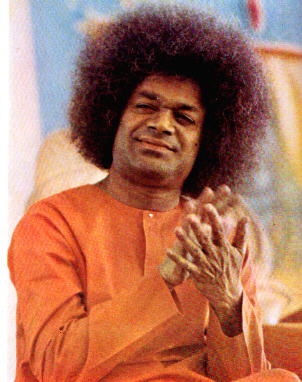
Vyasa too realized it was the beginning of another day. He said, "Son! I must be going now" and, taking the water-pot which he carried while journeying, he rose and blessed the king, who fell at his feet, in great sorrow. "Alas, that the dawn broke so soon! I have yet to grasp fully the grandeur and glory of my grandfathers! I have yet to fathom completely the depth of their devotion and sense of duty," he lamented.
He rotated in his mind the incidents he had heard and tasted their uniqueness. He was so filled with exaltation that he could not turn to the affairs of the kingdom. In fact, he avoided entangling himself in them and sought to be alone. He decided to go into the forest a-hunting, as an alternative. He instructed that arrangements be made for an expedition into the jungle.
Very soon, the men at the door brought the news that everything was ready, and the huntsmen and others had gathered in full strength. With a heavy heart, he dragged his body towards the chariot and placed himself in it. The attendants, with their equipments, moved on, both before the royal chariot and after, as was their wont. The king felt, for some reason or other, that so many need not accompany him; so, he asked some to return. When they advanced, a few herds were noticed moving about; that sight stirred the king to activity. He got down from the chariot, and with the bow kept in readiness, he stalked the animals with a few men following him. The herds scattered in fear, with the huntsmen in hot pursuit. The king had his aim fixed on one group of fleeing animals and he sped behind it, unaware that he was alone, cut off from his attendants who had gone on different trails.
He had trekked a long distance and could not bag any beast; a fierce thirst began tormenting him; he was exhausted beyond endurance. Frantically, he searched for water. Luckily, he espied a hermitage, a cottage thatched with grass. Highly expectant, he hurried towards it. There was no one in view! The place appeared empty. He called out very distressingly, as loudly as he could manage. With his feeble throat He shouted, "Thirst", "Thirst", plaintively. There was no reply from the cottage. When he entered he found therein, an ascetic engaged in meditation. He went near him and addressed him pathetically, "Sir", "Sir". But, he was so lost in the depths of meditation that there was no response at all.
At this, the king was overcome by resentment and a fierce gust of anger. Having come to a hermitage and seen the hermit, he was still helpless with hunger and thirst; this wounded his pride, for, he was the Ruler of the realm and the hermit had dared to dwell within himself, when he had come before him and called out for him. He became blind to the rules of propriety, for, he could hardly control his anger. His feet trod on some rope on the floor; he discovered it was a dead snake. That put a wicked idea into his head, quite by a twist of fate. He threw it round the neck of the hermit, sitting like a statue, heedless of other's distress; and, then, he left the hermitage and walked away fast, to seek some other place to slake his thirst and get some food.
Some boys saw him emerge from the cottage; they entered the place to find out, why he had gone in and what had happened there, for he looked a stranger and he was gorgeously dressed. They saw round the neck of the sage Sameeka, a snake! They went closer and examined it, to discover that it was dead. They wondered who could have done this atrocity. They surmised it must be the handiwork of the man who had just left the hermitage. So, they ran out and informed the son of Sameeka, who has engaged in games with his comrades. He did not lend his ear to their story, for he thought that no one would insult his father so. He busied himself with the game; but, the boys repeated their tale and insisted on his verifying its veracity, seeing the plight of his father with his own eyes.
Sringi was amazed at their insistence and he got afraid that the incident might actually have happened! He ran into the cottage and found that the unbelievable had happened! He sought to find out the culprit who had perpetrated this atrocity against his revered father. He came to know that a person in royal robes had gone in and come out, and that there was no one else around, since morning. The boys concluded that it must be his handiwork. At this, he ran in the direction pointed by them to catch him; before long, he saw the person in regal clothing and his anger knew no bounds. He threw a handful of water at the king, slowly walking before him and pronounced the curse: "May he who threw the dead snake round the neck of my father be bitten by a snake on the seventh day and may he die that day of that poison". The boys around him appealed to him not to, but, he threw the curse at the king, nevertheless. Then, he went back into the cottage and slummed on the floor, in a corner, with his head aflame with anger.
"Alas, that my father had to suffer this ignominy, when I am alive and about; I could well have been dead. Of what use is a son alive, if he cannot prevent some one insulting his father?" He condemned himself thus and bewailed his fate, most pitiably. His companions sat around him and tried to pacify him; they abused the wrongdoer roundly; they tried to console the disconsolate boy.
Meanwhile, the sage Sameeka emerged from his inner bliss and entered the realm of consciousness. His eyes opened; he unwound the dead snake from his neck and placed it beside him. He saw the son weeping in a corner and beckoned to him to come near. He asked the reason for his grief and got from him the tale of the stranger and the dead snake. Sameeka smiled and said, "Poor fellow! He did it out of ignorance and you reveal your ignorance, weeping for it. I am not concerned with honor or dishonor. The knowledge of the Atma enables a man to keep himself on an even keel, neither rising when praised nor falling when blamed. Some boor must have played this silly prank; since you are yet boys, you are exaggerating it into a big crime; you are undergoing a mountain of grief over a mole-hill. Get up and go to the playground", he said. He made his son sit on his lap and gently stroked his head, so that his grief might abate a little.
Sringi told his father, "This is no prank played by a boor. This is a terrible sacrilege committed by an ego-intoxicated fellow, in the garb of a king". At this, Sameeka asked, What do you say? A person in the garb of a king? Did you see him? Did the king commit this stupid misdemeanor? This silly thing can never enter a king's head". The comrades of Sringi joined their voices and testified that they too saw the person responsible for this sacrilege. "Master! We saw the dead snake and we ran to where Sringi was and brought him here. Sringi got so angry that he took the water of the Ganga in his hand and threw it at that person who was walking very fast, pronouncing at the same time, with appropriate ritual formulae the curse: let the person who placed the dead snake die of snake-bite, the seventh day from today."
Sameeka was shocked at this news; he was astonished at the behavior of his son. He pushed him out of his lap on to the floor. "What! Did you throw a curse like that? Alas, that the son of a sage should have behaved like this? What a calamitous curse for this trivial offence! Yours is a wrong which can never be atoned; You are a disgrace to the group of comrades around you, for you cannot bear with fortitude such a silly, insignificant prank! I am ashamed to say that such a boy is my son. You have no strength of mind to bear such little affronts. 0, what a pity! Alas, that your childishness should plunge all sages and ascetics into ill-fame; people will say they have not got even elementary patience and fortitude! Do not show me your face; to see it is a sacrilege. To punish people for wrongs done is the duty of the king; not, that of the recluse in the forest. The recluse who pronounces curses is no recluse at all."
"Moved by the yearning to achieve the Vision and the Presence of the Guide and Guardian of all the Worlds, the recluse has given up all attachment; he has established himself in the forest; he lives on fruits and roots; he denounces all catering to the senses as detrimental to spiritual progress. That such horrid curses born of impatience and egoism should come on the tongue of a recluse is a sign of impending doom: it marks the dawn of the Iron Age of Untruth" Sameeka said.
"Alas! What a great sin you have added to your burden today", he remarked; he described to his son and his comrades the heinousness of the act that Sringi had done.
The pointed words of the father inflicted great pain on the tender heart of Sringi, the son; they fell like sword thrusts or hammer strokes; the poor boy could bear them no longer; he fell on the floor and grasping the feet of his father, he wailed, "Father pardon me. I was overcome by anger that the king himself should behave so outrageously insolent, so irreverently, so inhumanly. I could not control my resentment at the insult hurled on you. It is not proper that a king should behave like this, in this most inappropriate manner, having come into a hermitage; isnt it?"
Seeing his plight, Sameeka, the ascetic, took the son beside him and said, "Son, the compulsion of the moment is inescapable. The dictates of reason are often brushed aside by man, due to that compulsion. The drag of destiny will destroy the reins of reason. The force of the moment faces man with all its power and he cannot but yield. This king is a staunch theist, a deep devotee. He has earned spiritual splendour. He is established in moral behaviour. He is the lord of all the regions; his fame has pervaded all the three worlds. He is served always by thousands of loyal men and minds. When he leaves his mansion and moves out, he is accompanied by many guards who await with folded hands and eyes fixed on him, his least command, so that they may win his favour by executing them to his satisfaction. As soon as he enters a kingdom, the ruler thereof accords him a glorious welcome, offers him magnificent hospitality and respectful homage. A person accustomed to this rich routine was naturally shocked when he did not receive any sign of welcome here; he was not even recognised and respected; the neglect was so serious that he did not get a cup of water to alleviate his thirst. He was torn by the pangs of hunger, and of humiliation, for, there was no response even though he called out many times. So, unable to bear the agony and the shock, he was led to commit this improper act. Of course, it is a fault but, just for this small misdemeanour, when you reacted so harshly, you brought irreparable damage to the entire community of ascetics and hermits. Alas! What a terrible calamity have you called down!"
The aged hermit closed his eyes and sat silent for a while, seeking some means by which the king can be saved from the curse. Finding none, and realising that God alone can set such things right, since He is all-powerful and all-knowing, he prayed with all his heart. "0, Refuge of all the Worlds! This immature little boy, with no knowledge of right and wrong, of what is one's duty and what is not, prompted by ignorance, has committed this great blunder, harmful to the king. Pardon this boy or punish him; but, promote the welfare of the king."
The hermit opened his eyes. He saw the ascetics and the young comrades of his son who stood around him. In sadness, he told them, "Did you notice the injury that my son has perpetrated? It is not right that we, hermits, should insult and injure the king who is the guardian and guide of humanity, isnt it?
Therefore, I request you all to pray God that the king should come to no harm and that only auspicious things be added unto him." When the Rishi Sameeka directed them thus, an aged monk rose from the group; he was the very picture of peace and resignation; he said, "Great Soul! You are showering such profuse Grace on this king. The person who pronounced this curse is your own son; surely your spiritual attainments are much higher than your son's and, you can achieve anything, through them. Why then are you so much concerned about the curse that this boy hurled at the king? You can make it ineffective, can't you?" At this, the rest of the group, the elders and the young ones, exclaimed, "True, true; listen to our prayers and pardon this boy. Bring about the welfare of the king and save him from harm."
The sage Sameeka smiled; he closed his eyes; he saw with his inner yogic vision the past and the future of the king, and examined whether his present was conditioned by his past or by his future. He found that Parikshith had to suffer the poison-bite of the cobra, Takshaka and that this was his destiny. He felt that trying to save him from this end will be going counter to the dictates of Divinity; he realised that the misbehaviour of the king and the angry reaction of his son were both the consequences of that compulsive urge. He concluded that only God, the artificer of all resolutions and achievements, can modify events and that, any effort on his part would amount to an exhibition of egoism.
He knew that egoism is the deadliest foe of hermits; but, yet he did not amass his undoubted strength against it and destroy it completely. He decided to render what little help he could to the unfortunate king of the realm. Opening his eyes, he looked on all four sides to select a clever disciple of his from among the gathering. At last, he called one student to him and said "You must proceed immediately to Hasthinapura and return; prepare yourself for the journey and come to me again." The student replied, "I am ever ready to obey your command; what have I to do with preparations? I am ever prepared. I can start this very moment; tell me what I have to do there." With these words, he fell at his feet and offered his obeisance. The sage rose from his seat and took the student into the inner apartment. He told him in detail all the points that he had to inform the king. Then, the student fell at the master's feet and set out towards the capital.
Meanwhile, the king had reached his palace and after a short rest, he awoke into a realisation of the enormity of the wrong that he had done at the hermitage. "Alas, into what depths of foulness did my mind fall! It is indeed heinous sin that I, the emperor, should cast an insult on that ascetic." He lamented within himself. "How am I to make amends for this crime? Shall I go to that hermitage and plead for pardon? Or, shall I offer my head to bear the punishment that is my due? What exactly is my duty, now?" He struggled with himself for an answer. Just then, he saw a guard who came up to the door and stood silent with folded arms. He asked him why he had come. The man said, "A student from a hermitage has come and is waiting for audience; he says, he has been sent by the sage Sameeka; he says his message is very urgent and important; he is in great hurry. I am awaiting royal orders."
When these words fell on his ears, the bed of jasmine flowers on which he was reclining appeared to have been transformed into a bed of snakes with fiery tongues, hissing and writhing all around him. He called the guard to come near him and he pelted question after question at him about the young man who had come from the hermitage: how is he? does he appear sad or angry? or, is he brimful of joy and equanimity?
The guard replied, "0 King! The sage's son who has come to have your audience is quite calm and peaceful. He is repeating the words, 'Victory to the king', 'Victory to our Ruler.' "I do not see any trace of anger or passion on his face." This gave the king some comfort. He sought to find out what reply had been given to the questions asked by the young student. The guard said, "We told him, the King had been to the forest, he returned only just now, he is taking rest for a while; please wait for some time; as soon as he breaks his rest, we shall inform him". The king inquired, "What did he say in reply to this?" The guard said, "Lord! The young man was most anxious to see you as quickly as possible. He said he had some urgent message to communicate; he said, his master would be awaiting his return and counting the minutes. He said that the sooner he sees you the better. He was repeating within himself all the time, 'May it be well with the king', 'May safety and prosperity be on him'. We offered him a high seat and invited him to occupy it, but, he did not accept it. He preferred to stand at the door; he is counting minutes there."
Tears of joy welled within the eyes of the king. Wiping them off, he hurried towards the entrance, without donning regal robes or insignia, without caring even to wear sandals or a robe over the chest. He fell prostrate at the feet of that son of a hermit; he held both his hands in his own and led him into the inner apartments, where he placed him on a high seat and himself sat on the floor beneath. He prayed that he might be told the reason for the journey.
The student said, "0 King! My master, Sage Sameeka sends you his special blessings. He has commissioned me to communicate to you some special matters," and broke into tears. Seeing this, the king exclaimed, "Well, tell me soon; if anything has to be done by me, tell me soon; I am prepared to lay down my life in the discharge of my obligations. Or, is my kingdom in any danger? Have I to take any measure of relief? I am ready to sacrifice anything for saving it.
The student messenger replied, "0 King! No danger threatens the realm or the hermits. No fear can ever bother them. You are the very person whom dangers threaten, whom harm will overtake." When he gave this subtle warning, the king declared exultingly, "I am indeed blessed. When my subjects and the hermits engaged in asceticism are safe, I do not in the least care what happens to me. I inhale and exhale so that I can ensure peace and prosperity for them both." The king quietened after some time and asked the Disciple, "Now tell me what your Master wanted me to know." He replied, "King! My master is very much concerned over a grievous wrong that has been committed, out of sheer ignorance. That is the prime reason tor his sending me to you."
Hearing this, Parikshit was very much agitated. He asked, "What is the wrong, you speak about? Who did that wrong? Tell me, tell me all," he pleaded.
Chapter 28: Death, Seven Days Ahead
"0, Emperor, our Preceptor has a son; though he is of tender years, the splendour of his spiritual attainment is overwhelming. He reveres his father as his God and has as his chief aim in life, his service and the upkeep of his renown. His name is Sringi. You came to that hermitage; propelled by some inscrutable impulse, you placed a dead snake round the neck of the father of this Sringi, who is also my Preceptor. A few children saw it and they ran towards Sringi, who was engaged in games with his comrades, to inform him. He did not believe it at first; he continued with his game. But, the children of the hermitage repeated the news often and insistently; they jeered at him for merrily playing on, when his father had been insulted so grossly. Even his playmates laughed at his callousness. So, he ran as fast as he could towards his cottage, and found that their report was true.
When he turned back, he saw you moving off from the place and, without any sense of discrimination about what is of lasting significance and what is of temporary interest, urged on by frantic passion and anger, that teenage fellow lost control over himself ... pronounced a curse on you. This has caused unending pain to my Preceptor." The Emperor interrupted him and asked, "0 son of a hermit, tell me what the curse is." The youth replied, "Lord, I find it hard to tell you. My tongue refuses to utter it. But, yet, I have to communicate it since my preceptor has commissioned me to do so. The son of my Preceptor promptly took the waters of the holy Kowsiki river in his palm, and pronounced, "Seven days from this day, may the King be bitten by the snake, 'Thakshaka', a terrible curse, indeed." The youth stopped, for his grief overpowered him and he broke into tears.
But, the Emperor only smiled. He said, "Young hermit, is this a curse? To be bitten by Thakshaka, and that seven days later? This is no curse, this is a signal gift of Grace! This is a Blessing from the lips of the son of the Preceptor. Immersed in the affairs of the empire, I had become slothful regarding the affairs of the spirit, and of God, which are the goals of life. As a result, the merciful Lord, Hari, moved the tongue of that Rishi's son to articulate those words. He has allotted me an interval of seven days! What a great blessing is this! It must be Divine Will that I should spend every moment of these seven days in the contemplation of God. From this very second, I shall dedicate both Time and Thought, without intermission at the Feet of the Lord. Young friend, what more did your Preceptor command you to inform me? Tell me soon. My heart is yearning to hear it."
The young messenger continued, "My Preceptor felt that this curse amounted to unpardonable treason for, you are well established in Dharma, and you are a great devotee of the Lord. So, he sought for long to discover some means by which the consequences of the curse could be avoided; however, he came to know through his yogic skill, that you are destined to give up your life as a result of snake-bite and destined also to reach the Seat of the Lord on death. He felt that this was an end, which was worthwhile; and that it was sinful to obstruct such a glorious consummation. So, he sends you through me his blessings that you may reach the Presence of God. I have now finished my mission. I can leave, as soon as you permit me."
Parikshith prostrated before the young disciple and prayed that his reverential gratitude may be communicated to the great saint Sameeka and his son. At this, he left and reaching the hermitage, he informed the hermit all that transpired at the capital.
Meanwhile, the emperor proceeded in great joy to the inner apartments and standing before the entrance of the zenana, he asked that his son, Janamejaya, be brought to him. Hearing the call the son wondered why he was summoned so suddenly and he ran towards the father. Parikshith got an old Brahmin into his room, and placing on the son's head his own crown lying on the cot, he walked barefoot, with just the clothes he had on, at the moment, towards the Ganga, entrusting the new King to the old priest.
Within minutes, the news spread allover the place and all through the City; groups of men and women, brahmins and ministers hurried behind the king and remonstrated piteously; but, it was all in vain. They wept aloud; they fell at his feet; they rolled along the road across his path. The king did not notice anything; he vouchsafed no reply; he moved on, with the Name of the Lord in his mind and the Goal of Realisation in his thought. He was fast moving towards the bank of the Holy Ganga. Finding that the King had been left alone, and unattended to the River, the Royal Elephant, the Royal Horse, the Palanquin were taken in a line behind him, so that he may ascend any one of them as was his wont; but, the King did not pay any attention to the importunities. The populace were amazed to see their ruler discard food and drink; he was engaged without a moment's break in the recitation of the Name of the Lord. Since no one knew the reason for this sudden resolution to renounce, all sorts of rumours got afloat based on the imaginative faculty of each individual.
But, some people investigated the antecedents of the event of renunciation and discovered that the disciple of a hermit had come with some important news, and following that cue, it was known that the king had only seven days more to live; the people gathered on the bank of the river and sat sunk in grief around the king, praying for his safety.
The tragic news spread so fast that it reached even the forest. The ascetics and Sadhakas, the sages and saints - they too trekked along to the bank of Ganga, with water pots in their hands. The whole place put on the appearance of a huge festival. The place resounded to the chanting of the Pranava, the recitation of Vedic hymns, and the singing in chorus of the glory of the Lord. Some groups were roundly scolding the son of Sameeka who was the cause of all the tragedy. Thus, in a short time, the bank was filled with human heads, so that not a grain of sand could be seen.
Meanwhile, an aged hermit who was filled with great pity and affection towards the Emperor approached him and, shedding tears of love, he spoke to him thus: "0 King! people say all kinds of things; there are many versions going round from mouth to mouth; I have come to you to find out the truth; I can walk only with great difficulty. I love you so much that I cannot bear to hear all that people say about you. What exactly did happen? What is the reason for this sudden act of sacrifice? What is the mystery behind the curse that the son of a hermit pronounced on such a highly evolved soul as you? Declare it! Satisfy our craving to know the truth. I cannot look on while the people are suffering like this; you were like a father to them. Now, you pay no heed to their pleadings. You have given up all attachments and come here. Speak to them at least a few words of solace. With you, sitting silent and hungry on the river bank, engaged in rigorous asceticism, the queens and ministers are like fish thrown out of water. Who was that young man, whose words caused this disastrous storm? Can he be genuinely the son of a hermit? Or, is that only a disguise? It is all a mystery to me."
The King listened to these words, spoken with such affection and equanimity. He opened his eyes, and fell at the feet of the sage. "Master! Mahatma! What have I to hide from you? It cannot be hidden, even if I want to. I went into the forest a-hunting. Many wild animals were seen but they scattered at our approach. The small band of bow men that was with me was also scattered in the attempt to pursue the animals. I found myself alone on the track of game and I was far away from my retinue. I got no game; I was overcome with hunger and thirst; the scorching heat exhausted me; at last, I discovered a hermitage and entered it. I came to know later that it was the cottage of Rishi Sameeka. I called out repeatedly to discover whether there was anyone in. No answer came, nor did any one come out. I saw a hermit sitting in deep meditation, lost in his own Dhyan. While coming out from the cottage, I felt something soft under my foot. I lifted it with my fingers and found it was a dead serpent. As soon as my eyes fell on it, my intelligence was poisoned; a foul thought came into me; I placed it round the neck of that hermit engaged in Dhyan. This was somehow recognised by the son of that hermit; he could not bear the ignominy. He cursed, "May this snake round the neck of my father take the form of Thakshaka and end the life of the man who insulted my father thus, on the seventh day from today."
"News was sent to me from the hermitage, of this curse and its consequence. I am conscious of the sin I have committed; I feel that a king capable of this sin has no place in the kingdom. So, I have given up everything, every attachment. I have decided to use these seven days, for the ceaseless contemplation of the Glory of God; it is great good fortune that this chance has been given to me. That is why I have come here."
Thus, when the nobles, courtiers, princes, queens, ministers, hermits and others who were around him came to know the true facts they dropped from their minds the wild guesses they had made so far; they prayed aloud that the curse may lose its sharpness.
Chapter 29: The Dialogue Begins
Some ascetics who heard the story of the curse from the lips of the King were so incensed at the 'son of Sameeka' that they declared he must be a fake, an unworthy child, for, no child born of a Rishi of the 'stature of Sameeka' will ever pronounce such a devastating curse, for such a trivial misdemeanor. He must be an ignorant fool or a madcap, they guessed. How can the curse emanating from the tongue of such a one take effect they asked? The King cannot come to harm, as a consequence of his curse, they affirmed. They tried to convince the King that he need have no fear on that account.
Many who felt similarly argued that the King had no reason to take the curse seriously, but, the King was unmoved. He replied to them with folded hands: "You are thinking and speaking on these lines, prompted by sympathy and kindness towards me. But, I know that the wrong I have committed is not light and inconsiderable. Is there a more terrible sin than casting insult on those deserving reverence? Besides, I am the King, responsible for their welfare and the maintenance of their honor. How can my act be dismissed as light and inconsiderable? Moreover, if you only consider it deeply, the curse pronounced by the boy is no curse at all. It is on the other hand, a great big boon.
For, I had fallen into the well of sin called empire; I had deluded myself into the belief that pleasure is the be-all and end-all of life; I was leading the life of a mere beast; I had forgotten God and my duty towards Him. God Himself has, by this means and through this instrument, directed me along the correct path. God has blessed me. This is a boon, not a punishment for past wrongs, as you imagine".
When the King spoke thus, tears of joy and thankfulness flowed from his eyes; he was visibly moved by extreme sincerity and devotion. He was uttering what he felt in calm, unruffled contentment. The ascetics and the subjects around him were amazed at his equanimity. They knew his declaration was true.
The aged ascetic rose and standing before the wailing populace, he addressed the gathering thus, "O Best of King! Your words are rays of sunlight to the hearts of the ascetics; they are so appropriate to your lineage and upbringing; for, you are a Pandava born. The Pandavas never even once slipped into wrong or sin. They held fast always to the Feet of Hari, the Lord; they stuck to the commands of the Lord, unwaveringly. When the Lord returned to His Abode, they gave up the kingdom as a result of spontaneous renunciation; they left for the northern regions. You too are today following this holy path, since you belong to this great clan, which has inherited this way of life."
At this, the King prayed to them, with palms folded in adoration: "O best among ascetics! I have just one doubt; please remove it from my mind. Make my days worthwhile." "Tell me what it is," responded the ascetic. The king asked that he be informed what the man for whom death is imminent can best do. At this, one sage rose and said that, so far as time permitted, one could perform yajnas or yagas, or one could engage himself in japa or thapa, acts of charity or pilgrimages, or fasts or ritual worship. Another declared that liberation can be acquired only through the acquisition of Jnana, "Jnaanaa devathu Kaivalyam;" a third spoke of the supreme importance of holy acts prescribed in the Vedas and Sastras, "Karmanyai vahi samsiddhi." Some others argued that cultivating devotion to God is the best method of using the week, "Bhakthirvasah Purushah," the Lord is won over by devotion alone. In this confusion of conflicting opinions, the king sought the true path and the ascetics were silenced by the persistence of the king to get a real answer to the problem he had posed.
Meanwhile, a youthful ascetic, with an extra-ordinarily bright face, and a personality of attractive splendor, moved through the gathering of aged sages, like a fast stream of light and reaching the presence of the king he seated himself on a height. The onlookers were amazed at this sudden appearance. Some among them were stricken with curiosity about his antecedents. To all outward appearance, he was a 'munikumar' that is to say, the son of an ascetic. But, his stance, his pose and poise, his personality - all affirmed that he was a Master. In years, he was quite tender. Yet, there was a divine halo, bathing him.
Very soon, one wise old sage, identified him and approached him reverentially with folded palms. "Blessed indeed are all of us. This ray of Divine effulgence is no other than Sri Suka, the precious offspring of Vyasa-bhagavan." Introducing the stranger thus to the gathering, the sage continued: "From the moment of birth, this person is free from all attachment. He is the master of all knowledge." The king who heard this shed tears of gratitude and joy. He rose like a kite in the air, so light and full of joy, and fell prostrate at his feet. His palms were folded in prayer when he stood up; he was straight and silent as a pillar. He was immersed in bliss. He visualized the youth before him as Krishna Himself. The splendor of Suka was too brilliant for his eyes. His charm appeared to the king, equal to the God of Love. The black curly rings of hair moved like black serpent-hoods hovering over the white oval face. As stars amidst the dark clouds, his eyes shed cool luster and shone extra-ordinarily bright. A smile showered drops of joy from his lips.
The King neared Suka, with slow steps; his voice was broken and indistinct his throat was quivering with emotion. He said, "Master! I have no strength to describe the depth of your grace. Every act of yours is aimed at the welfare of the world. It is indeed my fortune that I had your Darsan today, so easily, for, I know it can be won only by protracted and persistent effort. 0, how fortunate am I! I must ascribe it to the merit earned by my grandparents". The King was overcome with grateful joy at the presence of Suka; he stood with tears of joy streaming from his eyes.
With a smile hovering on his lips, Suka directed the King to sit by his side. He said: "0 King! You are no doubt straight and steadfast in moral conduct. You are ever intent on the service of the good and the godly. Your meritorious life has drawn this large gathering of sages around you, this day. Or else, these ascetics who are concerned with spiritual discipline would not have left their schedules to come here and pray that you may attain the realization of the Highest. This is no act of charity! You have earned this gift by many lives spent virtuously and well."
The King was gazing with devoted admiration at the face of Suka, while he was speaking to him. Suddenly, he raised his head and addressed the young sage thus: "Lord! I have a doubt pestering me. Remove it and give peace to my heart. I was laying it before this assembly when you came. You can, I know, solve that doubt, in a trice. It must be child's play for you." Suka interrupted him and said, "Parikshith! The reason I came to you is to solve this doubt that is pestering you. You can ask me what you have in mind. I shall resolve your doubt and grant you satisfaction". When the great Suka uttered these words, the sages who had gathered, exclaimed, "what great fortune!" "Blessed indeed!" and clapped their hands in joy so loud that the acclamation reached the sky.
The King spoke humbly and with evident anxiety, "Lord! What should a person facing death who is aware of the oncoming of the end, engage himself in? What should his mind dwell upon? After succumbing to death, he should not be born again. When that is his prayer, how should he spend the days at his disposal? This is the problem that is bothering me at present. What is my highest duty?" the King pleaded again and again for guidance.
Suka answered: "King! Withdraw your mind from worldly thoughts and fix it on Hari, the Lord who charms all hearts. I shall instruct you in the wisdom of the Divine, the Bhagavathathatwa. Listen to it with all your heart; there is no activity holier than that. There can be no greater spiritual exercise, or discipline or vow. The human body is a worthy boat; the story of Hari is the rudder; this world of change, this constant flow, this Sansar, is the sea. Hari is the boatman! Today, this sacred equipment is available for you.
The problem you have raised is not concerned with just one individual, the whole world is concerned with it, and its solution. It is the most vital of all problems that deserves inquiry. The Atma principle is the panacea for all beings. That is the ultimate Truth. No one can escape it. To establish oneself in that faith during the final days is the duty of living beings. It is on this basis that status in the next birth is determined. So, the question that you asked, the doubt that you raised, are matters of great moment for the welfare of the whole world. The answer is not for you alone. Listen."
Chapter 30: The Science of Salvation - The Bhagavatha Path
"Maharaja! The great Tree that Bhagavatha is, truly inspires reverential awe. It has, incorporated in it, every conceivable source of auspiciousness and joy. The Lord, Sri Narayana is the seed from which it has sprouted. The sprout is Brahman. The trunk of the Tree is Narada. Vyasa constitutes the branches. Its sweet fruit is the nectarine story of Krishna. Those earnest souls that yearn for that nectar, and pine plaintively, regardless of bodily comfort or the passage of the years, until they secure the fruit and imbibe its essence, such are real saints and yogis.
0, ye ascetics and sages! This day, I am relating to you that Bhagavatha Sastra, that enchanting story of Krishan; treasure it in your memory and save yourself from delusion and grief, You have listened to the recitals of all Sastras already. You have also mastered all Sadhanas. But, you have not known the greatest of them all. I shall now give you the sacred Name of Krishna and the Sweetness that is flowing from it. It is the sweetest name one can conceive; when it falls on the ear, the heart is filled with joy; when you recall the Name to memory, a stream of Love springs from the heart. The Bhagavatha inspires and promotes deep devotion to Lord Krishna.
The Universal Absolute, the Birthless Formless, Unmanifest, Infinite, too on limitations of Name and Form, and concretized Itself as Avathars (Incarnations) on many occasions and manifested countless instances of Divine Intercession and Grace. Through these, as well as the characteristics assumed and the ideas propagated, God saved mankind from downfall. Those who sing the story of this Glory, those who listen eagerly to the recital, those who imbibe and digest the lessons conveyed, these are the real devotees. They are the Bhagavathas, those who follow the path laid down in the Bhagavatha. Bhagavatha binds Bhaktha with Bhagavan; that is to say, the Story fills you with God, and transmutes you into Divinity.
God incarnates, not merely for the destruction of the wicked; that is just an excuse, one of the obvious reasons. Really speaking God incarnates for the sake of Bhakthas (faithful devotees). The cow has milk primarily as sustenance for its calf. But, it is used by man for maintaining his health and efficiency. So too, God incarnates, primarily for the sustenance of the faithful, the devoted, the virtuous and the good. But, even the faithless, and the bad, use the chance for their own purpose. Therefore, in the Bhagavatha, stories of such wicked persons intervene amidst the accounts of the Glory and Grace of God. This does not make the Bhagavatha any the less holy. When the sweet juice has been squeezed out of the sugarcane, the bagasse is discarded. When the sweetness of Divine Majesty has been tasted, the bagasse can well be thrown out. The cane has both bagasse and sugar; it cannot be sugar only. So too, devotees have to be amidst the faithless; they cannot be without the others.
God has no bondage to time and space. For Him, all beings are the same. He is the master of the living and the non-living. At the conclusion of every aeon the process of involution is completed in the Deluge; then, evolution starts again and as Brahma, He creates beings again. He enlightens every one with a spark of His own Glory and fosters every one of them on the path of fulfillment, as Vishnu. It is He again, who as Siva, concludes the process by the destruction of all. Thus, you can see that there is no limit to His Might, no end to His Potence. There can be no boundaries for His achievements. He incarnates in countless ways; He comes as an Incarnation of a Kala (fragment) of His, or an Amsa (part) of His; He comes as an Inner inspirer for some definite Purpose; He comes to close an epoch and inaugurate another (Yugavathar). The narrative of these Incarnations is the Bhagavatha.
The One Divine Principle works through three Forms, as Brahma, Vishnu and Siva, in order to manipulate and complete the process of becoming a being, called Srishti. The three are fundamentally of the same essence; there is no higher or lower; all three are equally Divine. Associated with Creation, He is Brahma; with Protection, He is Vishnu; with Dissolution, He is Siva. When He comes down assuming special form on special occasions for a specific purpose, He is known as Avathara. In fact, Manu and Prajapathi and other Persons are Divine Persons entrusted by Brahma with the mission of peopling the world. Everything happens in consonance with the Divine Will. So, we can assert that the saints, sages, ascetics and men both good and bad, are all Avatharas of the Vishnu Entity. Avatharas are as countless as living beings are, for, each is born as a consequence of Divine Will. But, the story of the Yugavathar alone is worth perusal for the Advent is to restore Dharma and moral life. The story of all the rest is but a story of distress and despair.
Brahma deputed Manu to proceed to the earth and to create living beings thereon; Devi, the Feminine Principle eluded him and took the Earth into the nether regions. Brahma then had to seek help from Vishnu (Hari) and He assumed the Form of a Boar and brought the Earth, from the nether regions, and placed it among the waters.
Later, the Earth was so incensed at the atrocities of Emperor Venu, she kept all the seeds sown, within herself and did not allow them to sprout. So, all beings were afflicted with the agony of hunger. The earth became a medley of hills and valleys with nothing green on it. Then, the Lord assumed the Form of Prithu, who leveled the surface and added fertility to the soil and induced the growth of agriculture and promoted the welfare of mankind. He fostered the Earth like his own child and so, the Earth is called Prithivi. He is said to have built the first cities upon the earth.
That is to say, it was the Lord's Will that it should be done so. It is that will which is being worked out. The Lord originated the Vedas, for the preservation of man, through the practice of morals and spiritual exercises. The Vedas contain Names that will liberate beings, and the rules and regulations that will guide. When the Asuras or the Evil-minded threatened to steel the Vedas, they hid themselves in the waters and the Lord assumed the form of a Fish to recover them. He saved the Seven Sages and Manu from the same waters. This is the reason why it is said that the Lord incarnated as a Fish.
0, ye ascetics! 0, King Parikshith! Doubts may arise in your minds when you hear the story of creation and the early history of man on earth. The processes of the Divine Will are mysterious wonders; they cannot be grasped by the faculties with which you measure earthly events. Often, they may strike you as devoid of any basis but, the Lord will never involve Himself in any deed without proper cause. That Will need not be explicable; it is its own prompter. Everything everywhere is due to His Will.
To initiate Creation, there must be some attraction that will act as the urge. So, Brahma had to become two, in body and activity. The One Body was transformed into two and therefore, where there was one Will formerly, two appeared, one which attracted and the other which was drawn towards creation, the feminine and the masculine. Since the one attracted in a hundred distinct ways it was called, Satharupa (hundred-facetted) and Beloved of Brahma (Brahmapriya). The other was named, Manu. These two gained renown in the first stage of creation. Satharupa and Manu were the first progenitors.
Satharupa and Manu together approached the Lord of Creation and inquired what they had to fulfill. Brahma replied with a smile, "Be mates of each other; beget and people the Earth." Equipped with the authority derived from this command, they filled the earth with people, said the sage Suka, to the King.
At this the King interceded: "Master! I have learnt from my own experience that the origin of all grief in this world is Infatuation or Moha. I have no desire to hear about these matters; please relate to me how to overcome infatuation, delusion and attachment. In these last days, what exactly has man to do? Which Name has he to keep constantly in mind so that he can avoid for ever this round of birth and death? Tell me these things," he asked.
Suka was very much delighted, at this query. He replied, "0 King! you are a spiritual soul. You serve sages with devotion. This large gathering of monks, ascetics and sages is proof of your meritorious acts. For, these do not usually congregate in any place." The King interrupted him, with his protests. "No, no, my Lord! I am a great sinner; I have no trace of spiritual progress in me. If I had the least merit, if I had served sages devotedly, I would not have become the target for the curse of the Brahmin. The fortune that I now enjoy, namely, the company of these great sages and the chance of adoring your feet, is the consequence of the meritorious acts of my forefathers. I know fully well that my activities have not contributed anything to it. The grace that Syamasundara (Krishna) showered on my grandparents is the cause. Had it been otherwise, can persons like me who are sunk in the well of Samsar, immersed in the vain pursuit of sensory pleasure, who do not contemplate for a moment the True, the Eternal and the Pure - can we ever hope to see before us, in concrete form your presence, ever roaming in the silences of the forests, unknown to man? Really, this is an unattainable piece of good fortune. All this is due to the blessings of my grand-parents, and the Grace of Syamsundara (Krishna), not to anything else. You are full of affection for me and so, you attribute this to my own merit. I am only too aware of my failings.
Kindly continue to shower on me the same affection, and help me to decide what has to be given up by a person whose death is imminent, what has to be adopted and practiced by him. Advise me this and make my days worth while. You alone can solve this for me. Relate to me the Bhagavatha, as you said you would. You told me that it is the basis for progress and for liberation; it will destroy sins; it will result in prosperity. Let me quaff the sacred nectar of the Name of Krishna and refresh myself, in this feverish heat, he pleaded.
Suka smiled at the King and said, "The Bhagavatha is as worthy of reverence as the Vedas, as worthy of study and observance. At the end of the Dwapara age, on the Gandhamadana mountain, in the hermitage of my father Vyasa, I had listened to that sacred text. I shall repeat the same to you. Listen." At this, the King inquired, with his palms held together in prayer, "0 Incomparable Sage! I have heard that you were an ascetic deep in detachment from the very moment of birth. Even without the traditional ceremonial rites which purify and clarify the intellect, (such as Jathakarma, Namakarana, and Upanayana) you had won the fullest awareness of the Reality, and hence, I have heard you were moving about in the consciousness of that Truth, away from men, in the forests. Hence, I am surprised that your heart was drawn towards this text, which, you say, is saturated with devotion. What caused your interest in this path? I pray that you describe the circumstances to me."
Suka started explaining with a calm unruffled countenance. "Yes. I am beyond prescriptions and prohibitions. I am in unbroken mergence in the attributeless Nirguna Brahma. That is the truth about me. Nevertheless, I must declare, that there is an inexpressible sweetness in God that attracts you and captivates you by His Sportive Activities and Attributes. I must confess also that I have listened to the description of the beauty and the sweetness of God. My mind delighted in hearing and reading the Glories of God, manifesting His Divine attributes, through each of these. I could not remain at peace; I exulted like a mad man, thrilled by the bliss I derived from listening and reading. His sweet pranks and sports intoxicated me with infinite joy. This day I came hither, since I became aware that a chance has arisen to relate them to a group of eager listeners, persons who, in all respects, deserve to hear them, and understand their significance. Therefore, I shall relate that sacred Bhagavatha to you and through you, to the personages gathered here. You have the avidity and the attainment necessary to listen to it. You have resolved to achieve the Highest Goal of Man.
Those who listen to this narrative with earnest devotion, (not merely listen) and reflect upon its value and significance and act according to the Light it sheds on their minds, such will merge in the Bliss of which Vasudeva, the Lord, is the embodiment. Their hearts will be filled with the sweet nectar of the Personification of Captivating Charm (Madanamohana) and they will experience the Adwaithananda, the Bliss of being One and Only. The highest Sadhana is the recitation of the Name of God with full vigilance of thought, feeling and utterance (Manovaak-kaaya) and the loud singing of His Glory. No better Sadhana exists.
O King, do not lose yourselves in anxiety that time is short. Not much time is needed to win the Grace of God. The rays of Grace from that Embodiment of Compassion can fall on you as quick as the wink of the eye. I shall enable you to listen during these seven days, the stories of many who experienced spiritual bliss, how Vasudeva blessed them with spiritual progress, how persons crossed the Ocean of Birth and Death through the hearing of such stories and the singing of the Glory of God that is manifest in them. We shall not waste a single moment. You are conscious that you have only seven more days of life. Therefore, give up all sense of 'mine' and 'thine', of the body in which you live and the home in which the body lives. Be aware only of the story of Madhava, The Lord of the Universe; drink the nectarine narratives of the Incarnations of the Lord. It is quite a common occurrence that stories are told and heard by gatherings of thousands. But, Jnana can be achieved only by placing complete faith in what is heard. That faith must result in a cleansed mind, a pure heart.
One further point, O King! There are countless exponents who go about discoursing on morals and spiritual matters on the basis of mere study; they do not have an iota of experience of what they preach. They have no faith in the authenticity of the various Manifestations of Divine Glory which they dilate upon. Such exhortation is as ineffective as offerings of ghee, made, not in flames but on a cold heap of ashes. It will not cure the mind of faults and failures.
In your case, there is no fear of such ineffectiveness, Your heart is immersed in the uninterrupted flood of Love for Shyamasundara (Krishna). Whoever listens to this narrative and imbibes the nectar of this story with a heart, bubbling over with Divine yearning, unshakeable faith in God, and constant joy can attain the realization of the Self. This is beyond the realm of doubt. 0 King! This occasion, this text and this listener are all quite appropriate and excellent.
Saying, "0, how fortunate you are!", the sage Suka placed his hand on the head of the King in benediction; he caressed the thick curls of his hair. The King pleaded most humbly, "Master, You know too well that I have very little time before me." Therefore, he continued with folded palms, "give me highest guidance, and I shall get myself established in it, all these seven days. Give me the holy formula so that I can repeat it in the short time I have, and keep it fresh in memory and save myself".
The sage laughed. "Parikshit! Those who are intent on sensory pleasures spend their days in worry, in anxiety, in pain, grief and tears throughout a long period of life, they breed like birds and beasts; they eat good food and cast it away as urine and feaces. This is the purposeless life that most people lead. Can you call this, the process of living? Enormous numbers of living beings exist on the earth. Living is not enough; it has no value by itself, for itself. It is the motives, the feelings, the thoughts, the attitudes that prompt the day to day life that matters. If a person has divine qualities manifesting themselves as thoughts, feelings, etc., then he is alive. Instead, if a person defiles the holy encasement of his, (body) by utilizing it for unholy purposes that cater to momentary happiness, thereby ignoring the All-knowing, All-powerful Providence, it is to be condemned as a calculated denial of one's humanity. Take the case of a person who has fixed his mind on the Lotus Feet of the Lord (Hari); it does not matter if he is short-lived. During that short period, he can make his life fruitful and auspicious. 0 King, to remove your doubt, I shall tell you the beautiful story of a Rajarshi. Listen.
In the Solar Dynasty, there was once a ruler who was mighty in prowess, heroic on the field, prolific in charity, upright in character, and just in his dealings. He was named Khatvanga. He had no equal, no one who could challenge him. Meanwhile, the wicked Daityas and Danavas mustered their forces and went to war against the Devas (gods); the gods were afraid of being overwhelmed; they realized their weakness and came down to earth and sought help from King Khatvanga. The king was also longing for the adventure of battle; so, he collected his bow and arrows and riding his chariot, he proceeded to the scene of war. There, he shook the hearts of the Daityas and Danavas by sheer terror of his valour. The enemy fled in panic, unable to withstand the terrific onslaught. Since it is immoral to subject a fleeing foe to hot pursuit, Khatvanga desisted from further clashes.
The gods (Devas) were happy that they could achieve victory through the timely help of Khatvanga. They praised his might and his sense of righteousness. "0 King, there is no one who can compare with you, in contemporary history. You granted us triumph in this deadly struggle against the forces of evil. We desire that you should accept from us in return any help that you need that we can render." The King told them, "Ye gods! Yajnas and Yagas are performed by men to please you, isn't it? This battle in which I had the privilege to participate is therefore a Yajna, so far as I am concerned. What else do I need from you than this Grace that you have showered on me? This is adequate boon." Declaring thus, he fell at the feet of the gods.
Not satisfied with this reply, the gods compelled him to ask for something, some boon from them. Though he had no mind to ask anything, he was forced to frame some wish, since he felt he would not be left alone. At last, he said, "Ye gods! Reveal to me how many years more I shall live. Only then can I decide which boon I can ask from you." Purandara (Indra), the monarch of the gods is all-knowing and so, without a moment's delay, he replied, "0 King, your span of life is very nearly over. You can live only for one more Muhurtha (a period of a few minutes [about an hour, edit.])." On hearing this, Khatvanga said, I have nothing to ask. I do not need anything. I feel that all the pleasures of this world and the next are trifles to be discarded. I shall not enter again the slush of sensory pleasure. Give me the boon of attaining the Sublime Presence of the Lord, from which there is no return, for which all life is dedicated." Then, he sat with closed eyes repeating the Name of God and, at the end of the Muhurtha he achieved the Lotus Feet of Hari (God)!
"Note how in a few moments, he cast off from the mind all attachment to objective pleasure! Khatvanga was thus able to reach the Feet of the Lord, where fear dare not approach. You have seven days, while he had a few minutes only. Therefore, you have no reason to be anxious. During these days, purify your inner consciousness by attentively listening to the best and holiest narrative of the manifestation of God."
At this, Parikshith shed tears of joy, remembering the supreme benediction, won by the great devotee, Khatvanga. He exclaimed, Master! Instruct, me what I must do now; I do not get words to express my yearning. My heart is overflowing with bliss." He sat in petrified silence.
Suka advised, "0 King, equip yourself with the sword of detachment. Cut into pieces the deluded affection for the body. Give up the 'myness' that makes you cling to your kith and kin. Be seated firmly on the bank of this sacred river." Then, when Suka was about to begin his narrative, Parikshith appeared anxious to ask some question. Seeing this, Suka said, "You seem to be perplexed with something. Ask me what you wish to know and have that doubt removed from your mind." Immediately, the King said, "Master! You are indeed an Ocean of Compassion. As a tasty meal to a starving person, your words bring cool comfort to my burning heart. Revered Preceptor, you had spoken to me a short while ago about the beginnings of Creation. I did not understand it clearly. Why did the Attributeless Parabrahmam (Formless-Immanence-Transcendence) assume Form and Attributes? Tell me about that." The King sat with expectant face, all attention, and praying sincerely, eager to hear and learn.
Chapter 32: Puranas and Incarnations
The sage Suka adjusted himself in his seat and began: "The Supreme Sovereign Lord manifesting Himself as Brahma, Vishnu and Maheswara, through the prompting of Primal Desire (Moha) is engaged in creating, fostering and destroying the worlds. In what is thus created, there is always the principle of Dualism. There is difference and disparity between one and another. If these differences and disparities are harmonized wisely, the world will have happiness and peace. If, on the other hand, living beings behave wrongly, the world will be sunk in anxiety, misery, and confusion. When these arise, the Lord assumes appropriate Forms and affords necessary protection and correction. He sets right the damaged world, removes the evil forces that caused the damage, and instructs mankind in the science of fostering the right and the good.
It is not possible to limit the freedom of God in assuming Forms. He adopts endless Forms, to manifest Himself in the World and saves it. His incarnation is in conformity with the need of the crisis at the time. When the Earth moaned under the injustice of Hiranyaksha, He had to appear as a Boar, taking Form and equipped with attributes, though, in essence, He is without Form and Attribute. The will of God is mysterious; it cannot be explained by categories or as consequences. It is above and beyond human reasoning and imagination. It can be comprehended only by those who have known Him, and not by those who have acquired scholarship or sharp intellect. The cause and the consequence are integrally related.
One day, when Brahma was resting for a while on His seat, there fell from His nose a boar as small as one's thumb-tip! Brahma who had assumed in sportive exuberance the Human form, knew the why and wherefore of everything; but, He pretended not to, and looked upon the tiny boar with astonishment. Meanwhile, it developed faster and faster into greater and greater size, like a frog, rat, and a cat, and into the proportions of a monstrous elephant in rut. Brahma was smiling within Himself at its antics. Very soon, the Boar grew so huge that it seemed to cover both earth and sky; it slid into the sea and emerged from it with Goddess Earth (who had hidden herself under the waters through humiliation) borne aloft safe and secure, on its tusks.
Meanwhile, a cry was heard from behind, "You wretched swine! Where are you fleeing to? Stop where you are." The Boar paid no heed to that cry; He moved on, as if He had not heard it. Then, Hiranyaksha, the Evil-minded Ogre-chief confronted It like a terrible monster, and challenged It to overcome his might. A mortal combat ensued between the two. Witnessing the frightful thrusts and counter thrusts, Goddess Earth shivered in fear but, the Boar consoled Her saying, "0 Goddess, do not be frightened. I shall end this orge's life immediately. I shall ensure safety and peace for you, in a moment." Soon, the Boar became terrible to behold, the Goddess was greatly agitated about the encounter; the Boar fell upon Hiranyaksha with overwhelming might and the Goddess closed Her eyes in sheer terror, unable to bear the sight of the devastating Form of the Boar. The duel was fought with indescribable fury, but, in the end, Hiranyaksha was torn to pieces and cast upon the ground.
Thus, the Lord assumed various Forms according to the needs of the situation, the Forms best suited for the destruction of the wicked Danavas (the Race of Evil-minded Ogres), and for the protection of the good and godly, and the preservation of the Scriptures that reveal the Truth, the Vedas. In this manner, the Lord incarnated as the Fish, the Tortoise, the Man-lion, and the Short-statured (Matsya, Kurma, Narasimha, and Vamana). Of all the Incarnations, the supremest and the most blissful is the Krishna-form. Still, you must realize that the chief purpose of all incarnations is the preservation of Dharma (Justice, Righteousness, Morality, Virtue).
He who instructs must gauge the qualifications of the learner to receive the lesson. It will be vain effort, to try to communicate the highest knowledge to a person belonging to the lowest level. For, he cannot comprehend it. So too, if the instructions that have to be given to the lower levels are given to those of the higher levels, they will derive no satisfaction from that teaching. To make this clear, I shall tell you about a discussion that ensued once between Brahma and Narada. Listen, carefully." Suka began to narrate the story of Narada.
Brahma once addressed Narada, "0 My Mind-projected Son! Creation is My task, the way, in which I fulfil My Mission, My Thapas. I will, and Creation happens. But, I lay down certain rules and modes for each species and, if they are properly adhered to, the Wheel will turn aright in Dharma. Instead, if the modes and rules are neglected and they toil for the satisfaction of their own wishes, along crooked and misleading paths, they will have to suffer various miseries.
Day and Night are willed by Me; The Rulers of Living Beings are parts of Me. The urge that people have to increase and multiply is the reflection of My Will. Sometimes, when the created world has to be sustained, I myself assume Name and Form and initiate Manvantharas (The Eras of Manu), and provide the Earth with appropriate Divine Personalities and Sages, who set examples to be followed and indicate the paths for progress.
I end also the unlimited increase of beings, when it happens. For this, I take on the Form of Rudra too. I create the bad, in order to high-light and promote the good; and in order to protect the good, I set certain limits, both to the good and the bad, for, they would otherwise, stray into wrong ways and inflict great harm.
I am immanent in every being. People forget Me, who is within and without them; I am the inner core of every being, but, they are not aware of this. So, they are tempted to believe the objective world to be real and true, and they pursue objective pleasures, and fall into grief and pain. On the other hand, if they concentrate all attention on Me alone, believing that the Lord has willed everything and everyone, I bless them and reveal to them the Truth that they are I and I am they. Thousands have been blessed thus. They are the seekers, the aspirants, the Mahatmas, the Sages, the Divinely Inspired, the Manifestations of the Divine, the Guides who show the Path. They have acquired the experience that Truth is Dharma.
I shall tell you about some of them, listen. Sagara, Ikshvaku, Prachinabarhi, Rubhu, Dhruva, Raghumaharaj, Yayathi, Mandhatha, Alarka, Sathadhanva, Dileepa, Khali, Bheeshma, Sibi, Pippalada, Saraswatha, Vibhishana, Hanuman, Muchukunda, Janaka, Satharupa, Prahlada, and many Rajarshis, Brahmarshis. Princes, Nobles - who can be grouped under one category, the Godly (Bhagavathas). They all yearn for the chance to listen to the glories of God. They have all been blessed, irrespective of cast, age, status, or sex; they have among them women, Brahmins, Sudras and Chandalas.
I am the Cause of all Causes. I am Eternal. I am Sath-Chith- Ananda (I am Existence, Knowledge, Bliss). I am Hari and Hara, too; for, I transform Myself into these Manifestations as occasion arises. Creation, the Universe, is but the projection of My Will; it has no basic reality. My son, I declared this truth to you, as a result of My deep love towards you. Others will not be able to grasp the mystery of this Creation. What I have just revealed to you is known as concise Bhagavatha.
Bhagavatha connotes three sections of knowledge: (1) The Glory and Majesty of the Incarnations of God, (2) The Names of those who are fully devoted to God and (3) The intimate relationship between God and the Godly. Where these three are found together, there we have the Bhagavatha. All that is visible is not beyond or outside God. Therefore, to put it succinctly, everything is Bhagavatha! Everything is worthy of being honoured so.
While Brahma was thus teaching Narada, with great joy, Narada interrogated Him, in amazement and anxious yearning, thus: "Lord! As directed by you, I am engaged without intermission in singing the glory of God and enabling the world to derive bliss therefrom. But, this insidious and powerful Maya (Delusion) may over-power me any moment, plunge me into wrong, and create obstacles in the path of my mission. Is there any measure by which I can escape this calamity? Kindly instruct me in that and show me this additional sign of your parental affection."
Brahma laughed at this question. He replied, "Son! Your words seem childish. The clouds of Delusion (Maya) cannot darken the inner consciousness of those who revel in the glory and majesty of God, those who know and make known that God is the Master of Maya, the Wielder of the Operative Forces that both delude and destroy delusion, those who are engaged in good deeds executed with faith and devotion, and those who endeavour ever to maintain Truth and Righteousness. Therefore, move fearlessly all over the three worlds with the Veena [Indian string instrument] in your hands, singing in adoration of God. Listening to the recital and elaboration of the mystery of God and the Godly, the inhabitants of the Worlds will save themselves from the cycle of birth and death.
Karma (activity and deeds resulting therefrom) are binding, because they have consequences that must be suffered or enjoyed. But, deeds of service, are free from this handicap. Be ever fixed in the thought of God; there is no other means than this to turn the mind away from sensory pursuits and objective activities."
Suka told the King, "0 Parikshith! Since this supreme wisdom cannot be communicated to all except those who have reached a high level of purity and understanding, Brahma taught only Narada. And Narada too, continued as advised, to sing and adore God through his songs the Lord who is immanent as well as transcendent. He did not ignore or discard the teaching that Brahma favoured him with. You too are qualified to receive this sacred lesson; that is the reason why, I, who am inaccessible, have spontaneously come direct to you, to describe to you the Bhagavatha. I am no ordinary minstrel. I never approach a person who has not earned the right to listen to me. Imagine the height that Narada must have reached, to acquire the qualification needed for instruction in the attributes of the Attributeless God!"
When Suka was thus gravely assessing him, Parikshith interceded, "Master! The Ancient Four-faced Sovereign Brahma directed Narada to sing the Bhagavatha, you said. To whom did Narada narrate the same? Who are those highly favoured personages? Tell me about them in detail." Suka replied, "0 King, why do you yield to hurry? Be courageous and controlled. I shall relate to you everything in its own time. Be calm and collected."
The King explained, "Master! Pardon me. I am not excited at all. I am only yearning to fix my mind at the last moment of my life on the charming smile that dances on the lips of Lord Krishna, to drink deep, at that moment, the nectar of the Lotus Feet of the Lord. I have no other desire. If I am unable to establish in my mind the captivating picture of the Lord at the moment of death, I will have to be born again as one of the 84. 000 [8.400.000 according to the Srimad Bhagavatam, edit.] species of living beings, isn't it? Since that calamity should not happen and since I must remember with my last breath, the Dispenser of Life-breath, make my life worthwhile by relating to me the Divine characteristics and the Divine activities of the Lord."
Suka laughed at this. He said, "King! How can the mind be established at the Lotus Feet of the Lord, if the ears listen to the characteristics and activities of the Lord? What is your opinion on this point? Tell me." Parikshith said, "Master! I believe that there is no distinction between God, His name and His Attributes; is that correct? When the story of the Lord is narrated and listened to, the Name of the Lord and the attributes enter the heart, through the ears and disperse the darkness of ignorance, isn't it? When the lion enters the forest, the timid jackals flee with their tails between their legs, don't they? The sincere listener will certainly fix his mind on what he heard through the ear. While listening rapturously to the ravishing attributes of the Lord with the captivating smile, the mind will be so attached to the sweetness derived thereby that it can no more be attracted by low and vulgar objects, isn't it? The ear and the mind will both act in unison, then. That alone will yield Ananda."
The King was thus enthusiastically extolling the benefits of listening intently to the activities and majesty of the Lord. Suka interrupted his exultation and said, "0 King! The mind has inconstancy as its very nature. How can it give up its nature and attach itself to the feet of the Lord? Is it not an impossible feat?" Suka was attempting to gauge the feelings that filled the mind of Parikshith. Parikshith smiled and replied, "Master! I shall answer, if you kindly permit me, and direct me to do so. The bee will hover around the flower, humming and droning, until it settles down to drink the nectar from it. Once it has entered the flower and tasted the nectar, it will hover, hum and drone no more. It will have no extraneous thought, to disturb its bliss. It will become so intoxicated with the bliss that it will not heed its own safety; for, when the petals close and the flower folds, it allows itself to be imprisoned inside it. Similarly, when once the mind settles on the Lotus Feet of that embodiment of Beauty and Goodness it can never more crave for anything except the Nectar of the Lotus Feet."
Chapter 33 : The Bhagavatha Purâna
When the sage Suka heard this answer, he said, "King! Since your heart is merged in Syamasundara, the Lord Krishna, I am pleased so much that you can ask me all the questions that trouble you; I shall give appropriate answers and explanations. I shall thrill you and heighten your yearning for Syamasundara, the Charming Lord with the Complexion of Dark Rain-heavy Clouds."
Parikshith was filled with delight at these words of the Master. He said, "Illustrious Preceptor, what qualifications have I which entitle me to put questions to you? Instruct me as you think best; tell me what I most need during these critical days; teach me what is most beneficial, most worthy of attention, most important. You know this more than I. Discourse to me, irrespective of my asking and desire. Of course, doubts pester me off and on, since I am bound by the temptations of delusion and ignorance; when such arise, I shall communicate my doubts and misgivings and receive from you curative explanations. I pray that you should not attribute other motives to me. Do not weigh my attainments. Treat me with affection as if I were a son; transform me into a quiet restful person.
Let me present before you however, one doubt that has been with me since a long time. Are the experiences of the individual in this body directed by his own nature or are they directed by the sum of the consequences of deeds in the past? Then, there is another: You said that from the Navel of the Primal Person (the Purana Purusha), a lotus arose and bloomed, and that all creation originated from that Lotus. Now, did God appear with limbs and organs like the individual Jivi? Is there any distinction between the Jivi and Brahma (the individual and the Personified Absolute)?
Let me ask also another question: On what basis are the past, the present and the future differentiated? And, the fourth: Which deeds of the Jivis lead to which results and consequences, which statuses, in the future? The fifth: What are the characteristics of the great (the Mahapurushas)? What are their activities? By what signs can we know them? The sixth: What are the stories of the amazing and charming incarnations of God? The seventh: How are we to distinguish between the Kritha, Thretha, and Dwapara yugas or ages? How can we name a yuga as such? The ninth: What are the disciplines that one must practice in order to merge in the inner Soul, which is the Over-soul, the Universal Soul? And, finally, the tenth: What are the Vedas and the Upavedas? Which Upavedas are attached to which Vedas?
Please tell me the answer to these as well as other subjects deserving attention. Master, I surrender to you. There is no one else who can enlighten me on these and other points. Therefore, save me from the perdition of ignorance." The King fell at the Master's Feet and prayed for grace.
With an affectionate smile, the Sage said, "Rise up, 0, King! If you pile up these many questions all in a heap, how can you understand the answers? Moreover, you have not slaked your thirst or eaten any food, since long. Come eat some fruits and drink a little milk, at least. They are the privileges, the rights of the physical body. With a famished body, you may pass away in the middle, with your doubts unresolved. So, take some food," he ordered.
The King replied, "Master! Those whose last days have come, should not prefer the food that nourishes falsehood, to the food that grants immortality, isn't it? How can I pass away in the middle, though the body may be famished, when I am imbibing the nectar of immortality and when you are filling me with the exhilaration of tasting sweet panacea for the illness of Death? No! It will not happen. Even if the angry Sringi (see also Bhagavatha Vahini, Chapter 26: The Curse that was Accepted Gladly) had not cursed me, even if the snake Thakshaka had not been deputed to kill me after seven days, I would not pass away in the middle while listening to the stories of the Lord. I listen to them, without thought of food and drink. My food, my drink, are the nectarine stories of Krishna. So, do not think of my food and drink; make me fit for the Highest Bliss, the Supreme Stage of Realisation. Save me from downfall. I am prostrating at your feet."
The King shed tears of contrition and sat praying to the Perceptor. The sage said, "Listen, then. In the beginning, Brahma shed light on the world manifested by Maya, or Delusion. Brahma willed that creation might proliferate. But, a voice from the void above (the Akasa) warned, 'Thapas is the essential base for everything'. Through Thapas, Delusion will disappear!" At this Parikshith intervened. He asked, "What is the meaning and value of Thapas? Please enlighten me."
Suka took this interruption kindly. He said, "Son! Thapas means Sadhana, Discipline, Spiritual exercise. It is through Thapas that the great processes of Creation, Preservation and Destruction are happening. Thapas is the cause for the Realisation of the Self. That is to say, when the mind, the intellect and the senses are subjected to Thapas or the crucible of disciplinary exercise, the Self will stand revealed. I shall tell you about this technique of Thapas, listen. The mind, the intellect and the senses are ever bent towards exterior objects; they are perpetually turned outward. When some sound from the external world strikes it, the ear hears it. As soon as the ear hears it, the eye attempts to see it. When the eye sees it, the mind desires it. Immediately, the intellect approves the idea and sets about to acquire it, as quickly as possible.
Thus, every sense runs after external objects one after the other, one supporting the other, restless and miserable. One must bring under control the mind, the reasoning faculty and the senses which roam aimlessly behind objective pleasures; one must train them to take on the task of concentrating all attention on the glory and majesty of God to follow one systematic course of one-pointed discipline. Bring them all and lead them towards the higher Path. Their un-licensed behaviour has to be curbed; they must be educated by means of Japa, Dhyana or Good Works, or some other dedicatory and elevating activity that purifies.
This process of purifying the inner equipments of man in the crucible of single-pointed speech, feeling and activity, directed towards God is called Thapas. The inner consciousness will be rid of all blemishes, and defects. When the inner consciousness has been rendered pure and unsullied, God will reside therein. Finally, he will experience the vision of the Lord Himself, within him.
O King, what can one picture, grander than this? The great sages, the Mahatmas, all engaged themselves in Thapas and as a result gained continuous and rare spiritual splendour. Why, even the wicked demons Ravana, won mastery over the material world and acquired their tremendous powers of destruction through the arduous discipline of Thapas, directed along aggressive channels. If only their efforts were directed along Sathwic paths, instead of the Rajasic path they preferred, they could have attained the Peace and Joy of Self-realisation. On the basis of the underlying urge, Thapas is classified into three groups: Thamasic, Rajasic and Sathwic. Of these, for the visualising of God, the Sathwic is the most effective.
Vashista, Viswamithra and other sages acquired amazing powers through their Sathwic Thapas, performed with pure unselfish motives. They rose at last to the status of Brahma-rishis too. Thapas is classified into another series of three: mental, physical and vocal. You may ask which is the most important of these three. I must tell you that all three are important. Yet, if the mental thapas is attended to, the other two follow.
The person bound by objective desire will strive in various ways to fulfill them. He is a slave to his senses and their pursuits. But, if he withdraws the senses from the world and gets control over their master, the Mind, and engages that Mind in Thapas, then, he can establish Swarajya or Self-mastery or 'Independence' over himself. To allow the senses attach themselves to objects - that is the bondage. When the mind that flows through the senses towards the outer world is turned inwards and is made to contemplate on the Atma, it attains Liberation or Moksha.
O King! All things that are seen are transient unreal. God alone is eternal, real. Attachment with objects ends in grief. God is one's own Reality. That Reality, the God in you, has no relationship with the changing transitory objective world; He is Pure Consciousness only. Even if you posit some relationship for it, it can only be the type of relationship that exists between the dreamer and the objects seen and experienced in dreams."
At this, the King started questioning this wise: "Master! On this matter a doubt is bothering me. In dreams, only those things that have been cognised directly while awake appear and so there must be reality as the basis of the false appearances, isnt't it? While experiencing the dream, all the objects are taken as real; on waking from sleep, it is realised that they are all unreal. But, this is the experience of us, men. Can God too be deluded? Again, if objects are one and of uniform type, then, it can be said that Maya deludes and this is the effect. But, they are manifold and of multifarious forms. They all appear real and true. How can these be compared to the dream-experiences?"
Suka was induced to laugh at this question. "O King, Maya itself has caused the multifarious forms. This is clever stage play, a kind of fancy dress. The objective world or Nature assumes manifold forms through the manipulations of Maya, the Deluding Urge. On account of the primary impulse of Delusion or Ignorance, the Gunas arose and got intermixed, and Time manifested with the change, and all this multiplicity called the Universe appeared. So, the Jivi must dedicate himself to the Master of this delusion, the director of this play the manipulator of this time, the actor who sports the Gunas (types of behaviour, groups of qualities, bundles of attributes), the mother of all the worlds (Maya); he must fill himself with the understanding of the immeasurable Power and Glory of the Imperishable Absolute (Akshara Parabrahma); he must immerse himself in the Bliss derivable there from. Then, he sheds all Ajnana and can be unattached, even when he uses the creations of Maya!"
The King was struck with wonder at these words of the Sage. He said, "Lord! How did this Creation first happen? What is the original substance which Maya caused to proliferate?" Suka elaborated these points. He said, "Creation is happening from beyond the beginning of Time. First, the lotus arose from the Navel of the Primal Person, called in the scriptures Narayana. From this Lotus, the Lord Himself manifested as Brahma; Brahma felt an urge to look at all the four quarters; so, he developed four faces.
Brahma became aware that he must activate Himself, so that creation can happen; so He seated Himself in the Padmasana posture of Yoga and, entertained the Idea of all this Creation. Parikshith, the mystery of Creation cannot be unraveled so easily, or understood so quickly. There can be no Cause-Consequence chain in the activities of the Absolute. No one can examine or inquire successfully into the creative faculty and achievements of the Supreme, which is omni-potent and omni-scient. King, when I was just attempting to answer the questions you had framed earlier, you came forward with another. Perhaps, you felt that I might forget to give you the answers for those in my eagerness to answer the latest. No, you will certainly be enlightened on all the points, during the ensuing narration of the Bhagavatha story. All your questions are within the bounds of the Puranas."
When these consoling and satisfying words were heard by him, Parikshith queried, "Master! What are the Puranas? What are their contents? How many are they?" Suka replied, "The texts that elaborate the terse truths that are enshrined in the Vedas are called Puranas. They are numberless in extent, But, at present, 18 of them are outstandingly famous. These were collated and edited by my father, Vyasa [see family tree of the Kuru dynasty]. They have ten common characteristics: the supplements to these Puranas, called Upa-puranas have five characteristics only. You may ask what those ten are. I shall relate them to you, even before you ask! They are: Sarga, Visarga, Sthana, Poshana, Uthi, Manvanthara, Isanucharitha, Nirodha, Mukthi, and Asraya. The Asraya is the most important of these ten." [see Hindunet.org for more detailed description about Puranas or go to the links-collection of this site]
Chapter 34: The Râma Incarnation
"If these ten characteristics of Puranas have to be described in a few words it will be hard, for, each has to be indicated clearly, as when the processes of butter-making have to be described, each item from the milking to the churning has to be touched upon. Each step is important. The ten names relate to the attributes as marked out by their meaning. But the purpose of all is the gaining of the 'butter', 'liberation'. It is for the attainment of that liberation that the ten characteristics are assumed. The Puranas are all designed to confer the eager and earnest listener the support and sustenance necessary for the pilgrim proceeding to Liberation. What the Vedas (Sruthi) indicate by means of a statement here or an axiom there, or by an implied suggestion in another context, or even by a direct description of the actual experience in some other section, is elaborated by the Puranas for better clarification and inspiration," said Suka.
A question arose in Parikshith's mind as he listened to these words. He gave utterance to it thus: "Master! You said that you will be relating a Purana to me. Therefore, I would like to hear more of these characteristics. That will make the listening happier and more beneficial."
Suka made ready to answer this question, starting the description of the ten marks of the Puranas. He said, "Listen, O King! I have decided to relate to you the Bhagavatha-purana. It is saturated with answers for all the doubts that arise in your mind, and all your questions. There is no Purana, higher than this.
Of its characteristics, the first one, namely, is Sarga. I shall tell you what it means. When the three Gunas or attributes - Sathwa, Raja and Thamas - are in equilibrium, it is called Prakrithi, the Primeval Substance, Moola. By the disturbances in the equilibrium, the dis-balance, the five elements are produced: Earth, Water, Fire, Wind and Sky. Also, the subtle attributes of these five: Smell, Taste, Form, Touch, and Sound, creating also as the subtle senses that can cognise each, the nose, the tongue, the eye, the skin and the ear. The mind and the ego too arise from the same principle. This process of creation is what is meant by the expression: Sarga.
The second mark of a Purana is Visarga, that is to say, Sarga or Creation in a special sense. The proliferation into manifold varieties of beings through the interaction of various oddities and peculiarities in activity is what is described as Visarga. It is intimately associated with the All embracing Super-Person in whom the Universe is immanent.
Sthanam is the third chief content of a Purana. Everything that is originated in the Universe must have some bounds, so that it may serve some purpose. The fixation of these limits, and the processes by which the limits are honoured are all described in the section entitled Sthanam, or State. A machine, for example has a key by which alone it can be started. It has also devices by which its work is regulated and stopped. Or else, it will be a source of danger to itself and its users. The establishment of such regulatory devices is the subject, comprised under Sthanam.
The next distinguishing mark of a Purana is the inclusion in it of a section on Poshana: Fostering, Guarding, Preservation from Harm. To put the matter simply, all fostering, guidance, and preservation are included in the one comprehensive subject of Divine Grace. The sapling that is planted has to be fostered with love and care, all creation is thus fostered by the Grace of the Creator.
The next is Manvanthara, the Chronology of Manu, which every Purana contains. The day is composed of 8 yamas; 30 such days make a month; 12 months are called a year. One year for this world is just a day for the gods. 360 such days, form a year, for them. The Kali yuga or the Kali Age is composed of 1000 such years. The previous Dwapara yuga had 2000 such years, while the Thretha yuga, which preceded, it had 3000 and the Kritha, which was the first of the four had 4000 such years. Each yuga has 200, 400, 600, or 800 contact periods or Sandhya periods. 12.000 such years comprise a Maha-yuga, 1000 such Maha-yugas form a single Day for Brahma! Every day of Brahma sees 14 Manus, lording the Universe. So, each Manu is master for more than 70 Maha-yugas. The story of these Manus and their lineage is named Manvanthara.
Oothi is the next sign of the Purana. Oothi means, the consequence of the activity, its impact on one's nature and career. The nature of each life is determined by the impact of the activities of the entity in previous lives. It is not assigned by a wayward God. God treats all alike; men forge their fates differently, through their own waywardness and willfulness. Oothi deals with this aspect.
Isanukatha is another subject dealt with in the Puranas. It means, the glories of Isa or God and the manifold ways in which men have experienced the might and majesty, the sweetness and light, that the Glory represents.
Then, we find in the Puranas, the Lakshana or aspect dealing with Nirodha, or, Absorption. The Lord absorbs within Himself all the Glory that He makes manifest; He then goes into the 'sleep of Yoga', until the Divine Impulse to manifest again, disturbs the Divine Equipoise.
Mukthi is another subject all Puranas dilate upon. It means the liberation of man, from the bonds of Ignorance, Ajnana, which keep him encased. That is to say, man has to be liberated from the awareness that he is the body in which he is encased; he must be made aware that he is the Atma, the Soul which is the Reality thus encased.
Asraya is the final aspect dealt with in Puranas. It means, the Help, the Support, the Prop. Without help, Liberation cannot be attained. The Absolute is the Prop for the Universe. The Absolute (Paramatma) from which all this has emanated, in which all this exists, into which all this merges is the prop for achieving Liberation. He who knows the Adhibhow-thik, the Adhi-daivik and the Adhi-atma by that very knowledge, knows the Asraya or the Paramatma too." Parikshith interrupted the sage here, and pleaded, "Master! Tell me then, what the Adhi-bhowthik, the Adhi-daivik and the Adhi-atma are."
Suka was happy that the question was put; he prepared himself for answering it. "0 King! I see a thing. That thing is Adhi-bhowthik. But, what exactly is seeing it? You may say, the eye sees it. Wherefrom does the eye get the capacity to see things? Think of that! The Deity presiding over the eye is the Sun (Surya). He gives the eye the power of vision. Without the Sun, in the dark, the eye cannot see, isn't it? The Sun therefore is Adhi-daivik. But, there is one more basic factor in this process the Jivi, the individual behind all the senses, behind the eye and the ear and the rest. That individual is the Atma, the Adhi-atma. The Atma, the Deity, the senses that bring knowledge of things, without these the process cannot continue. The Atma is the witness.
Now, I have told you of the ten characteristics of the Bhagavatha and other Puranas. Tell me what else you desire to know from me and I shall gladly relate to you the same. I am ever ready," said the sage.
At this, Parikshith said, "Master! I could understand the ten marks of the Purana; I came to know that the Param-atma who is in every one as Atma is the witness, of Time, Space and Causation. That Eternal Witness has assumed many forms for the sake of the world and upheld morality and righteousness. I wish to listen to the divine narratives of these incarnations, of Rama, Krishna and other manifestations, and of the deeper mysteries of these appearances. Do not feel that time is short. Let me sanctify every moment that is available, intently listening to the inspiring narration of these incidents. I pray that my thirst may thus be quenched and my heart be gifted with contentment, by your grace."
Suka replied, "0 King! I was also entering upon that narrative. So, listen! Every concrete manifestation of God is significant; there can be no higher or lower. The story of each one of them is elevating. Each is a full manifestation. Listening to these stories may make you feel that one manifestation is grander and more sublime than another. It would appear as if you get more inspiration from one Avathar than another. But, all are equally Divine and mysterious. The manifestation is suited to the time, the task, the circumstance and the need; its form is in accordance with the purpose.
Among these, the incarnations, Rama and Krishna, are most meaningful to mankind, since man can grasp their example, follow their solutions to problems, and derive Ananda through the contemplation of their excellences and teachings. These two have installed themselves in the hearts of mankind and are receiving the adoration of men. I shall narrate to you the more noteworthy among the incidents in the careers of these two Incarnations. Listen. [See also the Ramakatha Rasavahini, the Rama Story by Bhagavan Sri Sathya Sai Baba]
First, I shall describe the Soumya quality of Sri Rama. By "Soumya" I mean his gentle, soft and mild nature. He wore a leaf-green gown and had yellow cloth round his waist; he had on a golden diadem; but, he walked along with his eyes on the ground, as if he was ashamed to look up; the scene melted the hearts of all who saw. No one caught him in the act of casting his look on others. He had always the inner, not the outer, vision. Whenever any one offered anything to him, He did not accept it entirely; He used to break off a bit or take out just a portion, in order to please them; or, he just touched the offering with his fingers and gave it back to the person who brought it.
He moved with his father-in-law and mother-in-law, not as a son-in-law, but as a son. He seldom opened his mouth to speak to his sisters-in-law or their maids. He never lifted his face and cast his eyes on them.
All women older than himself, he revered as he revered his mother, Kausalya. He considered all who were younger to him as his younger sisters; all of his own age, He treated as if they were his step-mothers.
He stuck severely to Truth. He surmised that if his father broke his word, the dynasty will earn great dishonour; so, in order to uphold the plighted word of his father and to maintain his reputation, He exiled himself into the forests for 14 years. His father did not ask him to do so; but, he learnt it from his step-mother, Kaikeyi. He never argued or gave a reply. He gave up the kingdom and started straight to the jungle. He acted correctly according to the words spoken by him, and suited the action strictly to the word.
Rama had a heart filled with compassion; He gave refuge to any one who took shelter in him and surrendered to him. When the Vanaras ('Monkey hordes') and the Rakshasas (Ogres) were engaged in deadly combat during the battle in Lanka with the wicked Ravana, some Rakshasas changed themselves into Vanaras (Monkeys) and penetrated behind the lines; they were promptly caught by the Vanara scouts and brought before him, for drastic punishment. But, Rama stopped the Vanaras from torturing them. He told them that they had come to take refuge in him and declared that it was his vow to pardon all those who surrender to him, whatever their wrongs. He had thus given refuge to the brother of Ravana and treated him as his own brother Lakshmana. "If he says once, I am yours, He is mine for ever", Rama announced. Rama lived Dharma and taught Dharma through his every act. He established Dharma by practice and precept. He fostered and guarded good men (Sadhus). He removed the sufferings of the godly; he drew them near himself; their lives were fulfilled through his grace. He recognized no distinctions of high and low. He was a master of all the Sastras; he knew the meaning of all the Vedas.
Chapter 35: The Ananda Krishna Gives
Rama transformed the world into a realm of righteousness, through his varied activities and example. During the great Horse Sacrifice that he performed, all the sages and scholars of ritual who had assembled, honoured him as a great upholder of tradition and culture. His compassion and softness of heart are beyond description; no words can convey their depth and extent. He placed the dying eagle - Jatayu, a bird, which no one will ordinarily honour - on his lap; he wiped with his own flowing hair, the dust that had enveloped it; when it breathed its last, he performed the obsequies, even as a son does when his father dies!
His very appearance cast a charm on all who saw him. Love, Beauty and Virtue emanated from him and spread to all around him. He treated the Vanaras (monkey-tribals) with as much affection as he had towards his brothers, Bharatha, Lakshmana and Satrughna.
Rama was the full manifestation of Righteousness or Dharma. The sages extolled him, saying that Dharma Itself had taken that human form! There is no need to dilate and speak of a thousand details. For all householders, Rama is the Ideal. His advent was for restoring spiritual values and saving the world from moral disaster. How affectionately he moved with his brothers! Everything was ready for his coronation; but, at the last minute, when he was exiled and had to go to the forests, the populace of Ayodhya wailed in uncontrollable anguish; but, Rama moved out of the City and Kingdom, with as much joy and equanimity as he had, when he moved towards the throne for the coronation! What greater example is needed than this, for the Sthithaprajna (the person whose consciousness is calm and beyond all agitations)?
He felt that the plighted word was worth the sacrifice of even life. He suffered, with perfect equanimity, grievous hardships, in order to preserve the plighted word of his father. His sincere persistence in carrying out the promise made by his father is an inspiration and an example to every son of man.
Sitha, too, insisted on accompanying her husband to the forest, since the true wife can keep alive only in the company of the husband; she had never before exposed herself to sun and rain; but she spent her days in the terror-striking forest, as in duty bound, and in unsullied joy.
"He who is born with you, is more worthy of affection, than she who joined you later", that was the view of Lakshmana, when he joined his brother Rama, leaving his wife, Urmila, in Ayodhya itself.
Bharatha could not but obey Rama's wish; he came back to the Capital with a heavy heart, since Rama declined to come and enthrone himself. Bharatha created an artificial 'forest' for himself (that is to say, he led an ascetic's life, out of inner compulsion, since he felt he must live like his exiled brother).
Consider the difference between Dasaratha, the father and Rama, the son; they are as different as earth and sky! To please his wife, to make her happy and contented, the father was prepared to bear the utmost agony; finally, he even sent his dear son as an exile to the jungle! The son sent his wife into the jungle, as an exile, in order to respect the opinion of a commoner in his empire! Think of the different ways in which the two carried out their duties to the people, over whom they ruled. Dasaratha was overwhelmed by the illusion that he was the physical body; Rama was moved by the realisation that he was the Atma.
Ah! The virtues and excellences of Rama, I am incapable of describing to you, O King! What greater task and mission in life can a man have, than the contemplation of that Supreme Person? To save oneself from downfall, the only exercise needed is: listening to the glorious narrative of the lives of Avatars. When you do so, all sin is washed away", said Suka. [Sukadeva Gosvami, Supreme son of Vyasadeva].
At this, Parikshith was delighted; his face flushed with excitement. He said, "Master! While your account of the life and activities, the virtues and charm of Rama - the embodiment of Dharma - is bestowing on me such great Ananda, I wonder how much greater would be the Ananda I can derive when you describe the career of Krishna! He is dark blue beauty personified. How sweet must be the account of Krishna's child-hood pranks, his boyish adventures, his Divine Leelas, His Divine prattle! I pray that I may be kept immersed in the thought and contemplation of the might and majesty, the charm and beauty, of Krishna Himself, during the days that I still have to live. I pray that I may be saved from the cycle of birth and death, thereby".
Hearing this prayer, Suka said, "0 King, truly, the Leelas of Krishna are, as you said, amazing, wondrous; but, yet, sweet and meaningful. They are not tainted by the desire to show off the Divine Nature. The common man is drawn by external pomp, and apparent motives. So, he judges the Leelas as common and even low. The inner meaning and purpose are not easily patent to all. But, the Lord can never engage Himself in purposeless and paltry activities. His advent is for the uplifting of the world from the morass of wickedness and unrighteousness, for fulfilling the needs of those devoted to Him, for the re-establishment of Right and Morality and for the revival of the Vedas; He has to take into account the merit acquired by each in previous lives and shower His Grace accordingly; He makes Himself available through the grant of boons; His Leelas or Divine activities are so shaped that they suit the time, the person, the aspiration and the compassion which cause each shower of Grace. Therefore, who can comprehend correctly and interpret aright these Leelas?
"The amazing Leelas of Hari are known to Hari alone", it is said. He can be interpreted by Him alone, not by another. One observation however, can be made with confidence. The Manifest Incarnations of God will not engage themselves in the least, for their own sake or for the sake of fulfilling any personal likes! All activity is for the good of the world! Though without Them, the world cannot exist and survive, They move and act as if the world has nothing to do with them. In every word and deed of Theirs, one can observe the underlying current of total renunciation. For Them who hold the worlds in the palm of Their hands what can the world give or withhold? They can shape it as they like.
Fools, persons without faith, persons who deny God, persons caught in the coils of ignorance, those who do not learn anything-these may see the Leela's of God as self-centred and even motivated by delusion, like the actions of ordinary mortals. But, genuine Bhakthas will cherish them as significant and sustaining examples of Grace. How can Thath be grasped by those who are engrossed in Thwam?
King! the actions of Rama, Emperor of Kosala, and of Krishna are, you should remember, wide apart.When the wicked and cruel enemies of righteousness were about to overwhelm the good, Krishna and Balarama, the two brothers were born, the one black and the other white (as a head of hair, both black and white), and by their acts that transcended the comprehension of man, astounded the world.
The Leelas of Krishna are beyond the comprehension of any one, however, scholarly or wise. His movement, his walk, his talk, his smile, his laughter, his gesture, his speech, his song, each is charming with a unique artistry.
It all looked so peculiar, so extra-ordinary. Very often, it resembled lawlessness and sheer mischief. While walking in the eastern direction, his attention was fixed in the western direction! He conversed through His eyes; the flash of His eyes spoke out His plans and intentions. He did not care for human limitations and disciplines. He did not recognise the distinction between new and old acquaintances; He treated both alike. He did not respect kinship or yield to the demands of convention.
Wherever He went, He created some strange mischief or other. Like a typhoon sweeping over the land, He left behind in every home that He visited a series of upheavals, quarrels, wailings and tears!
There was no need to invite Him ceremoniously into any house; He would enter, uninvited, unannounced. Every house belonged to Him; He would get in and take whatever He desired from wherever it was hidden, and eat them to His heart's content.
He was everyone's dearest kinsman, fastest comrade. So, He could take anything from any house with impunity. But, He was not content with that. He took away much more than His own need, for, He gave away large quantities to His companions too. And, they were quite a large number! The owners might bewail the loss, and condemn the theft, but, He did not care; He gave the things away as if they were His own! No one could hinder His sport; no one could go against His word. If any dared oppose or threaten, the sufferings that will be heaped on his head were indescribable!
But, the truth must be told. The smallest act of His was saturated with supreme sweetness. Even the sufferings He inflicted on those He wanted to punish were sweet. So, no one felt the least anger towards Him. Instead, they yearned to meet Him more often, to play with Him longer, to talk with Him and stay with Him as much as possible. Whatever His pranks and practical jokes, the victims never felt annoyed at Him.
The reason was: the Prema, the undercurrent of Love, that motivated all His words and acts. The cow-herd maids rushed towards Him with sticks to beat Him off, but, when they neared Him and cast their looks at Him, their hearts were filled with Prema, and they came away, with a prayer on their tongues. Whatever He did, appeared as Divine sport, Leela.
And the manner of His speech! It was so pleasing and so clever, it was mostly intended to mislead! He put sand into His mouth, before all His companions; but, when His mother took Him to ask for it, He denied it and put out His tongue to prove His denial! He rendered true statements false and false statements, true! He went daily to Vrishabhendrapura, the village where Radha lived. Many people saw Him on the road, while going and returning. But yet, when His mother accosted Him and challenged Him, saying, "Why are you trekking every day such long distances? Have you no comrades here, in this place itself, to play with?" He replied, "I do not know that road at all!" He caused confusion in every home, created factions between mothers-in-law and the daughters-in-law, set them one against the other, and enjoyed the fun. He was seldom stationary in one place, from dawn when He rose from bed till the hour when He went to sleep. This little bundle of mischief roamed from house to house, without rest.
In spite of all this, the villagers could not bear His absence, even for an instant! If He did not put in His appearance any day the milkmaids watched for His visit, peeping at the road through the windows or looking into the distance from the terrace. Such was the charm of the Divine Love that Krishna showered on them and the Love that the people had towards Him. His pranks were so heart-warming; they were so inspiring and meaningful.
The blue Boy was the Master of subterfuge and diplomacy. He saw through every artifice, however cleverly camouflaged. When the ogress Puthana approached Him as Mother to feed Him at her breast, He pretended to be taken in, by that stratagem; He sucked her life out and felled her to the ground. (See also the "Krsnabook", Chapter 6: Putana Killed) Many an Asura came near Him to destroy Him, Some assuming the familiar forms of the cowherds and milkmaids of the village; but, He discovered their identity and despatched them to the City of Death. One Asura took the form of a calf, and moved among the calves and cows which Krishna was tending, awaiting an opportunity to kill Him! But, the three year-old Divine infant saw through the device; He caught him by the tail, raised him, swung him one round and beat him on the ground, so that he breathed his last.
Such strength and skill were quite out of proportion with that Infant Form. But, He demonstrated His Divinity in a million ways, in order to convert and convince men. He taught every one, whether they were elders, women, or crooks, or His own kinsmen and well-wishers. He advised them into good ways. He entangled some of them in dilemmas. His maternal uncle, Kamsa, was drunk with imperial power and heroic audacity. He caught him by the tuft of hair, pulled him down from the throne, fisted him to death, and dragged the body along the main thoroughfare right down to the bank of the Yamuna! The entire population of the City of Mathura saw in every act of His, a wondrous mixture of the amazing, the astounding, the sweet, the charming, the enticing, the beautiful and the simple.
While yet an infant, He ended the lives of Puthana, Thrnavartha, and Sakatasura; He was then, a tiny thief in search of butter in every home! When His mother tied Him to a wooden mortar; He dragged it behind Him, and with it, He pulled down two giant trees, growing together. He curbed the conceit and fury of the serpent Kalinga, which poisoned the waters of the Yamuna and made them disastrous for men and cattle. When His mother attempted to tie Him up with a rope round His waist, He revealed to her His Universal Form, the Form in which the entire Universe was found to be but a part of Him. The parents and the people of Gokula were wonder-struck at the remarkable experience of His Divinity. Through His yawn, He showed them the macrocosm and the microcosm, both!
He showed His dear cowherd comrades His Paradise, which knew no grief or loss (Vaikunta). He persuaded Nanda to stop the usual Puja for Indra and to offer worship to the Govardhana Hill, instead. When the Rain-God Indra, stung by this neglect, poured terrible rains on the Village, Krishna held aloft on his little finger, the Govardhana Hill inviting the entire village to take shelter under it!
He raised the cowherd boys and maids into ecstatic moods, by means of His playful pranks and His melodious music on the Flute. To interpret this as low and sensuous is a sign of foolishness.
When Krishna danced in the moonlight, with the maids, each maid having a concrete Krishna by her side, it is interpreted by low minded persons as laxity of morals and as a vulgar pastime. There is no basis for such inference at all. Krishna was only five or six years old when these miraculous incidents took place; how then call the experience be con- demned as lascivious? The Lord has no attributes or qualities. The Rasa Kreeda, as this, incident is called, is but a means of rendering the Gopis worthy of Grace, an example of Devotion and the fruit of Devotion, Dedication. The Lord was showering on them the Grace they had earned by their meritorious acts. It was a boon, a blessing.
When that super-human Divine Manifestation is taken to be merely human, lasciviousness and thievishness may be attributed; but, consider, which human can achieve even an iota of what He did? He saved the world from the harassment of such monstrous evil-doers as Pralamba, Dhenuka, Kesi, Banasura, Arishta, Mushtika, Kuvalayapida, Kamsa, Naraka, Poundraka, Dwividha, Jarasandha, Dantavakra, Sambara, Kambhoja, Kuru, Matsya, Kaikaya and many such powerful heroes. Can it be said that all this is within the capacity of a mere man?
In this unique Avatar, every act is an amazing miracle. Even when angry, He could not but evince His overflowing Prema. In Love His compassion flowed unhindered. Through His Darsan, Sparsan and Sambhashana, one could earn Liberation. He granted Immortality to those who reminded themselves of His Name. The cowherds among whom He lived and moved tasted the nectar of ecstasy whenever they witnessed His deeds or remembered them.
O King! The Bhagavatha is not merely the narrative of the Lord's story, in the background of Mathura, Brindavan, Gokula, the banks of the Yamuna, Nanda-Yasoda, Vasudeva-Devaki, and others. Bhagavatha includes the stories of all the incarnations of Bhagavan or the Lord. All incarnations were the manifestations of the selfsame Gopala, Krishna, from Go-loka or Vaikunta. The story of each is but the story of Vasudeva, emerging from Him and merging in Him. That Divine Power is the sustaining factor for all incarnations as well as all living beings.
"Listen O King! God is omnipotent, He knows no distinction between the possible and the impossible. His Wizardry, His Sport, His Play, His Pranks cannot be described with the vocabulary that man commands. Though He has no Rupa or Form, He can assume the Form of the Universal Person, embodying all Creation in His Form. He is One but He makes Himself Many. Matsya, Varaha, Narasimha, Vamana, Parasurama, Rama, Krishna, Buddha, Kalki - people relate to each other that these are the Divine Forms He has assumed. But, that is not describing Him as vast as His magnificence! We have to visualize all forms as His; the vitality of every being is His Breath. In short, every bit in Creation is He, the manifestation of His Will. There is nothing distinct or separate from Him.
But, for the protection of the world, for the upholding of Dharma, for fulfilling the yearnings of devotees He wills specially and assumes a special Form and moves in the world; He confers great joy on the devotees by His divine acts, which convince them of His Advent; they are thus confirmed in their faith and prompted to dedicate their activities to God and thus save themselves, and liberate themselves. Therefore people consider the Forms aforesaid which were assumed with this end in view, as specially sacred and they worship God in those incarnated Forms. On certain occasions, for resolving certain urgent crisis, God has incarnated with Forms embodying part of His Divinity, with some Divine powers and potentialities. Examples of such incarnations for the protection of the world are plenty."
When the Sage Suka spoke thus, Parikshith lifted up his face lit with a strange joy and exclaimed, "Ah, did the charming Lord assume such Forms through a part of Himself? Of course, it is all Play for Him. Tell me about these Forms taken by Him for the preservation of the world; make me happy, listening to that narrative". Praying thus, he prostrated before the Preceptor.
Suka continued, "Listen, O King! Kapila, Dattatreya, Sanaka, Sananda, Sanatkumara, Sanatsujatha, and other sages, Rshabha, Nara-Narayana, Vishnu, Dhruva, Hayagriva, Prthu, Kachchapa, Dhanvanthari, Hamsa, Manu, Balarama, Vyasa and many such Divine Personages are but Name-Forms assumed by the Lord, for granting boons to devotees, for saving the world from ruin, for laying down the Code of Morality and Right Behaviour for humanity, and the restoration of traditional and well-established ideals and modes among mankind. There are many more such Amsa (partial) Avatharas (incarnations). But, we have no time for the detailed description of each. Moreover they are not so important as, to merit detailed consideration. I responded to your request because, I felt a short review is enough."
But, Parikshith intervened. He said, "Master! Tell me at least very briefly the reasons for the Lord incarnating so, even though only a part of Him incarnated, as Kapila, Dhruva, Dattatreya, Hayagriva, Dhanvanthari etc.; tell me about their achievements and the significance of each Advent. That will afford me purifying enlightenment." So, Suka said, "King! Devahuthi, the wife of Kardama Prajapathi bore nine daughters, and as her tenth child, the Kapila Form was born. The Lord appearing as Kapila became the Preceptor and spiritual Guide to the mother, Devahuthi herself! He taught her the secret of attaining Liberation and vouchsafed to her the teaching that led to final release.
The consort of the sage Athri, Anasuya by name, prayed that the Lord may be born as the child of her womb and the Lord replied, 'Granted' (Datta). Since the father's name was Athri, He was called Datta-athreya, Dattathreya. He showered on Karthaveeryarjuna and Yadu, emperors of high renown endowed with all glory, the great treasure of Yogic wisdom. It is in this Form that God, in the beginning of this Kalpa or Age, moved about as the four child sages, Sanaka, Sanandana, Sanathkumara and Sanathana. They were ever at the age of five, so innocent that they wore no clothes, so divine that they spread Wisdom and Peace around them. The Lord was born as the twins, Nara and Narayana, and they lived in the forests around Badri in the Himalayas, practicing austerities. They had Murthidevi as their mother. The Lord appreciated the intensity of the austerity of the boy Dhruva; He conferred on him the Blessing of His Vision in concrete Form; He sanctified the lives of the parents of Dhruva. He crowned him as the Lord of the polar regions, and set him in the sky as the Pole Star. When the downward - falling wicked Vena was cursed and destroyed by the sages, and when his body was churned, the first sovereign ruler of the world emerged, because the Lord took that Form; he was Prithu, the first Iswara (Lord) of Prithvi (the Earth). By his austerity and good conduct, Prithu saved his father from hell. He restored prosperity and morality in the entire world. He built villages, towns and cities on the earth and ordered that men dwell peacefully therein, each performing in loving cooperation with the rest, the duties assigned to him.
The Lord was born again as the child of Nabhi and Sudevi; He manifested as a Paramahamsa, a realized sage, and He taught the supreme remedy for all ills, viz., renunciation (thyaga) and the ways of cultivating it. Later, the Lord took Form as Yajna, in a Brahma-yajna, and since, above the neck, He had the Form of a Horse, He was called Haya (horse)-griva (head). The breath of Hayagriva became manifest as the Vedas. Meanwhile the wily ogre, Somaka, stole away the Vedas and hid them in the surging floods of Pralaya (The Great Dissolution). So, the Lord had to assume the Form of a Fish, search for the Vedas amidst the depths of the sea, destroy the ogre and bring the Vedas over to be restored to Brahma and thus, re-establish on earth the ways of living laid down in the Vedas and the goal of life marked out therein. The Lord has thus assumed many forms appropriate for each need and manifested Himself on countless critical occasions and showered His Grace on the World; He has destroyed the fear and agony of mankind; He has rescued the good and the godly. Countless are the narratives of such advents. His Will results in His advent; so it is foolish to investigate into the reasons that prompted Him to incarnate.
Those who seek to know or lay down the causes for the Lord willing, one way and not another, are really fools venturing on an impertinent adventure; so too are those who assert that His Power and His Plans have such and such characteristics, qualifications and limits, and those who claim to know that the Lord will act only in this particular mode, and those who declare that the Divine Principle is of this nature and not otherwise!
There can be no limit or obstacle to His Will. There can be no bounds to the manifestation of His Power and His Glory. He fructifies all that He wills; He can manifest in whatever Form He wills. He is unique, incomparable equal to Himself alone. He is His own measure, witness, authority.
Once, the Lord was so touched by the sincerity of Narada's devotion to Him that He assumed the Form of a Hamsa (Celestial Swan) and, elaborated to Him the nature of Bhaktha, Bhagavan and of the relation between the two, so that all aspirants may be led and liberated. He placed the Wisdom and the Path on a foundation strong enough to survive the end of this present age, without any fear of defeat or decline. He rendered the Seven Worlds shine in purity, through the splendour of His spotless renown. During the Great Churning of the Ocean of Milk, the Lord assumed the Form of the Tortoise, to hold up the Mandara Mountain Peak, which was the Churning Rod. At that very time, the Lord took another Form too, as Dhanvanthari, to bring the Divine Vessel filled with Amrith (Immortality-granting Nectar). As Dhanvanthari, He taught the means of conquering disease and enable men to cure their physical ills. He rendered many, famous as physicians and doctors, skilled in diagnosis and cure.
He did much more, O King! Physicians and doctors were until then not entitled to receive a share of the offerings made to the Gods in sacrifices. Dhanvanthari laid down that they must be given a share and thus, He raised their status, in society.
Did you note the inscrutable sport of the Lord, evident in these manifestations? God! God alone knows the ways of God! How can others gauge their grandeur and their glory? How can they successfully measure them with their poor equipment of intellect and imagination? Since men are bound by the shackles of Ajnana (ignorance), they argue and dilate, long and loud, on God and His attributes and flounder in the sin of sacrilege. Instead, man can win the Grace of God, if only he discards doubt when he sees Divine manifestations, if his picture of God is untarnished by passing moods and events, and if he transmutes his own moods and acts, in conformity with the manifestations of God he is privileged to witness. If he acts otherwise, he cannot hope to win the Grace, or taste the Bliss.
Next, the mystery of the Krishna incarnation! That embodiment of sweetness is most captivating! Exquisite charm, unrivalled sweetness, incomparable love - the Krishna Form was the concretization of all these! That Form was the treasure-house of Bliss; it was the Ocean of Virtue; 0, what Innocence! What Superhuman Excellence! The mere sight of Him is enough; listening to His words is enough; merely touching Him is enough; one's life will find its goal! All rituals, all sacrifices, all scriptural ceremonies have as their goal only this, this sight, this listening, this touch. The gain that accrues from the rites etc., are nothing when compared to the gain from the sight and the touch, and the listening to His voice. No. They are nothing at all. Ah! What immeasurable sweetness! Contemplating on that Form, recollecting the charm and the loveliness, the sage started shedding profuse tears of joy; he was so full of inward bliss that he stopped his narration and lost all consciousness of himself and his listeners.
The ascetics around him and the King himself were overcome with wonder at the rare sight of the sage's Samadhi; the illumination on his face had an overpowering impact on all. They sat like statues, afraid to disturb the sage and immersed in their own amazement and joy."
After some time, Suka opened his eyes, and exclaimed! "How fortunate were the Gopas and Gopis (the herdsmen and maids) who lived then. How their bodies must have shone with the Divine Joy they experienced, when they moved in His Company, played with Him, talked with Him, sang with Him and shared supreme Ananda with Him! Gods envied their luck, for, it was a chance they could not secure. Those simple illiterate folk could get the singular good fortune as a consequence of the merit acquired by them in many previous lives. Those Gopas and Gopis were not just common men and women. No. At first sight they struck one as simple unlearned folk, that was all. But, they had, within them, a vast treasure of revealed wisdom, which only a few could appreciate and understand. Or else, how could they secure the Bliss of the Lord's Touch, which even Rukmini and Sathyabhama could not win so easily! The Gopas and the Gopis can be said to be more fortunate than those Queens. Their good fortune was the fruit of the good deeds done by them during, not one, but, three previous lives!"
The sage's eyes closed again. He was in Samadhi, tasting the sweetness of the Krishna Incarnation; there was a beautiful smile beaming on his lips. Parikshith was astounded at the sight of the waves of joy that overpowered the great sage, whenever he allowed his mind to dwell on the Divine career of Krishna. He too yearned with enthusiastic impatience to listen to those enrapturing incidents and activities of the Lord.
When Suka resumed, Parikshith too lost all consciousness of his surroundings; he was so struck with wonder, that he could not believe that some of the incidents could ever have happened! This gave him immense pain, and caused unbearable agony, at the thought of his own inconstancy. So, he placed his problem before the Sage and won peace of mind. after hearing his explanation and elaboration. While proceeding thus, on one occasion, the King developed serious doubts about the Bhakthi (devotion) of the Gopis; he argued within himself and sought remedial assurances through his own understanding and faith. But, the doubts would not vanish. Nor had he the courage to ask the Sage who might consider them as too childish. So, he was suffering and smothering the suffering. This became evident to the Sage and, so, he asked the King with a smile, "It is evident that some insane idea is distracting you. In this crisis, it is not beneficial to suffer from repressed emotions. If some doubt is simmering in you, or if a thirst to know about something is hurting you, do not hesitate to ask me; I shall resolve the doubt, I shall quench the thirst and ensure joy and contentment of mind." When the Sage encouraged the King in this manner, the King spoke, "Master! You know the Past, the Present and the Future. You have the vision and the capacity to cure me of the doubt that is pestering me. Therefore, please do not misunderstand me; hear me and resolve the doubt; Cure me of the anguish I have on account of it. Restore the peace of mind, I had, before it entered my heart". The King fell at the Sage's Feet and continued, "Master! I have heard much, in various versions, of the sport and pranks, of the Rasakrida (the Raasa Dance) of Krishna, with the cowherd maids (the Gopis) of Brindavan. They appear to be sensual pastimes of ordinary mortals. If such incidents had happened in truth, how can they be interpreted as Divine? Are they not disapproved by the world? These incidents at Brindavan, on the Yamuna banks, where such loose sensual lascivious play was enacted, besmirch the Divine Nature of Krishna, I am afraid. It is said that ultimate release or Moksha can be attained only by those who transcend the Gunas or qualities. These Gopis were afflicted with qualities, and the desires born out of them, mostly sensual, and objective. When it is said that the Gopis too were able to attain Moksha, it causes amazement; indeed, it appears even ridiculous! If, however, these immoral activities have some inner significance which justifies their being accepted as praise-worthy, please enlighten me."
When Parikshith prayed thus, Suka had a hearty laugh. He said, "0 King! Do not think that You are afflicted by a doubt; it is much worse! For, those who have realized that Krishna is the Lord Himself will not entertain such doubts! This is the final period of the Dwapara Age; the Kali Age is beginning soon. It is the Kali spirit, the spirit of the Age of Wickedness that has entered into you, that has prompted you to lodge such ideas in your mind. Or else, you had unshaken faith that Krishna is the Sovereign Supreme God. Every incident in His Career shines in your heart with Divine Brilliance. The moment you recollect His Name, you are overcome by joy and your thoughts merge in Him. So these doubts cannot arise in such as you! You are defiling your personality by them. Again, consider what type of person I am. You know that there is no place in my heart for activities born out of Gunas or the impulses created out of those qualities. Just consider how such a one as I is overpowered with supreme joy, when I contemplate the Divine Sport of Krishna with the Gopis! Consider how I praise the good fortune of the Gopis who got that precious Companionship. Can they be ordinary sensual sport?
Or are they the pure and genuine exuberance of Divine intoxication? Think a while. Sensual exultation and Divine exhilaration might appear, the same, in their external manifestations, to the untrained eye. But, when the senses are transcended, when the Individual and the Universal have merged into one Thought and Consciousness, when all awareness of the body has been negated - to interpret these activities as objective and sensual is sheer stupidity, to say the least.
A knife in the hands of a murderer is fraught with danger to all; a knife in the hands of a surgeon confers freedom from pain, though in both cases, there is a hand that holds the knife. So too, the acts of those whose self is centered in the body are to be condemned; those of people whose self is centered in the Atma or Inner Reality are highly beneficent and praiseworthy.
Be devoted to Me and receive power from Me. To the extent to which you enthusiastically intensify and quicken up this process of give and take, to that extent you will be successful and happy. Deliver all your anxieties, troubles, travails and desires to Me and in return receive joy, peace and strength of mind from Me. During this Advent, only spiritual aspirants and righteous persons are relatives, friends and recipients of My Grace."
Chapter 37: Gopala, Gopas and Gopîs
"Maharaja! Parikshith! Who can describe the supreme supra-world charm of Krishna, whose lovely Form was the very embodiment of sweetness? How can any one describe it in words? You want me to relate to you stories of Krishna; but, they belong to a realm, beyond the reach of human vocabulary. God has incarnated often and demonstrated during each advent, many supra-worldly miracles; but, in this Krishna incarnation, He exhibited a unique attraction. Did He but smile once, revealing the pearly line of teeth? Those who had the spring of love in their hearts, those who had the spell of devotion in their hearts, and even those who had mastered their senses and overcome their inner reactions, felt an upsurge of emotion rising in them, an upsurge of affectionate adoration! Did He but touch them softly with His tender Hand? They lost all consciousness of their bodies, they were so immersed in bliss that thenceforward they lived in tune with Him! Now and then, He used to make fun, relate humorous tales. On those occasions, the listeners felt that there were few more fortunate than they, few superior to them in the entire world!
The Gopas and Gopis, the men and women of Vraja, might be engaged in their daily avocations; but, let them but see Krishna once, while so engaged - they stood entranced by His Loveliness, rooted to the spot, like images carved in stone. The women of Vraja had surrendered their minds, their very breath to Krishna, whom they recognised as love and compassion personified. No scholar, however high his attainments, can find language adequate to describe their nature and experience. In fact, language has to be dumb; it can only fail.
The devotion and dedication of the Gopas and Gopis, filled with elevated emotions knew no limits or bounds. No less a person than Uddhava exclaimed on seeing them 'Alas! I have laid waste all these years of my life, isn't it? Having been in the cool comforting presence of Krishna-chandra so long, so near Him in fact, I have not gained access into His Love and His Glory. My heart is not yet illumined by even a fraction of the devotion and love, that these Gopis have for the Lord. Verily, if one has to take birth, one must be born as a Gopa or Gopi! Why be born otherwise and live a life sans meaning, sans significance? If I have no luck to be born as a Gopa or Gopi, let me become a green floral bower in Brindavan, or a jasmine creeper there or, if I do not merit that fortune, let me at least grow as a blade of grass on the lawns frequented by the Gopas, Gopis and Krishna. Uddhava lamented thus. He yearned in devoted anguish; his heart was filled with yearning; in fact, he was saved by that very anguish."
To state that this relationship between Krishna and the Gopis was low and lascivious, therefore, only to reveal that the person is too easily led into wrong conclusions. Such statements are not worth attention."
Maharaja! None but the pure in heart can understand the sport of Krishna.
Parikshith was very happy when he heard this. He asked the sage with a smile on his lips, "Master! When did Uddhava proceed to Brindavan? Why did he go there? What was the reason that prompted him to leave Krishna's presence and go? Please describe the incident to me."
Suka began the description, as desired "0 King! Uddhava can never be away from Krishna, even for a moment. He can never leave the Presence. But, Krishna Himself sent him to Brindavan, in order to communicate his message to the Gopis; so, he had no option. He had to go; the separation became inevitable. But, Krishna gave him just one day to fulfill his mission; he directed that he should not stay there longer than a day. In spite of this, that one day of separation seemed an age for Uddhava, when he proceeded to Brindavan."
However, on reaching Brindavan, Uddhava was sorry that the hours were flying fast and that he had to leave the place so soon. "Alas, that I have to go away from these people so quick! How happy would I be if all my life were spent in their company! I have unfortunately not acquired that merit" - these were the sad thoughts that worried Uddhava.
Did you note, Maharaja, that there is really no difference between the Lord and the Bhaktha? Uddhava felt more anguish when he had to leave the presence of the Gopis, than when he had to leave the presence of Krishna Himself! His Ananda in both places was the same. There is really no distinction between Gopi and Gopala, the Bhaktha and Bhagavan. The hearts of the Gopis had got transformed into altars where He was installed. Their inner cravings were satiated by drinking the nectar of Krishna-rasa. Uddhava was able to realize their agony at the separation from Krishna, the sincerity of their affectionate attachment to Him, their eagerness to hear about Him, their anxiety about Him, and their earnestness to hear and obey His Message. The Gopas and Gopis never for a moment allowed their attention to wander away from stories of Krishna, from descriptions of the sport of Krishna and from the narratives of His activities and achievements. The splendour of the sweetness of Krishna cast such powerful influence on Vraja that the living appeared lifeless and the lifeless appeared living! Uddhava saw with his own eyes the boulders of Govardhana-giri melt in tears of joy. He saw also the Gopis transfixed like stone images, when their hearts were filled with Divine joy. He took these experiences of his as wonderful and illuminating.
While describing these characteristics of the devotion of the Gopis, the sage Suka was so overcome with joy that tear-drops fell from his eyelids and he lost awareness of all external things and entered Samadhi so often, that the holy men and rishis who were listening to him and watching him were filled with ecstasy and an irrepressible yearning to visualize the Krishna-chandra who thrilled Suka so deeply.
Meanwhile, Suka opened his eyes. He said "Maharaja! How lucky was this Uddhava! While showing him the places where they sported with Krishna, the Gopis took him to Govardhanagiri also. When he saw the place the wonder of Uddhava increased even more. For, he could see on the rocks and the hard ground the footprints of Krishna, the Gopas and the Gopis, as clear as when they walked long ago in that area. When they neared the Govardhanagiri, the Gopis felt the agony of separation from Krishna, so poignantly that they broke into sobs. They were aware of Him only; they merged in thoughts of Him only. When all of them called out in one voice 'Krishna!', the trees that stood around were thrilled into exhilarated horripilation. They swayed their arms and began to moan in sadness. Uddhava observed with his own eyes how separation from Krishna had affected and afflicted, not only the Gopas and Gopis of Brindavan, but, even its hills and trees. Maharaja! What shall I say more? Uddhava saw scenes that transcend belief. He was overwhelmed with amazement; he was also humbled."
At this, the King was eager to know further, He said, "Master! How did that happen? If there is no objection, please enlighten me on that point also". When he prayed thus, Suka answered, "Raja! The awareness of the Gopis had become one with the consciousness of Krishna; so, they noticed nothing else, none else. Every stone, every tree they saw, they saw as Krishna; they held on to it calling out Krishna, Krishna. That made the stones and trees feel the agony of separation from Krishna, and they too melted in the heat of that grief, so that tear-drops fell from the points of the leaves. The stones softened with the tears they exuded. See, how amazing these scenes must have been! The axiom, 'All is alive' (Sarvam Sajivam) was proved true, in this manner, to him. The stones and trees of Brindavan demonstrated to Uddhava that there is nothing that is devoid of consciousness and life.
Those who are unable to grasp the glory of the Gopis, the Bhakthi that melted stone and drew sobs of grief from the trees, have no right to judge and pronounce a verdict; if they do, they only reveal that their intelligence is more inert than rocks and boulders. Inert minds can never grasp the splendours of the Krishna-chandra, who is the sovereign of the Universe, who captivates the Universe by His Beauty and Power. Only the clearest and the purest Intelligence can grasp it.
Similarly, Uddhava noticed at Brindavan that evening a novel feature. As Brahmins and the other twice-born persons engage at sunset in the worship of Fire through ceremonial ritual, the Gopis lit the hearths in their homes, bringing cinders or live flames from neighbouring houses in shells or plates of clay. But, Uddhava noticed that the first house to light the lamp and hearth was the house of Nanda, the house where Krishna grew and played; he saw that as soon as the light shone in Nanda’s house, the Gopis went to that place, one after the other, with lamps in their hands, to have them lit auspiciously there from. They carried the lamps thus lit, to their own homes. Uddhava sat on the step of the Village Hall and watched the lamps go by.
Meanwhile, one Gopi took too long a time to light her lamp at the house of Krishna; the others who came behind her got impatient; they had no chance to have their lamps lit. Yasoda who was in the inner apartments came out and seeing her, cried out, '0, what calamity is this!' and tried to awaken her with a pat on the back. But, she did not open her eyes. Those around her dragged her gently away from the lamp and laid her down so that she may rest a while. Her fingers had got badly burnt and charred. With great effort, she was brought back into consciousness. On inquiry, she revealed that she saw Krishna in the flame of the lamp, and in that joyful experience, she did not know that her fingers were in the flame and were being burnt; she felt no pain at all.
Uddhava was astounded at this incident, which was another wonderful instance of the devotion of the Gopis."
Chapter 38: The Boyish Pranks of Krishna
"Master! I am eager to hear about the boyish pranks, games and adventures that Krishna, as the cowherd lad, (Gopala), did engage Himself in with His comrades of the Vraja community in the groves and wilds during the eleven years, He spent in Brindavan, after reaching there, from the Mathura Prison, where He chose to be born."
When Parikshith prayed thus, Suka was rendered very happy. He smiled and said, "It is not possible for me to describe to you all the leelas of that Divine Gopala, each of which fills the mind with sweetness. The Vraja cowherd boys who shared that joy were really blessed. The Lord will not pay any attention to external distinctions, the name of the individual, his nationality, his caste, his profession, his attitude. Whatever may be the attitude with which a person approaches Him, He will welcome him, draw him near, fulfil his wishes, and confer happiness; that was the nature of Gopala.
Ever since He was left in the home of Nanda by his father, Vasudeva, Krishna granted great joy on Nanda and the grateful shouts of 'Victory' echoed and re-echoed in that home as a result of the child's Divine Prowess. He grew day by day, with increasing charm; he shone as the most endearing treasure of the mother, and played on her lap; toddled and crossed the door-step; He held the finger of His father or mother, and venturesomely walked a few steps; though the parents tried their best to hide Him from view, so that the many ambassadors of death that Kamsa dispatched without respite, could not get at him, he would somehow make himself available. He used to go forward to meet them, and introduce himself to them. Who could keep Gopala, the Provider and Protector of the Universe, hidden - and where? Who could carry Him off - and how? O, Parikshith, it is all Divine Sport!
Growing day by day, He started going to the sacred sandbanks of the holy Yamuna river with children of His age from the homes of the cowherds, and play; the parents endeavoured to stop Him, but could not. Like His comrades, He drove cows to the pastures. Really, the eyes that saw the entrancing scene - when Gopala was in the midst of the herd of clean sleek happy cows and calves - are worthy to be called so; for they saw the Sight of all sights. Picture to yourself, 0 King! The spotless white herd of calves and cows; the dark Divine Boy! They were drawn to Him, close; they will not leave Him and stray away. Nor could Krishna, for He loved them, as His own brothers and sisters, or as His own children! Let but His hand touch their backs ever so lightly, the calves and their mothers forgot all about themselves, opened their mouths, raised their tails, hung out their tongues, and lovingly licked His face and hands. Gopala too, often clasped their necks and swung to and fro, in great joy - His eyes closed. His face beaming with a radiant smile. The calves playfully butted at His soft Body with their just - emerging horn-ends. On the ever-fresh ever-spring sands of the cool Yamuna, He played about gracefully and gladly, regardless of night and day, with His friends: the calves and the cowherd boys. The parents had to send servants to seek them out and bring Him with His followers, willy nilly, to heir home.
As the days passed thus at home and outside He grew up into a charming boy. Though the parents did not want Him to, He unleashed the cows and calves of the stall, drove them along the route taken by the village cattle, and put them too, on the common road to the verdant pasture ahead. Like the other boys, He had a stick leaning on His shoulder, a length of cloth wound round His head. Walking along with supreme self-confidence He appeared as magnificent as a royal Lion cub.
He played in fun with His companions; He sang aloud the sweetest tunes, with the left palm covering the left ear. At this, the cows who were voraciously munching the green grass would stop as if too entranced to continue they stared delightedly, listening to the Divine melody. They stood, with ears alert, lest they miss the Message calling them to bliss; with eyes half-closed, as if they were immersed in the depths of Dhyana! The calves that had nuzzled at the udders eager to have their fill stood still, drinking instead the Divine strains of Krishna's song. It was a thrilling scene, for all who witnessed it.
O, King! I cannot tell you the number of nature of the Leelas of Gopala. All were wondrous and awe-inspiring, all were full of Ananda, conferring Ananda. Sometimes, He would challenge His comrades and swing round the stick in His hand, so fast that the eye could see no stick! At this, the comrades, gathered around Him and prayed that they may be taught how to turn it so. For Him who turns the Universe with all its contents so fast around, turning a stick is no special accomplishment; it is a feat that no teaching can impart. The poor fellows did not grasp this Reality, behind their playmate.
Often-times, He played on trees, the game of the hunt for the thief! When the pursuers climbed behind Him, He took refuge, on the topmost branch, a branch so thin and weak, that it will swing when a squirrel walks on it! He could not be captured at all! Yes, indeed! How can He be caught by one and all? Only the pure heart can capture Him.
To all appearance, Gopala will be with His comrades, in the woods and groves; He will be playing with them, making them happy with many a practical joke and hilarious game; He will move with them, His hands placed endearingly on their shoulders; but, in a moment, he will disappear and be away from sight. Meanwhile, He would confront His companions in a clever disguise, so perfect that they will deem Him to be a stranger, with whom they shall not talk. But, He will surprise them with a burst of laughter and the exclamation, "It is I, It is I, you couldn't discover Me." This threw the boys into amazement, or sometimes, even fright.
The day passed thus; when dusk fell, He returned to the village with His friends, quite innocently, as if nothing had happened to disturb His equanimity. On certain days, the mother insisted that He should stay at home and not go into the pastoral groves. Those days, the cowherd boys and the cows and calves walked heavy with grief, slowly to the grove: they lay under the trees listless and alone, not caring to eat or drink, but, with eyes longing for the arrival of Ananda-Krishna, who alone can put life into them.
Many a day, the wicked Uncle, Kamsa, sent his emissaries, the ogres, in disguise, with playthings and delicious sweets. The boys gathered round the pedlars, and enquired the cost of the things they desired. But, the ogre was intent on the chance to catch Krishna; he was looking out for the moment when He will come near. Krishna did not cast his glance at the toys and sweets. Krishna used to wait until evening, and, then, approach the wicked men, allowing them to believe that He had fallen into their trap, but, only to fall upon them, pull them to pieces and throw the carcasses afar! Such adventures filled the people of the village with amazement, fear and wonder, besides delighting them at the happy escape from danger.
Another day, the village was packed with carts full of mangoes! Krishna knew that this was another evil plan of the ogres, the emissaries of Kamsa. So, He took the fruits and killed those who brought them. He felt that it was not proper to refuse the fruits that the Uncle had sent; so He accepted them. But, He did not send any one back alive to inform him what had happened. That was the fate of all whom the Uncle dispatched on his evil mission.
0, King! From the day the Lord took residence in the Vraja region, the place was changed into a treasure-house of the Goddess of Wealth and Welfare, Lakshmi. It appeared as if She was scattering Her Graceful Smiles all over the place. There were thousands upon thousands of cows; there was no shortage of curds, milk, or butter. In fact, there was such a plenty that they did not know how to consume all they had or how to keep or preserve them, for future consumption. Gopala loved the cows so much that He could not tolerate any idea of throwing away the precious gift. That is the reason why He was pleased to receive them into His own stomach. This act of Grace is the basis for the appellation: Milk and Butter Thief!
Observing that He was being named as such, Indra decided to demonstrate to the World that Krishna was, indeed, God come on earth; so, he manipulated a situation, where Indra Puja was cancelled by the people of Vraja, where Indra retaliated with heavy downpours of rain, and where Krishna had to lift up the Govardhana Peak, in order to shelter the cowherds and cows from the onslaught of the downpour! It was all part of a play. Indra had no anger, nor did he entertain any idea of revenge or retaliation! Nor would Krishna ever advise people to give up Puja. Such miracles were decided upon, in order to make them identify the Divine already amidst them. Such incidents confirm the view that nothing can happen, without an underlying purpose.
Meanwhile, Parikshith intervened with his joyous exclamation, and said, "0, How sweet are the Leelas, the sport and pranks of the Divine Boy, Gopala! The more we hear, the greater grows the appetite! Master, Let me listen to a few more, and attain the state of Liberation."
Chapter 39: The Killing of the Demons Bakâsura and Aghasura
Indeed, recollecting the boyish pranks of Krishna, and enabling others to listen to descriptions of those pranks were assignments that gave great delight to Suka! Therefore, as soon as he was asked, he began, "O King, there is no higher course for you during the few remaining days of life, than devoting them to the contemplation of God. Is it not? The doings of the Lord are drops of Nectar. Every one of them is a fountain of Ananda. Tell me which of them you wish to hear about. I shall describe to you the truth of each, and the glory I saw."
At this, King Parikshith said, "Master! I desire to hear of the wondrous way in which Gopala moved among the cowherd boys; that will give me such joy, that I can liberate myself from the hold of death-and-birth."
So, Suka said, "King! Gopala woke early, during the Brahma Muhurtha (the hours from 4 to 6); he finished wash quite soon and went into the cowshed, to select and separate the cows and calves that had to be taken to the pastures that day and gave them water to drink, he heaped grass before the animals that were to be left behind, so that they can feed their fill; he loosened the ropes from the posts to which the cows he wanted to take with him were tied and, drove them out of the shed, into the area in front of his home; then, he went inside the house and collected his 'cold rice and curds packet, with a bit of pickles in it', he cautioned his elder brother that it was time to start; and, in order to alert his companions to be ready to join him, he blew a horn, standing on the road. On hearing that call the cowherd boys were activated quite suddenly; they finished their allotted tasks at home hurriedly; they bore the bundles of noontime food packets, and hastened to the house of Yasoda, the mother, ready for the task for which Krishna called.
Then the boys proceeded, playing on flutes, singing melodious tunes. Some of them responded to the kokils that sang on trees, with echoing songs of their own. Others ran along the shadows of the birds that flew above. Some lay flat on the backs of the cows and sang merrily their favourite songs, all the while watching with eagerness, what Gopala was doing and where He was. Thus, they moved on into the forest.
Gopala will then place the flute tight in his loins: he holds the noon day meal packet in his left hand; and, raising His lovely silver voice, He will sing a charming song and slowly walk along. The cows too stepped in unison with the song, as if their feet kept time and delighted in doing so. They pointed their ears, to listen to the Divine Melody. They raised their heads in silent admiration and adoration. At last, they reached the banks of the tank.
By then, it would be time for partaking food. They sat under the trees and untied the cloth bundles, which contained cold rice mixed with curds, cream and milk, and other items according to the taste and need of each. The boys waited, until Gopala opened his packet and started eating, to take the first morsel themselves. As soon as Gopala took a mouthful, each boy began eating. Once a while, Gopala used to give his companions a handful of food from his packet and receive from each of them a handful from out of his stock! He went to every one and asked for a share from his packet! He went to every one and asked for a share from his packet! The boys were reluctant and even afraid to give Gopala the handful of food he asked for, from their plates, for, it had been rendered ceremonially impure by their eating out of them. Seeing this, Gopala assured them that the One resides in all of them and so, they should not feel He was separate from them; how can ceremonial impurity arise, when all are One, He asked. Then, he took the half-bitten pickle-fruit that they had kept aside and bit off a portion, for his own chew. How can the Lord who ate with relish the leavings of Sabari from her plate, in the Rama incarnation desist from eating the leavings of the cowherd companions? Both were so intimately devoted to Him.
One day, sitting on the rocks in the shadow of the hills, they ate their meal, and washed their hands; Gopala then ran towards the group of cows grazing in the open pasture. His companions wondered what the matter was; they noticed among the herd a huge beautiful calf. Gopala went straight towards that animal; he lifted it, holding both its hind legs, and rotated it fast over his head, until he brought it heavily down on a rock, to smash it: but, it made a terrific noise and turned into a Rakshasa (Ogre), spouting blood and breathed it last. The boys were amazed at this; they ran in hot haste towards Gopala and questioned Him, to tell them what the mystery was. Gopala beamed with a radiant smile on his lips, he said, 'A wicked ogre assumed this form and came here enjoined by Kamsa to kill me. He mingled among our herd of cows and was enacting this role in the drama he had decided on. I have given him due punishment now'.
At this, the boys extolled Gopala's foresight, bravery and strength, and exclaimed, 'Gopala! You have given him what he deserved'. They jumped around him excitedly in great joy. They searched among the herd for any other strange calf or cow, suspecting other ogres who might have come in that disguise.
They were also apprehensive that their own cows might have come to harm, or might have been swallowed alive by some wicked ogre in some shape. They vigilantly examined their own herds, to discover, before it becomes too late, any sign of danger.
Meanwhile, they reached a hill rich in pasture, by noon. The cows were driven into the shades, under the overhanging rocks, to be free from the scorching sun, and the boys too rested a while stretching themselves on the grass. It was afternoon soon and when evening came on, one boy rose and approached the herd, to collect the cows for the return to the village. He saw there a giant crane, picking up the animals and gulping them whole into its cavernous stomach. He cried out, 'Krishna, Gopala; hearing his desperate cry for help, Gopala reached there in a trice. He caught hold of the beak of that crane, (which he knew was an ogre, by name Bakasura come in that disguise) and pulling the upper and lower parts apart, he tore the crane in two. The cows inside the stomach were freed.
Thus, Gopala destroyed the messengers despatched by Kamsa, each day a new miracle a novel wonder! The cowherd boys came to feel it as supreme sport. They were no longer amazed; they realized deep in their hearts that His skills and powers were superhuman and incomprehensible. So, they were ready at any time to accompany Him anywhere without any fear.
Hearing that Gopala had killed his brother who had planned to get near Him and swallow Him whole, the brother of Bakasura got so incensed that he swore revenge and came into the forests where the pastures lay, as a python. It lay across the jungle track, with wide open mouth scheming to swallow whole, the cows and the cowherd boys, as well as Balarama and Krishna. To all appearance, it looked like a long cave and, unaware of the fact that it was a trap. Cows and cowherds walked into it. Gopala recognized it as another wicked ogre; He too entered the python's body, only to hack it open and save the lives that had been entrapped. They lost all fear and moved on to their homes, secure under Gopala's protection.
From that day, the cowherds had no trace of fear; they believed that Gopala will certainly safeguard them against all danger, for He was omnipotent. So, they cared for nothing on the way, they never watched the sides of the road, but, walked confidently on in the direction Krishna took.
The sport of the Boy Krishna was every moment, a wonder, a miracle an amazing event, a heroic adventure. What can I describe about them? Can ordinary humans perform such wonders? Those who do not have faith, in spite of seeing such event, are but burdening the earth, they are fruits that have no taste and no kind of use."
Suka had his face lighted by a deep inner smile as he said this; his eyes shone as if he saw the vision of the resplendent One, as he fixed them intently for long on one spot.
Parikshith asked him, "Master! While even Danavas (sub-human monsters) develop faith in God and worship Him, how is it that human beings forget Him and neglect to worship Him? They put trust in the ears that hear, rather than eyes that see. I consider this to be the consequence of some great sin they have committed. Or, it may be the effect of some curse."
At this, Suka said, "O King, your words are true. Monstrous individuals like Kamsa, Jarasandha, Salya and Sisupala saw with their own eyes evidence of Krishna's supra-human powers, but, the falsehood that he was just a cowherd boy was so overpoweringly echoing inside their ears that they were always aware only of the Akashvani they heard from the sky, rather than what they saw with their eyes. As a consequence they lost their lives, ignominiously. They ignored the miracles, the wondrous events, the amazing achievements that they witnessed, the successive defeats that their emissaries suffered at His hands and neglected the duty to the God before them; what other explanation can we give for this, except that they were cursed so to behave. And, that curse must have fallen upon them, as a result of sin.
Gopala is Lokapala, and not a cowherd boy. (Go means cow; pala means he who fosters and protects; Loka means the World). The Form he has assumed is Human, that of a cowherd boy; that is all. But, really speaking He is the most auspicious Form who liberates from bondage, having in His hands, Sakthi (power), Yukthi (means of attainment) and Mukthi (freedom from bondage)."
Parikshith was supremely delighted at these words of the sage; "My grandparents had the unique good fortune of being in the divine company of Gopala; they played with Him; they talked with Him; they had the bliss of His company and Presence. Well, I am able to listen to the description of at least a fraction of His Glory and enjoy the Ananda therefrom. This too is great good fortune. This chance of hearing about it from such a celebrated sage as you is also due to the blessings of those grandparents. Can such a chance be won, without special good luck, said Parikshith, with tears of joy flowing down his cheeks.
He said, "Master! I have heard that Gopala trampled on the serpent Kaliya and humbled its pride. What is the inner meaning of that sport? What great truth underlies that miracle? How was it considered to be an amazing sign of His glory? Please describe these to me and remove the doubt that afflicts me," he prayed.
The Divine Boy, Gopala, was but God who had taken human form in sheer sport. He grew up like human children and attained the age of five. One day - no one can know the significance of His movements - He was never in the habit of communicating to others, about His sports or Leelas, either before or after; one has only to observe and obey; no one can guess their nature or plumb their meaning whoever he may be, whatever his attainments - one day, He collected the cattle secretly, so that even the parents did not know anything about it. Every day, the elder brother at least would know and he would also accompany, but, that day, even he was not aware of the goings-on. Krishna got together His comrades from the cowherd homes, and proceeded with the cattle to the bank of the Yamuna river. He took them to a deep pool in the river, which people generally avoided.
That pool had a sinister history. Pools such as that one will naturally be stagnant and slushy, but, this pool was blue in colour and boiling hot; the water was bubbling ceaselessly emitting steam into the upper air. A cloud hung over it, in consequence. Whoever breathed that atmosphere fouled by the fumes breathed his last, to the consternation and amazement of all. Birds that innocently flew over that pool were so fatally poisoned that they flapped their wings violently in despair and rolled down dead into its depths.
Every one in Gokul knew all about this mortal trap, this deadly wonder. They were carefully avoiding approaching it; they warned their children against it; they vigilantly prevented their cattle from grazing anywhere near it. Of course, His comrades protested vehemently and pleaded with Krishna that He should not go near that pool; they prayed, long and loud; but, it was all in vain. He asserted that He must go to that very pool; that was His predetermined destination that day. The boys drew Him back and did their best to prevent the inevitable 'disaster'. He shook them off, and, removing His clothes announced, that He would delight in swimming, inside that poison pool!
The boys could not muster enough courage to warn Him aloud against the terrors of that pool; their mild protestations, He brushed aside. With a certain perverse Will of His own, He got upon a tree on the bank and plunged into the horrid pool, by the side of the bank. He did not come up for a long time. The cowherd boys, for whom Krishna was the very breath of their lives, were overwhelmed with fear; they gathered round the pool and started calling Him in unbearable agony, sobbing and shedding tears of extreme grief.
Meanwhile, Gopala appeared above the waters, shaking the pool (as if an earthquake was rocking it) with the strokes of His swimming. Suddenly, they saw a huge serpent following Him, spitting poison and belching fire like a volcano, through its glowing eyes.
The boys could not look on, at this dreadful scene, without bawling out, in uncontrollable anguish, "Krishna! Come on, to the bank, come this way, come, to this bank." Krishna swam about, as if He did not hear their prayers. He was happy in the pool, thrilled with excitement and joy. At last, the serpent succeeded in pursuing Krishna round the pool through the high tossing waves. It wound itself round His body, gradually tightening the grip. Seeing this, some boys ran as fast as they could to Gokul, and broke the news to Nanda and Yasoda, the father and the mother of Krishna. They wept aloud, while telling them what had happened.
Immediately, Nanda and Yasoda, with all the Gopas and Gopis, the entire population of Gokul, ran towards the poison pool, urged on by fear that some dire calamity was about to over-take Krishna. Balarama, the elder brother too, was among them. He knew the strength and skill of Krishna; So, he calmed the anxiety of the parents; he assured them that no calamity can befall Krishna; He consoled and conferred confidence in many ways. Within a short time, the bank of the river was packed thick with people. On all sides, the cry of despair, "Krishna! Krishna!" was resounding from every throat, steeped in grief. Many fainted and lost consciousness when they cast their looks at Krishna and the serpent. Oh, it was indeed a heart-rending sight!
Many Gopis could not bear to see Krishna caught in the coils of that mighty monster, dragged down the blood-red waters one moment, pulling Himself up the next, struggling valiantly with the serpent which was emitting fiery sparks of poison. Yasoda and many Gopis swooned and fell on the sands. They were nursed by others back into consciousness; when they came to, they wept plaintively and called out the name of their beloved Krishna. "My dear child, where was this horrible serpent hiding all this while? Why did it emerge now?" lamented Yasoda, in despair.
A few of His comrades sobbed, "Cannot the serpent strike its fangs on us, instead of wounding Krishna? Can it not release Gopala?" Some cowherd maidens, prepared themselves to plunge into the pool so that the serpents may give up Krishna and attack them, instead. "We shall give up our lives, so that Krishna may be saved", they declared. But, Balarama stood in their way; he assured them that Krishna will come out unscathed, that no harm can approach him; he called out to Krishna to come to them soon, after triumphing over the monster.
Many Gopis prayed ardently for victory to Krishna, for, "The safety of Krishna is the safety of the worlds. Our Krishna is the sole Sovereign of all the Worlds. Therefore, may Krishna be released quickly, from the stranglehold of the serpent". Their prayers were addressed to the very Krishna whom they wished to save, by means of the prayer! They opened their eyes, even while praying, to find out whether He had released Himself already. The huge gathering on the river-bank was awaiting, with eyes that did not even wink, the release of Krishna, that may happen any moment; They were overpowered by fear and anxiety, hope and faith.
At that moment, 0, how can I contemplate and describe that scene, to you, King?" - Suka could not proceed, He could not suppress the flow of Ananda, grief, wonder and adoration that rose from his heart. He was so overcome that he covered his face behind his clasped palms in a vain effort to suppress his tears.
Parikshith saw this and he exclaimed, "Master! Master! What wonder is this? What happened later? What calamity intervened that you are grieving thus? Please tell me quick."
Suka recovered his composure, wiping the flow of tears with the end of his ochre robe. He said, "Maharaja! No calamity took place, yet, this wonder happened. Krishna grew so fast, so big and so tall every moment that the serpent had to uncoil from around Him, ring by ring. When the Gopas and Gopis saw the little child growing before their very eyes, they were struck with amazement and joy. At last, the serpent had to release its hold. It was too exhausted to do any harm; still, its anger was unabated; so, it vomited poison into the waters and the air. It lifted its hoods every few moments, and fixed its glare on Krishna as if its desire to finish Him was still unquenched.
Meanwhile, Krishna caught it by its tail, and whirled the serpent pretty fast; He beat the surface of the water with its body. This forced the serpent to hang down its heads, but, with great effort it struggled to keep them erect over the waters. Then, Krishna jumped upon it and holding the tail in one hand, He decided to dance upon the line of hoods! The serpent could not beat the weight of the Lord, stepping merrily from hood to hood; it was bleeding profusely from nose and mouth; it whined piteously through pain and shame. It could scarcely breathe. It was about to die.
Seeing this, the people who were gathered on the bank shouted, in their joy and confidence, "Krishna! Come over to the bank, now. You have saved us all from this monster. The crisis is over. You have won the victory; our prayers have been answered. We have won the fruit of our good deeds." While the cowherds were thus exulting over the amazing turn of events, the serpentesses, who were the consorts of the monster, rose from the depths of the pool, sobbing aloud, and in great anguish. They fell at the feet of Krishna and prayed, "Lord! You have incarnated with the avowed object of punishing the wicked and the vicious; so, your trampling on this monster and curbing his pride is right and proper. It is but just. You have merely carried out Your Task and Mission. But, however cruel our husband was, we are sure that his nature has been transformed when Your Feet were planted on his heads. Pardon him, O Lord and give us back our husband, with your gracious blessings. Save him and bless him that he no longer cause any living thing any harm."
The Lord condescended to grant their prayers. He pardoned the monster, Kaliya. He released him, with the admonition: "Henceforth, do not inflict injury on any one, without provocation, be Sathwic in nature. I bless you that no one will harm you and provoke you into vengeance. You carry on your heads My Footprints and so, even your natural enemy the Garuda eagle, will not harm you any more. Go and live in peace."
Chapter 41: The Divine Students - the Omniscient as Student
"Great Master! I do not get satiated, however many stories I hear about the boyhood sport of Krishna! Really, this lovely boy Krishna is the Divine, who had within Him everything that exists, but, nevertheless, He played about as if He was an ordinary human child! 0, what good fortune is mine! When I think of it, I feel that it has accrued to me, not as a result of the merit earned in this life. Ah! I am spending these last days of mine in listening to the exploits of Him, who has the hooded Sesha as His couch! The curse of that sage has helped to cleanse me of the sin, through this means! I offer once again a thousand prostrations to the sage's ire, for affording me this beneficent opportunity!
As the final moment draws nearer, and nearer, my yearning centres in the joyful quaffing of the sweet narrative of Krishna's sport. It intoxicates me; it makes me 'insane'. Give me, who is burning with that desire, the cool comforting drink, throughout the few hours that are left of the allotted span of my life."
Parikshith, the King, fell at the feet of Suka, overwhelmed by the burden of devotion in his heart, and prayed for more stories of the Boy Krishna. The spring of compassion in the sage, welled forth, at this prayer. He asked, "O King! Which among the countless delightful divine incidents do you desire to hear from me? Their number is so large, that even if they are told continuously for millennia, many will remain untold. No one, however proficient, can compress the narration, into a few hours."
At this, Parikshith replied, "Master! I have heard that our dearly beloved Krishna learnt many skills and subjects, with Balarama as His companion, from a very fortunate preceptor Saandeepini. Does this mean there was the need for an unlearned person, to instruct Him who is the Master of all branches of knowledge, the Master and Sovereign of All? It must have been His Play. Only that great Play-Director Gopala knows who has to be blessed and saved, by which means and when. He should have enacted this play, in order to liberate Saandeepini from the shackles of birth and death, through the merit of association with the Lord. Let me hear the incidents of the play, centering round Saandeepini; I will be saved, by listening to it." Suka said, O King! What you said is the indisputable Truth. Yes, all is His play. For the Drama which Krishna directs, the Universe is the stage there are countless screens (curtains), stage appurtenances, shelves and compartments, for enacting His various plots, devised to save and to liberate. Since the propitious destiny of Saandeepini had ripened, He gave him that great chance and blessed him in that manner. Listen! I shall relate to you that Divine Drama.
"Balarama and Krishna, the Divine Brothers, grew like the Sun towards the zenith, and shone with increasing splendour. The parents, Nanda and Yasoda were concerned about their future, since they were befogged by natural delusion; they decided that the children must be taught the arts and sciences, the skills and attainments appropriate to their status and condition. The family priest, Garga, was called in and in consultation with him, an auspicious day and hour were fixed for the necessary rites. They celebrated with great pomp and ceremonial, the rite of initiation into Brahmic wisdom, called Upa-nayana or 'the rite of leading the pupil to the preceptor'. That day, numerous acts of charity were done and many valuable things given away, according to Sastraic injunctions. The people of Gokula were rendered happy by folk entertainments that were provided for them.
Then the parents invited many Pundits and conferred with them and Garga to discover the preceptor who was most proficient and desirable for the education of the children. The family priest Garga thought for a while and declared that it is best to send the children to the great Saandeepini, a pundit from Avanthi, living in Kasi the Holy City on the sacred Ganga.
Saandeepini, he said, was a saintly person. The parents could not send their loved ones, to such a distant place; but, they were aware of the truth, learning without a preceptor is only blind learning; so they agreed, and themselves journeyed to Kasi with Balarama and Krishna; reaching the holy place, they entrusted the brothers to Saandeepini and made arrangements for their stay with the famous preceptor. They returned soon after, with a heavy heart, to Gokula.
From that day, Balarama and Krishna studied under Saandeepini, offering him the tribute of fear and reverence. O King, thousands, tens of thousands, millions of children there are, who study under teachers; but, students who behave in a manner that gives satisfaction and joy to the teacher are very rare, not even one in a hundred! Satisfying the teacher, studying well what has been taught, avoiding the pursuit of sensory pleasure and attaching oneself only to the pursuit of knowledge, ever in the consciousness that study is the task and study is the duty, - that is how a student should be. That is what Balarama and Krishna were.
They never, on any single occasion, interrupted the discourse of the preceptor or interposed their will against his. They did not overstep his will or direction, in any instance. They never challenged his authority or dared disobey his instructions. Though they were the repositories of Supreme authority over Earth and Heaven, they gave their preceptor the respect and obedience, that was due to his eminence and position.
They were full of earnestness and devotion; they did not allow anything to distract their lesson. Observing their discipline and their enthusiasm to learn, Saandeepini felt great joy surging up in his heart. When he saw them, he got an irrepressible yearning to train them in many more branches of learning. He made them masters of the four Vedas, the Vedandas, the science of logic, grammar, jurisprudence, and economics, he taught them all that he knew. King! what can I say? How can I describe them? The world may have known of geniuses who can master one subject in five years or in one year or in a single month; but, listen! Balarama and Krishna were with Saandeepini for only sixty-four days, and in that short time, they mastered the sixty four arts and sciences! That was how they enacted this drama of study; it was just a sport for them. How can we explain this amazing make-believe, this Divine histrionic Leela? Can ordinary mortals learn so quick? Can they master so much in so few days?
While exulting over the humility and loyalty of the brothers, while accepting their salutations and homage so genuinely offered, and while engaged in delightful conversation with them, Saandeepini used to shed tears, in spite of his persistent efforts to curb the grief that was surging within him. Balarama and Krishna observed this and long hesitated to question him, about the reason. At last, one day, Krishna stood before the preceptor with folded hands and addressed him, "0 greatest of teachers! While we are conversing with you, we find that your eyes are occasionally filled with tears, whenever you contemplate some incident. If you consider it appropriate that we can be told the reason for this grief, please tell us."
When he heard this prayer, the pent-up sorrow in his heart gushed forth; overcome by unbearable grief, he clasped Krishna with both hands and wept aloud in uncontrollable anguish. Krishna knew the whole story; he pretended not to; he said, "Guruji! Tell us the reason for this agony. We will try our best with all our strength and skill, alleviate it. No mission can be so holy and so important for us as this - to restore joy in the heart of the Guru. Inform us without entertaining any doubt. Do not consider us as boys, and hesitate." When Krishna remonstrated with him thus, Saandeepini was much relieved. He recovered himself, and drew the brothers near, making them sit close to him on his right and left.
He said, "Dear ones! It is indeed my good fortune that I secured you. I already derive from your very words the joy of realising my desire. My conscience is telling me that you are no ordinary children. I feel that it may be possible for you to fulfil this mission; that faith is prompting me; sometimes, I am, shaken by doubt. I do not know what is in store for me. Saying this, he stopped and the tears flowed again. At this, Balarama fell at his feet again, saying, "Guruji! why do you doubt us and refrain from trusting us? We are as your own sons. To give you Ananda, we are prepared to sacrifice our very lives." The earnestness of the boys and the firmness of their resolution caused a sense of shame in the preceptor, that he kept back from them the reason for his sorrow "Children! I got a son, after many years of married life. I brought him up lovingly and with as much care, as I guarded my own life. One day, he went to Prabhasa-kshetra, on the sea, and while taking the holy dip in the waves, he was drowned. I was deriving great consolation and even joy, looking at you two and watching your humility and sense of discipline. I almost forgot the loss. You have learnt all that has to be learnt, very quick. Now, even you can not stay with me any longer. Whom am I to watch and love, after your departure?" The preceptor burst into inconsolable sobs.
Krishna stood before him, strong and straight. He said, "0 best of masters! We have to offer you gratitude for teaching us in an incomparable manner all the rare arts and sciences. That is only our Dharma, isn't it? We will proceed immediately and fight against the sea that swallowed your precious Son, and recover him. We shall bring him back to you and give you joy. Let us dedicate this act as our Guru-Dakshina (ceremonial presents made to the preceptor, by the pupil). Bless us, so that we can start on this expedition. Bless us, and give us leave to start." They fell at his feet, rose and stood, expectant. Saandeepini was confident that the Boys were not of ordinary mould; he had faith that they would succeed. He embraced them, stroked their hair and blessed them. The King said "Master, 0, how fortunate are my grandparents that they could witness these! Krishna was the Divine which was acting the role of a human being, though he had immanent in Him, all that there is, was and will be."
"0 King, receiving the acceptance and blessing of the Preceptor, Balarama and Krishna hastened to the sea and standing majestically on the shore, commanded in a compelling voice, 'Ocean! Give back the son of our Guru! Do this immediately or suffer the punishment we intend to give you.' The ocean shook in fear, as soon as he heard these words. He touched the Feet of Balarama and Krishna, and said, 'Pardon! It is no fault of mine! When the boy was bathing, destiny drew him into a vortex and brought him into the depths. Meantime, the ogre, Panchajana, who has been living in the caverns there swallowed him and had him in his stomach. This is the truth of what has happened. I leave the rest to you.'
When the sea spoke thus, Krishna nodded, "Right! I have heard your account," and plunged into the depths of the sea, to the cavern of that ogre. He attacked him in mortal combat, the ogre handed over the boy to the God of Death before he himself died; so, Krishna could not recover him, when He tore open the stomach. While searching his intestines in great anger to discover whether the boy was any- where there, a huge Conch came into His hands. Securing this, Krishna emerged from the sea, and went straight to the City of Death. Standing at the Entrance, Krishna blew the Panchajana conch that he had got from Panchajana. The sound it produced was as thunderbolt to the ear.
Yama, the God of Death rushed up to the gate, in terror. He saw Balarama and Krishna and queried, politely, the reason why they had come so far. The Brothers commanded him to bring the 'son of the Guru' and place him in their custody. "As you order," replied Yama, with folded hands; he directed his minions, and within seconds, the consecrated son of the preceptor was placed in the Divine hands. They brought him, immediately, to the hermitage and placing him by the side of Saandeepini, stood on one side, "This is our Guru-Dakshina, please accept this act as such," appealed Krishna.
The joy of the parents was beyond words; they were overcome with the sudden gush of happiness. No one who contemplates such divine achievements - the bringing back into life of the son, who was in the arms of Death and similar miracles - can entertain the belief that they are mortal and not Divine. What then are we to speak of Saandeepini? He knew; he realised that they are the twins, Nara-Narayana.
He was overwhelmed with exhilaration, when he reminded himself that he had the fortune to have such Divine beings as his pupils and that he could call himself their Guru. He prostrated mentally before them; with tears streaming down his cheeks, he embraced them and arranged for their leave-taking from the Asram.
Balarama and Krishna rode on their chariot, after taking leave of the Guru and his wife and reached the city of Mathura. The inhabitants of that City, on hearing how the brothers demonstrated their gratitude to their Guru, extolled them for their Divine compassion and capabilities. They felt immensely happy, that they had come back among them.
O King, reflect for a while how inspiring was the example of Gopala Krishna while he was undergoing his education and how much his conduct and earnestness contributed to the joy of the elders. Every act of Krishna, however tiny and unimportant on the surface, had a deep significance and meaning. Fools cannot discover it so they treat these acts as insignificant. Is there in this world any one who can affirm that he can teach the art of swimming to the fish? Similarly, who can teach and become the preceptor of God? Though all learning emanates from Him and is to be earned through His Grace, He plays the role of a pupil, as a representative of the ideal pupil, in order to show the world, by His own example, the way in which a Guru is to be chosen and served, the quality of humility that education must instil and the gratitude and respect that the pupil has to offer to the teacher. It is with the intention of guiding and prompting the students of today that Krishna Himself went through the educational process and lived the ideal. Notice how subtle is the mystery of God and His Leelas!" While Suka was repeating these words, tears of joy flowed down his cheeks in streams.
The King, who was listening to the thrilling narrative of the gratitude of Krishna towards His Guru, suddenly opened his eyes, and seeing the Sage before him, he said, "Ah, the Leelas of Krishna! His wonder-filled acts exceed each other in miracle and mystery. God is prepared to assume any burden, in order to correct and improve the World; by this means, He proclaims His genuine Majesty and Might. But, the dark smoke of Maya settles hard on the eye of Man and renders him incapable of recognizing Divinity. Therefore, he misses the inner significance of these "Leelas."
Suka understood the working of the King's mind. He replied, "King! The confusing influence of Maya is the consequence of the accumulated activities in previous lives. One can escape Maya through good consequence; one succumbs to it if the consequence is deleterious. If good activity has marked previous lives, any sinful tendency will be overwhelmed by virtuous tendencies in this life and one will have faith in Divinity; one will attach himself to the Divine and spend his life, on the basis of the Divine.
On the other hand, those who have committed horrible crimes in past lives have the dreadful darkened vision, which prevents one from seeing the Divine. Such a one never reminds himself of God and His handiwork, never yearns for his own 'good' and the good of others; he sees things in false perspective; he revels in wickedness, and engages in vicious acts. Faith in God is the harvest of the seeds planted in previous lives. It cannot be grown and harvested, on the spur of the moment."
Hearing these words, the King grew anxious to know more about the Punya (merit acquired by means of good activity), and Papa (demerit acquired by means of evil activity) and their impact on the lives of men; so, he prayed the Sage Suka to tell him one more incident from the career of Krishna, which deals with a curse and its cure, illustrating the principle of destiny.
Suka laughed at this request! "King! Countless are the cures which Krishna effected on those affected by curses! The Rakshasas whom He killed while He was yet a child, and later, as a boy, as I have told you, were all cursed to be born so, as a punishment for some evil deed and when they met with death at His hands, they were liberated from the curse. The King put in a suggestion, at this stage. "I have heard that the 'uprooting of the tree' was an amazing incident of outstanding importance; if you elaborate on that, I can derive deep joy there from." On this, Suka who was ever ready to oblige him, began the story:
"King! Though there was no paucity of servants, it was Yasoda the mistress of the house who, according to traditional custom, did all the chores of the household. Boiling the milk, curdling it, churning it and preparing butter - all these activities were personally done by her. One day, she woke up as usual, at the beginning of the Brahmamuhurtham (4.30 A.M.); she took her bath and went through the early morning duties, and later, placing the milk pot before her she started churning the contents, vigorously pulling the ropes which kept the churn-rod steady in the liquid - all the while singing sweet hymns on God.
Meanwhile, Gopala (Krishna) came forward with slow but steady steps to the place where the mother was churning and singing and gave a sudden sharp pull at the end of her sari; Yasoda was startled at this unexpected pull; she turned round and was most pleasantly surprised, when she found it was the mischievous child, Krishna! (See also the "Krsnabook", Chapter 9: Mother Yasoda Binds Lord Krsna) Putting stop to the churning, she took Krishna into her arms and fondled Him, "Dear Son!" 'It is not dawn yet! Why have you got up from bed so soon? Go, my darling! Sleep again for a few minutes!" But, the Divine Child lisped most entrancingly that It was hungry, and began sobbing pathetically, to confirm its yearning for being fed. The mother's heart melted; she placed the churning rod on one side and covered the pot with a lid; then, she took Krishna on her lap, sitting just where she was; while she was feeding Him at her breast, she stroked His head, gently and softly. Just then, she heard the noise of a pot rolling down from the oven in the kitchen inside; she suspected it was the mischief of the cat; she lifted the Child from her lap and placed it on the floor, for, she had to run in, to examine what had happened! When Yasoda disappeared into the next room, Krishna was incensed at her behaviour, dropping Him in the middle of His Feed.
He saw the pot, before His eyes, and turned all His anger towards it. He gave it a hard blow with the churning rod, and when the curds flowed along the floor, He collected the butter and stuffed it into His Mouth, and hastened out of the room, lest He be admonished. When Yasoda came into the room, she saw the pot broken, the curds on the floor, the butter gone! And, Krishna had made Himself scarce! Knowing this to be the handiwork of Gopala, she searched for Him, in every nook and corner.
She could not find Him anywhere. She went into the neighbouring houses and inquired whether He was found by anyone there. Everyone declared that they had not come across the Child; they did not know where He was. Yasoda was really frightened. "He must have run away dreading punishment for having broken the pot and let flow its contents! Poor Child! It has run out into the darkness!", she thought. She searched house after house, in the street. At last, she caught Him in the act of taking down a pot of butter, from a sling, where the mistress of the house had kept a series of pots full of milk, curds and butter. Krishna was standing on an upturned mortar so that He could lift the butter pot and bring it down safe, to be shared with His comrades! Seeing Him, Yasoda shouted, "You thief! Are you behaving like this, in every house? When the poor Gopis complained to me about your thefts, I used to blame them without verifying their charge, and send them away. I have now seen it with my own eyes! Yet, I can scarce believe my eyes! 0, how mistaken I was all these days! I cannot let you escape hereafter. No. If I let you off, on the plea that you are a child, later, it will lead you on to calamitous crime. I must punish you effectively now, and not pardon you at all. When the child of a great family turns thief, it is a disgrace to the entire clan. The ill-fame cannot easily be wiped off. The reputation of our family will suffer." Her agony was beyond expression. She had not suffered so much humiliation before. She yielded to a great rush of anger. She brought a long thick rope, and went near Him with intent to tie Him fast to the heavy mortar.
Gopala, knowing her intention slipped in and out of every door, and dodged her attempts to catch Him. The Mother ran behind Him, through every lane and street. She was well on the side of the fat; she had never before run so fast. So, she was soon exhausted; Her gait was slowed down soon; she started gasping for breath. Men, women, and children began laughing at her vain pursuit of the little child. They enjoyed the fun, and derived all the more merriment from the prank of Krishna, and the foiled attempt of His mother to bind Him.
Gopala is omniscient, nothing is hidden from Him. So, he realized that the mother was too tired to move forward, and He allowed Himself to be caught. Yasoda could not lift her hand to beat Him! She caught Him firmly by the hand and saying, "Come home, you thief! It won't be nice, if I beat you in the bazar. I shall teach you a lesson, at home," she drew Him home. There, she dragged Him to the side of a huge stone mortar, so that He could be bound to it, by means of a strong rope.
The rope she brought was found too short; so, she went in and brought another, for being knotted onto the first. She had to do this, again and again, for, however long the rope, Krishna seemed to grow so big that it would not reach round Him. Just a bit more length was always wanted to admit His being tied! The mother wondered at this amazing development. To what was this miracle to be ascribed? She did not know. At last, she could somehow tie a knot, leaving Him bound to the mortar; Yasoda went into the house and engaged herself in regular household duties.
Meanwhile, He drew the mortar along, went into the garden, with the mortar rolling behind him. There, a tree grew with twin trunks side by side, very near each other. The mortar was caught between the twin trunks, and when the Divine Child gave a slight pull to overcome the obstacle, the tree was uprooted! It fell with a great resounding noise. The noise attracted every one to the house of Yasoda where the tree fell, though there was no rain or storm! Yasoda hurried to see what had happened; she was astounded at what she saw! She saw Gopala in the midst of the fallen foliage, between the enmeshed branches. She groaned aloud and went near the Child. Unloosening the rope, she carried away the Child and felt quite relieved that He had escaped another terrible calamity.
"My child! Did you get a fright? 0, how wicked I was!", the mother wailed aloud. But, while she was lamenting thus, two Divine Forms, both male, emerged from the tree! They fell at the Feet of Gopala. They stood with folded palms, and said, "0 Lord! We are the sons of Kubera, we are twin brothers, Nalakubura and Manigriva. Through the curse of Sage Narada, we were turned into this tree and existed as such. This day has seen the end of that curse, through your Grace. If you permit us, we shall go back to our own place." Thus saying, the two Divine Forms disappeared. At the sight of those strange Divine Forms, the people of Gokul were taken aback; they were filled with great joy.
Though they listened to the glorification of Gopala as God, though they had concrete evidence of His Divinity, they relapsed into Maya (Delusion) and resumed their conversation about Gopala being the son of Nanda and Yasoda and felt He was their cowherd friend. They were caught up in the coils of illusion."
When Suka said thus, the King interposed with the question, "Master! How did this Maya acquire such overwhelming Power? Who endowed Maya with the capacity to hide the Glory of Madhava (God) Himself? What exactly is the real nature of Maya? Please tell me." Then, Suka explained, "King! This Maya is not anything separate, with its own Form. God is discernible only with the sheath of Maya; He is evident, because He has worn the accoutrement of Maya. It is His Upadhi. That is to say, Maya obstructs the Reality. Its nature is to hide the reality and make it appear as the unreal. Only he who removes It, destroys It, beats It off, cuts across It, he alone can have a vision of God; he alone can attain God. Maya makes you feel that the non-existent exists. It shows water in the mirage; it makes you see what is imagined and desired, as Truth. Delusion cannot affect a man, if he is able to give up desire or imagining and planning.
Or else, how could Yasoda who has seen with her own eyes, on many occasions, the Divinity of Krishna, slide back into the belief that He was her son? The imagining, the desire, that was the cause of this delusion. The body is of the son, and of the mother; but, the real core the dehi, the Embodied - that has neither son nor mother! The mother-body is related to the son-body but, there is no mother-dehi, no son-dehi! If one gets this faith firm in himself there can be no more desire for external pleasures. Inquire - and investigate; you will know this Truth. Without that Inquiry, delusion will grow and intellect will be slowly subdued."
Ah! The role that Divinity takes upon Itself brings about results that are really momentous! The Vedanta teaches that one should penetrate behind the role into the Reality; this is its inner meaning. Deluded by the role, man pursues Desire! Believing the body that is assumed, to be real and true, man falls into Maya. For those whose attention is concentrated on the Body, the Person within will not be visible, isn't it? When ashes cover, the red cinders will not be visible. When clouds gather thick, the sun and the moon cannot be seen! Moss floating thick upon the waters of a lake give the illusion that it is hard ground, over which there is vegetation. When the eye has cataract over the pupil, one cannot see anything at all. So too, when the notion of the body being the Reality is predominant, the Resident in the Body is not noticed at all. "Master! This day, in truth, the veil has fallen off, from my mind. Your teaching has, like a gust of wind, shaken off the ash over the live cinders. The illusion that this composite of five elements, namely, this Body, is the Reality has been totally exploded, and exterminated. I am blessed, I am indeed blessed." With these words, Maharaja Parikshith fell at the feet of the Guru, Suka.
Meanwhile, the gathering of Rishis, sages, and common citizens fell into animated conversation. When time clicks fast towards the end, the body too has to get ready to drop, isn't it? The body drops when the vital airs stop flowing in it; but, the mind will not leave off. For this reason, newer and newer bodies have to be assumed until the mind is rendered empty, devoid of content, vacant of wants. "This Day our Maharaja has differentiated the mind from the body! Now, he is in such bliss that even vital airs can't make any impact. When the mind is merged ever in Madhava (God), the body will be all Divinity; its humanness cannot be identified."
The teaching conferred by Suka today is not directed to Parikshith alone; it is for all of us, they said; it is for all who are afflicted by the delusion that they are the Body in which they are encased. This type of delusion is the cause of bondage; but, the other type, the belief that we are the Atma, that is the means of Liberation. This is what the Vedas and the Sastras declare. The mind which welcomes the delusion or which entertains the idea of the Reality is therefore the instrument, for both bondage and liberation. 'Mana eva manushyanam karanam bandha mokshayoh'. This statement of the Sruthi is the Truth. Ruminating thus for some time, the people sat with eyes closed, lost in prayer. When the sun was about to set, the sages walked towards the bank of the sacred Ganga, holding the water pot (kamandalu) and stick (danada) in their hands, so that they could perform the evening rites.
Chapter 43: The Message of Krishna's Advent
The King who had achieved the destruction of the agitations caused by desire and thus succeeded in the elimination of 'mind' folded his palms together and prayed, with just one last desire urging him, "Master! Time is fast nearing its end, so far as this body is concerned. The culmination of the curse of the Sage is rushing fast towards me. Of course, I am prepared in every way to welcome it, most gladly. Nevertheless, so long as I am resident in this physical habitation, I have vowed, I will engage myself in thoughts divine, recapitulation of the divine, listening to the divine; let that vow be not broken to the slightest degree. May the short balance of the allotted time be spent in imprinting on my heart the charming lotus face of Nandanandana, the lovely Divine Child that illumined the home of Nanda. May that sportive Form fill my consciousness and overflow, conferring on me immeasurable Ananda. Describe to me the shower of auspiciousness that must have marked the hour when He was born. What were the miraculous events and happenings that revealed to the world at that time that God had come to earth? How did Kamsa develop the cruel determination to kill the Divine Child and how was that determination fanned into a raging flame as the days passed? Tell me the Story of the birth of that Kamsa and of the Lord as Krishna. May the final hour be blessed by that sacred story. It will certainly render my breath so holy that it will find consummation in Gopala."
At this, Suka became even more happy. "Maharaja!" he said, "I am also filled with joy at the prospect of spending the few remaining hours in reciting the wondrous birth and the divine sports of Gopala. Gopala took birth for the sake of establishing Dharma or Righteousness. It is fraught with great mystery. Only those who have become ripe in wisdom, through the chastening process of divine activity can unravel that mystery and grasp its meaning. For others the world itself is a whirlpool of vile sin; they revel in its depths, they sink and float and finally dissolve themselves in it. We are under no compulsion to spend a thought on such persons.
Maharaja! Long long ago, the world was ruled by a king of the Yadu dynasty, named Ahuka. A large band of feudatories surrounded his throne and awaited his orders and paid him reverential homage, seeking peace and prosperity through his beneficent overlordship. He had two sons, Devaka and Ugrasena. When they grew old enough to assume the responsibilities of administration, the king had them married and he placed on their heads a share of his own burden. Years slipped by. Devaka had seven daughters and Ugrasena had nine sons. Devaki is the eldest of Devaka's daughters; and, Kamsa is the eldest of the sons of Ugrasena. These two play vital roles in the story in which we are both interested.
In olden days, Mathura was the capital city of the Yadu dynasty. Within the precincts of this city, there lived the tributary ruler of Yadu, Prince Surasena by name. He had ten sons and five daughters; the eldest son was named Vasudeva. Kunthi was his eldest daughter. These princely families lived side by side, and the children grew. The flow of time sped fast, and urged by the force of historic cause, produced epoch-making consequences. Devaki, the daughter of Kamsa's paternal Uncle, was given in marriage to Vasudeva; the marriage was celebrated on a grand scale. Rulers, kings and emperors, scholars, sages and saints assembled in large numbers. The city was packed with distinguished princes and personages. Kamsa took special interest in dealing out prolific and pompous hospitality to every one; he had no sisters of his own, he loved Devaki as his dearest self; so, he dowered her with costly raiments, precious jewels, and all the paraphernalia of regal glory. Every one was delighted at the grandeur of the festival. On the third day, the bride had to be sent to the groom's home with all customary presents and gifts; so, Kamsa himself drove the newly weds in a magnificent chariot. When they were proceeding in a colourful procession through the decorated streets of the City, suddenly there was a brilliant lightning flash over the chariot; there was a blast of terrific sound as if the world was being destroyed by a deluge all in one gulp. The flash and the blast stunned prince and peasant into pillars of immobility. All music was silenced that very moment. That instant, the silence was broken by a few clear words that exploded through the sky.
The words were: "0, Emperor Kamsa! You are behaving like a fool, unaware of coming events! This very sister, whom you love as your own self, whom you are now taking so affectionately in this chariot with so much pomp and pleasure - she will bear as her eighth child the person who will deal you death! Reflect on that coming calamity."
The shining figure that spoke these ominous words disappeared from the sky. The populace, the princes and the scholars who listened to the dreadful news of doom lost all trace of joy. (See also the "Krsnabook", Chapter 1: The Advent of Lord Krsna) Kamsa on the chariot was filled with the fury of fire. He lost control of himself; he was overcome by confusion; the reins fell off his grasp. His heart was aflame with hate. His thoughts fled fast into fiercer and fiercer fears. At last, they took a decisive turn. With the sister alive, the killer will be born; when the sister's life is cut she cannot bring forth the person who can deal him death!
Thinking in this strain, he lifted the sister from her seat at the back of the chariot, grasping her plaited hair! Forcing her to stand up, he pulled his sharp sword from out of its scabbard with the vile intention of slicing off her head.
Even the hardest heart recoiled from the awful sight. What a frightful thing was this: that he should attempt to kill the very sister whom he loved so long so deeply and whom he was escorting with such gusto, was so stunning by its contrast. No one could do anything to avert the disaster.
Meanwhile, the bridegroom Vasudeva, rose and held both the hands of Kamsa tight in his grasp. "Dear brother-in-law! I too heard the Voice from the sky. If harm comes to you, we too are sharers, we do not like any harm affecting you. We pray for your welfare, without intermission. We shall never seek to inflict injury on you. For a brother like you, it is not proper to indulge in grievous disaster, when everyone is reveling in joy. Release your sister from the hold. If you have such firm faith in the Voice which declared that you will suffer death from the child that is to be born, I solemnly assure you that I shall entrust to your care every child that is born of her. I swear I shall do so. Let me tell you that this will solve your fear; if on the other hand, you become a party to the slaughter of your sister, while this my offer is there, it will bring about disaster to you and the kingdom, as reaction to this monstrous sin.
When Vasudeva pleaded thus most piteously, Kamsa felt a little relieved, realizing that there was some validity in what his brother-in-law was saying. He loosened his hold and let Devaki fall into her seat. He said. "Well! Be warned. Keep the word that you have now given me." With this, he directed his younger brother to take charge of the reins, and returned to his palace. Of course, he returned; but, he was torn between fear of death, and affection for his sister. Though his bed was a soft bed of feathers, he suffered as if he lay on a bed of hot cinders. He had no appetite, no inclination to sleep. He was plunged in the terror of death. Kamsa spent one full year in this state. The brothers-in-law were in constant contact with each other.
Meanwhile, Devaki became enceinte, and the nine months drew to a close. She delivered a son. "I have given word, to save your life," said Vasudeva to Devaki, when he handed over the new born babe, rolled in warm clothing, to the tender mercies of Kamsa.
However, Kamsa had no mind to kill the tender baby; he was delighted that his brother-in-law had kept his word. He said, "My dear brother-in-law, this babe can cause me no harm! The Voice from the Sky warned me only against the eight child! Therefore, take back this child." Thus Vasudeva got the baby alive and placed it in the hands of Devaki. The mother was happy that her first born was restored to her; she poured out her heart in gratitude to God for this blessing. She conceived again and the parents were afflicted with grief at the fear of Kamsa and what he might do to the child; they wanted children, but, dreaded the fate that might befall them.
Meanwhile, the sage Narada, who roams wide from world to world, singing the praise of the Lord, appeared in Kamsa's Court; he inquired from the Emperor whether he was well and whether the kingdom was safe and prosperous. During the conversation, Narada revealed that the Yadavas were the gods come as men, and that Kamsa was an incarnation of Kalanemi, a famous Asura. He also said that the son to be born as the eighth son of Devaki will undermine the brood of Asuras and be the destroyer of the life of Kamsa himself. This acted like the pouring of oil or fuel on fire. Not content with this, he said, while taking leave of Kamsa, "Take every day that you manage to live as equal to a decade or more. Do not disregard death, as a distant contingency!" (See also the "Krsnabook", Chapter 1: The Advent of Lord Ksrna)
Hearing this warning, Kamsa was plunged into deeper anxiety. He feared that even little babes might bring about his death, and sent word for Vasudeva to come to him. Poor Vasudeva came shivering in mortal dread, lest some dire calamity might descend upon his head. When he put in his appearance, Kamsa flew into a rage, and roared the question at his face, "How many children have you now?" Vasudeva had no tongue to answer; fear that something terrible may happen if his answers overpowered him; his lips quivered, as he replied, "Now, I have six!" Kamsa yelled. "Well! Tomorrow morning, at dawn, you must bring all the six and hand them over to me!" He uttered no word in return. He had to honour his word. But, attachment to his offspring drew him back. He moved as if he was but a corpse that had managed to be alive! He came to where Devaki was fondling the six sons on her lap! When he told her that Kamsa had asked that the sons be given over to him, she held them in fast embrace and suffered agony that passes imagination.
Maharaja! For the sake of prolonging one single life, see how many innocent lives are sacrified! You may wonder why this horrid sin! But, who can unravel the mystery of the Divine? To the outward eye, it appears to be unpardonable infanticide. The inner eye may perceive in it the fruition of the sins committed by those very babes in the past or the culmination of some curse that was pronounced on them! It may well be their passing into a superior level of birth. Who knows what lies in the recesses of their past, or in the caves of their future? Who knows why they were born, why they live and why they die? The world observes only the interval between birth and death; they concerned themselves only with that limited period. But, the Master and Sovereign of all the Worlds, past, present and future, does not do like that. He has more compassion than all men. He showers Grace, weighing the three tenses of time, the three tiers of space, and the three traits of character. He knows best, more than any man; so, the only recourse for man is to believe that everything is His Will and be at peace, and immerse himself in the contemplation of His Glory and Grace.
Maharaja! Next day, as soon as the sun rose above the horizon, Vasudeva took the children most unwillingly, with the help of attendants, and, with eyes firmly closed, he gave them over to Kamsa, and burst into tears. The ego-centered maniac caught hold of each of them by the leg and beat them out of shape on the hard floor! Helpless to interfere and prevent, the unfortunate Vasudeva retraced his steps home, with a heavy heart, lamenting over the gigantic sin that brought about this woeful recompense. The royal couple were wasted in body through the terrific agony they underwent and bore it silently together. They felt every moment of living as an unbearable burden. "God's Will must prevail; one has to live, until life lasts" they consoled themselves; toughened by this feeling, they were dissolving their strength and physique in the streams of tears that grief engendered.
Meanwhile, the seventh pregnancy! And surprisingly, it was aborted in the seventh month! Was it necessary to inform Kamsa? If yes, how? They could not find the answer. When Kamsa knew about this, he suspected that the sister was capable of some stratagem to deceive him and so, he put her and her husband in a closely guarded prison.
Chapter 44: The Consummation in Gopala
Devaki and Vasudeva, who spent their days in prison, were indistinguishable from mad persons. They sat with unkempt hair, lean and lanky through want of appetite and the wherewithal to feed their bodies. They had no mind to eat or sleep. They were slowly consumed by grief over the children they had lost. When their prison life entered its second year, Devaki conceived for the eighth time! O, it was wondrous! What a transformation it brought about! The faces of Devaki and Vasudeva, which had drooped and dried up, suddenly blossomed like lotuses in full bloom. They shone with a strange splendour.
Their bodies which were reduced to mere skin and bone, as if they had been dehydrated, took on flesh, became round and smooth, and shone with a charming golden hue. The cell where Devaki was shut in was fragrant with pleasing odours; it cast a wondrous light and was filled with inexplicable music and the jingle of dancing feet. Amazing sights, amazing sounds indeed! Devaki and Vasudeva became aware of these happenings, but, they were afraid to inform Kamsa, lest in his vindictive frenzy, he might hack the womb into pieces. They were anxious about the strange future of the son that will be born and were restless with weird forebodings. (See also the "Krsnabook", Chapter 2: Prayers by the Demigods for Lord Krsna in the Womb)
And what of Kamsa? He knew his time was fast rushing towards its end; he was torn by the greed to continue as unquestioned Emperor of the Realm; he was overcome by conspiratorial inclination; he overran the territories of the Yadu, Vrishni, Bhoja and Andhaka principalities and added them to his domain; he was so intent on establishing his dictatorial regime that he threw his own aged father, Ugrasena, into prison; thereafter, his will was sovereign.
When Suka related this story, Parikshith interrupted him, with the words, "Alas! What folly is this? Knowing full well that his end was drawing near, knowing, that, in the eighth pregnancy, the Person who was to destroy him was growing fast, knowing that the Voice that spoke from the Sky cannot be untrue, did Kamsa resolve upon these acts of inordinate greed and unspeakable wickedness? This is indeed, unbelievable!"
Hearing these words, Suka burst into laughter. He said, "Maharaja! Evidently, you think that all those who know their end is drawing near, will, like you, utilize the time at their disposal, in seeking to realize the Vision of Him who is the embodiment of Time! But, such yearning as yours can arise in the mind, only as a consequence of a favourable balance of merit, acquired in previous lives. It cannot arise all of a sudden. Consider the vast difference between what you are engaged in, when you knew that the allotted span of life is hastening to its finish, and the undertakings Kamsa was engaged in, when he knew that his end was in sight! These two attitudes are named, Deva and Asura, Divine and Demoniac. For those who are equipped with the Devi or Divine virtues of eagerness to do good acts, and to have good thoughts, faith in God, compassion towards all beings, contrition for swerving from the straight path, truth, nonviolence, and love, only thoughts of God and urges to do sanctifying deeds, will emerge during the last days.
Instead, those who are immersed in selfishness egotism, greed, vice, violence and unrighteousness will suffer from evil urges, in their last days and destroy themselves. The former attain Kaivalya, or, beatitude; the latter achieve only hell, Naraka.
The eye of the onlooker sees the same consummation-death. But, the goal reached by either is distinct; it is invisible to those around them. The goal is determined by the thoughts that arise in the mind of the dying. Destruction of life is common; the Darsan of God is something to be won, and earned. That is unique. Hence the proverb, "Vinaasa Kaale, vipareetha buddhi": when disaster is imminent, the intellect turns against! Only those who are about to be destroyed will get and welcome such evil intentions. Those who are to be blessed with the vision of God will hold fast to the pure and the elevating, in their last thoughts.
When Suka spoke thus, in all sincerity, Parikshith Maharaja said, "No, this is not the result of my effort, or the consequence of the merit acquired by me in previous lives. The fruit of the goodness of my grandfathers and father is directing me along the correct path. More than all, the illumination shed by gems of wisdom like yours and the consecrating effect of the Grace of Krishna - these are heightening the devotion and dedication, that rise within me. Of course, the association one is privileged or compelled to share has a promotional (or adverse) effect.
But, luckily, since the moment of birth, the Grace of God has been guide and guardian to me. I have been shaped and sustained by association with good men, comradeship with just and moral personages, acquaintance with great scholars, and the inspiration of the magnanimous deeds of my illustrious grand-fathers. I must also acknowledge the help rendered by wise and discriminating ministers, who served as my right hand, and earned and enjoyed the love and reverence of my subjects. All this could never be the consequence of my efforts. However, excellent the seed, if the field is unfertile can the harvest be plentiful? However high my ideals are, if my kingdom had no high tradition laid down by my ancestors, no sages and scholars to instruct and inspire, no ministers to execute and elaborate in action, no subjects to appreciate and act the ideals, they can only be like the vessel of milk spoiled by drops of acid curd, isn't it?
Had it not been for them, my ideals would have evaporated and I would have imbibed the vices of people who flatter me, and become another hard-hearted Kamsa! Therefore, I conclude that the sinful acts of Kamsa have to be attributed, to a certain extent, to the vices inherent in the scholars, elders, ministers, and subjects of Kamsa's kingdom.
Of course, you are most competent to pronounce upon the correctness of this inference. Well. Why should I waste the few remaining hours of my life in seeking faults in others or analyzing their causes and consequences? It is best I sanctify every second; tell me, Master, about the holy moment of Birth, when my very Breath, Gopala, appeared upon the earth." Praying thus, Parikshith fell at the feet of Suka and sat up, with eyes closed, eager to listen. He was yearning in happy expectation, to learn from Suka the amazing mystery of the Birth.
Suka related the story thus: "Maharaja! The foetus of the seventh pregnancy was taken and transferred to the womb of the wife of Vasudeva, Rohini by name, who was in Gokula, under the protection of Nanda. This was done in order that the child may grow into a companion and helpmate for Gopala. Rohini gave birth to a son, who was named by Garga, the family Preceptor, as Balarama, since he was extra-ordinarily strong in body and he charmed every one by his innocence and intelligence. Since he was transferred from the womb of Devaki to that of Rohini, he was also named Samkarshana (He who was attracted, drawn).
Meanwhile, the eighth pregnancy completed nine months; Devaki and Vasudeva held their lives in the grasp of their palms, for, they were agonized over what might happen any moment - when the delivery will take place? What Kamsa will do to punish them or to destroy the enemy he feared! They sat helpless, in great anguish, without food or sleep. When Kamsa learnt that the nine months had passed, he took extra precautions to see that the child does not escape him. He ordered that Vasudeva and Devaki be shackled with chains, on hands and feet; he locked the doors of the prison with even more formidable contrivances. He placed larger numbers of even more alert and able guards around the prison. He arranged that, once every five minutes, the guards must examine and satisfy themselves that the inmates are within the prison walls. Kamsa was ceaselessly worried and anxious about the birth and what might happen to him, therefrom.
But, who can hinder the inscrutable operation of the Will of God? Can the Divine Mystery be penetrated and unraveled? Fools who cannot grasp the Truth, who cannot recognize Divinity and measure the Power of God, who have no faith in God, live in the delusion that their petty plans will save them and that they can triumph through their own efforts! The fact is, not even the smallest success can be won, without God's Grace.
Though this is true, we should not sit with folded hands, believing that a thing will accomplish itself, if and when God wills. Human effort is essential, and man must himself make a trial. He must use the strength and skill that he is endowed with, and resolve to proceed with the work, laying the responsibility for success on God. For, without the Grace of God, every effort will be rendered fruitless.
One night, lying on the floor of the prison room, Devaki developed labour pains; she fixed her mind on God, and looked intently at the flame of the little oil lamp, anxiously asking herself, "What is to happen to me? What lies in the future for me?" Suddenly, the flame went out, and darkness filled the cell. Just then, she beheld an effulgent Form, casting a strange splendour, standing before Her. She wondered who it might be; she called on Vasudeva afraid that it might be Kamsa in that shape; she was lost in confusion and doubt, about the identity of the Phenomenon before her.
Suddenly, the Form became clear! It was armed with the Conch, the Discus, and the Mace; the Fourth Hand was held in the Abhaya pose (the pose that indicates that one need have no fear). It said softly and sweetly, "Do not grieve. I am Narayana. I am to be born in a few moments as your son, with intent to wipe off all your travails, in answer to the promise, I made, when you visualized Me as a result of your earnest asceticism. Do not be anxious about Me. Be but witnesses of the drama that is about to be staged. In all the fourteen worlds, there is no one born or to be born who can inflict on Me the least harm: be assured of that. Even when some little anxiety affects you as a consequence of affection for the child you bore and of Delusion fogging the mind, you will be able to witness immediately miracles that will reveal My Nature.
No sooner am I born than the shackles will fall off from your hands and feet. The doors of the prison will open by themselves. Take Me from here without any one's knowledge, to the home of Nanda in Gokula, and place Me by the side of his wife, Yasoda, who is having labour pains, this very moment. Bring from her side the baby girl that she has delivered, back into this prison and keep her with you. Then, send word to Kamsa. Until he gets the news, no one either in Mathura or Gokula will notice you, or apprehend you; I shall arrange it so." He shone in Divine Splendour; and blessing Devaki and Vasudeva, He entered the womb of Devaki as an Orb of Light. Within minutes, the Child was born.
The time was 3-30 a.m., the auspicious hour of Brahma-muhurtham. The Vishnu-maya (Divine Power to Delude) brought sleep, sudden and log-like on all the guards and on all the watch and ward. They fell in their places and were caught in sleep. The thick iron chains that bound the hands and feet of Vasudeva fell off, in a trice. The doors and the gates flew open. Though it was the darkest hour of the night, the cuckoo was cooing with a sudden spurt of joy; parrots were announcing the heavenly happiness they felt. The stars were twinkling, for each of them was smiling in inner joy. The Rain-God was showering flower-drops of rain on the earth below. Around the prison, flocks of birds clustered in happy song, twittering sweet melody.
Vasudeva realized that all this was the manifestation of the charm of God; he turned his eye towards the new born child and was astounded at what he saw. Was it true? he asked himself. Or, was it a mental illusion? He was fixed to the spot, like a pillar. For, Maharaja! encircling the Babe was a brilliant halo of Light! The Babe laughed outright, seeing the mother and the father. It appeared the Babe was about to speak out something! Yes. They heard the words, "Now, without delay, take Me to Gokul."
Vasudeva did not tarry. He spread an old dhoti on a bamboo mat-let, and placed the Babe on it, he tore the scarf of an old sari of Devaki and covered the Babe with it. Then, he moved out of the open doors and gates, past the sleeping guards.
(See also the "Krsnabook", Chapter 3: Birth of Lord Krsna) He noticed the little drops of rain that fell from the sky, and was sad that the new-born Child would soon be soaked. But, when he turned back, he found the snake, Adi-sesha following his footsteps, preventing the rain from wetting the Babe, holding the ribbed umbrella of its broad hoods over the Child! At every step along the road, Vasudeva noticed auspicious and favourable signs. Though the Sun had not risen yet, the lotus bloomed in all the tanks and leaned on its stalk towards Vasudeva. Though it was a night with no expectation of moonlight, perhaps through the yearning to have a look at the Divine Babe the full moon peeped through the clouds, its cool rays illumining only the bamboo-mat-let on which the Babe lay, along the entire route!
The Babe which attracted all this auspiciousness was placed in Nanda's home, and the child that had just then been born there was brought and placed into the hands of Devaki. No sooner was this done, than Vasudeva burst into tears; he could not stop his weeping.
Even while these words came from his lips, Parikshith exclaimed aloud, "Krishna! Krishna!"; everyone turned towards the King and hastened towards him. They saw a snake, crawling away fast, after biting the right toe of the Maharaja!
It was clear to all that the end had come. Everyone echoed the words of Parikshith and repeated, Krishna! Krishna! and "0 Dwarakavasa! Brindavana-vihara!" The vast gathering had no other thought than that of God, no other word than the Name of God.
The Maharaja fell on the ground, repeating, "Krishna! Krishna!" Men learned in the Vedas recited Vedic prayers. Bhakthas sang the Glory of God in chorus; ascetics and sages were sunk in Japa and Dhyana.
Suka shed tears of inner Bliss; he announced: "The Maharaja has reached Gopala!" He wanted the funeral rites to be undertaken and, went away, without being noticed.
The word Suka means a parrot. Yes; he was the Parrot that plucked the ripe nectar-filled fruit called Bhagavatha from the Tree of the Vedas and enabled the World to taste it and be nourished by it. May the world relish the Fruit and strengthen itself through it, and derive the Atmic Bliss that it can confer.
May Humanity attain Nanda-Nandana!